
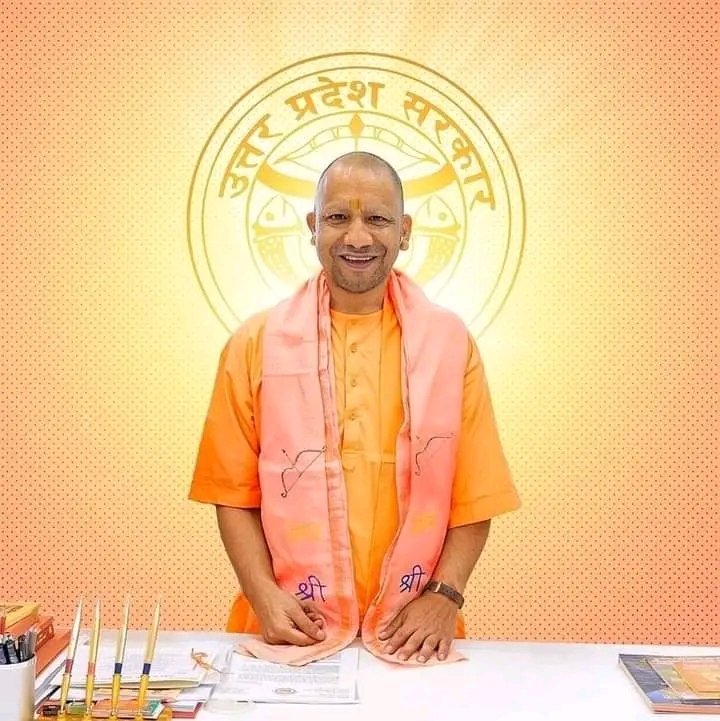
LUCKNOW — Chief Minister Yogi Adityanath delivered a powerful address on Monday, detailing a historic economic turnaround. He stated that Uttar Pradesh transformed to revenue surplus from a state previously labeled as “BIMARU”. Speaking at a programme in Lok Bhavan, the Chief Minister recalled the dire financial situation he inherited in 2017. At that time, the state treasury was empty. Furthermore, financial institutions were so skeptical that bank chairmen refused to even take his calls.
Today, the landscape of India’s most populous state looks remarkably different. Adityanath emphasized that the government chose financial discipline over reckless borrowing. By improving resource mobilization, the state has nearly tripled its budget size and per capita income. This robust fiscal framework now allows Uttar Pradesh to execute massive infrastructure projects. Consequently, the state no longer relies heavily on external loans to drive its development agenda.
Read More : Bhagwant Mann Slams Operation Lotus, Calls It Threat to Democracy
Executing Mega-Projects with Internal Resources
A prime example of this newfound financial independence is the nearly 600-km-long Ganga Expressway. Adityanath noted that the project is being executed primarily through the state’s own financial resources. Previously, such a feat would have been unthinkable without massive bank loans. Interestingly, the same banks that once ignored the state are now lining up to offer funds. However, the government has remained firm in its self-reliant approach.
The Chief Minister contrasted this success with the mismanagement of previous regimes. He specifically cited the Jayaprakash Narayan International Centre as a glaring example of fiscal indiscipline. Its costs reportedly escalated from Rs 200 crore to Rs 860 crore while remaining incomplete. By avoiding “unplanned expenditure” and “freebies,” the current administration has significantly reduced the debt burden. This shift ensures that the people of Uttar Pradesh are not burdened with unnecessary future liabilities.
Merit-Based Recruitment and Zero Tolerance for Corruption
Beyond the balance sheets, the Chief Minister highlighted a revolution in the state’s recruitment process. During the event, he distributed appointment letters to 500 newly selected auditors for various departments. He asserted that the “chacha-bhatija” (uncle-nephew) culture of favoritism has ended. Instead, a transparent system ensures that candidates from all religions, castes, and regions receive opportunities based purely on merit.
Adityanath reiterated his government’s “zero tolerance” policy towards crime and corruption. He claimed that more than nine lakh people have received government jobs through this fair process so far. The recruitment is handled with such confidentiality that even top officials remain unaware of specific outcomes until the end. Moreover, the era of frequent paper leaks and disputed recruitment lists has been replaced by a reliable, confidential system. This transparency is essential for achieving the broader goal of a “developed Uttar Pradesh”.
Conclusion: Building a Robust Fiscal Future
The news that Uttar Pradesh transformed to revenue surplus serves as a blueprint for other states. By prioritizing coordination between the finance department and audit units, the state built a sustainable model. Adityanath concluded by stressing the importance of fiscal discipline at the panchayat and urban local body levels. As the economy continues to expand, the focus remains on maintaining this transparency to ensure long-term prosperity for every citizen.