
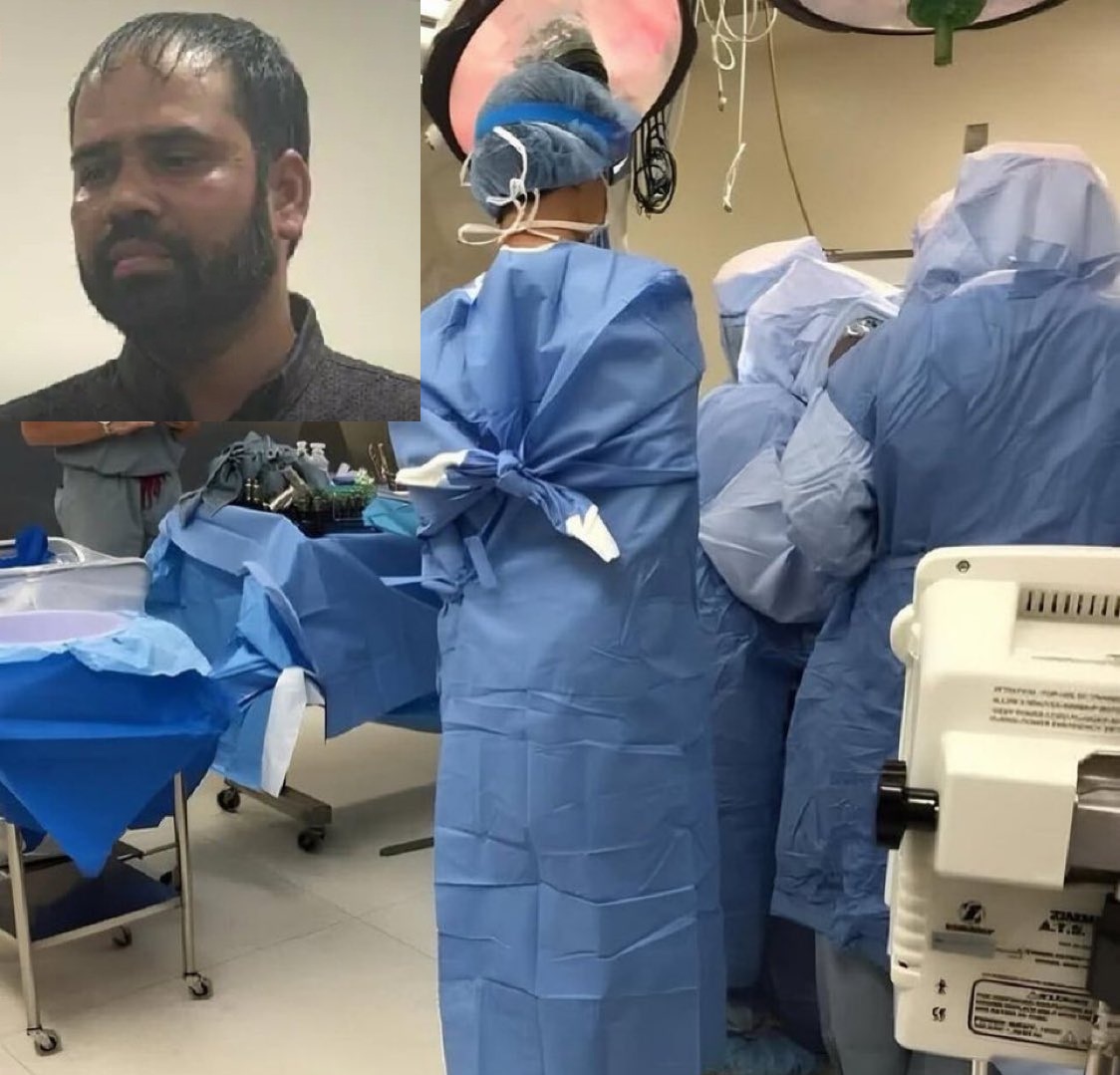
KANPUR — In a major breakthrough, the Kanpur police have arrested 34-year-old Rohit Tewari, the alleged mastermind behind a massive organ trade syndicate. The Kanpur kidney racket case has shocked the nation as investigators revealed that Tewari, who is only a Class 12 passout, successfully posed as a specialized surgeon. He allegedly performed at least 30 illegal kidney transplant surgeries across several private hospitals. Tewari had been evading the law since March 31, moving between Goa, Kathmandu, Manali, and Shimla before his capture.
Also Read : UP Voter Roll Revision: BJP Strongholds See Sharp Electorate Decline
Police officials placed a bounty of ₹25,000 on Tewari after multiple raids exposed the scale of his operations. During his interrogation, the accused admitted to wearing a stethoscope and apron to deceive both patients and hospital staff. Moreover, investigators recovered photographs showing him inside operation theatres performing complex procedures. This lack of medical qualification has raised grave concerns, as several patients and donors associated with the racket have reportedly died.
The Mechanics of the Illegal Organ Trade Network
The syndicate operated with chilling efficiency by targeting vulnerable individuals through social media platforms like Telegram. Brokers would lure poor donors with offers ranging from ₹5 lakh to ₹10 lakh for a single kidney. Subsequently, the syndicate sold these organs to wealthy patients for staggering sums between ₹60 lakh and ₹1 crore. This vast network extended far beyond Kanpur, with deep-rooted links found in Lucknow, Delhi, Mumbai, Kolkata, and even Nepal.
In one instance, a student from Begusarai, Bihar, was found admitted at Medlife Hospital in Kanpur. He revealed that an ambulance driver, Shivam Agrawal, used persuasive tactics to convince him to sell his organ. Agrawal allegedly cited public figures who live healthy lives with a single kidney to normalize the procedure. Consequently, the donor agreed to the surgery without realizing the lack of medical oversight involved.
Shocking Lapses in Hospital Accountability
Raids at facilities like Priya Hospital and Medlife Hospital revealed a complete absence of official medical records. Investigators found that hospitals deliberately skipped basic administrative procedures to avoid detection. No Bed Head Tickets (BHT) were prepared for donors, and no official files existed for the transplant recipients. Furthermore, post-operative treatment details were often scribbled on plain paper without any official stamps or doctor signatures.
The Kanpur kidney racket case highlights a systemic failure in the regulation of private healthcare facilities. Police Commissioner Raghubir Lal noted that the syndicate thrived on the negligence of hospital owners. So far, the police have arrested the owner couple of Ahuja Hospital, Dr. Surjit Ahuja and Preeti Ahuja, alongside nine others. Two more suspects, Dr. Afzal and OT technician Mudassar Ali, remain under the scanner with active rewards for their arrest.
National Security and Healthcare Implications
The cross-border nature of this racket, involving Nepal, suggests that organ trafficking remains a significant challenge for Indian law enforcement. The SIT (Special Investigation Team) is currently tracing the financial trails of the ₹60-crore empire Tewari allegedly built. Additionally, the health department has begun auditing several small-scale private clinics in Kanpur to ensure no other “fake doctors” are operating within the system.
Public health experts are calling for stricter verification of medical credentials in private surgical units. This case serves as a grim reminder of how digital anonymity on Telegram facilitates dangerous criminal enterprises. As the legal proceedings against Tewari and his accomplices begin, the focus remains on ensuring justice for the families of those who lost their lives to this fraudulent medical ring.