
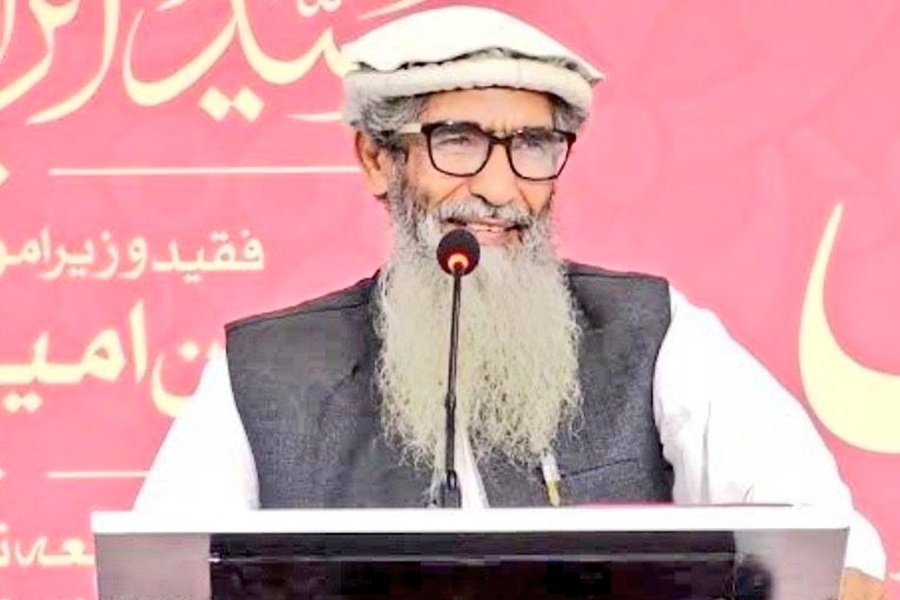
LAHORE — In a major security breach, the Maulana Amir Hamza shot reports have confirmed a daring daylight attack on the 67-year-old Lashkar-e-Taiba (LeT) co-founder. On Thursday afternoon, April 16, 2026, unidentified motorcycle-borne gunmen opened fire on Hamza’s vehicle near the Hamdard Chowk area of Lahore. The veteran terror ideologue was returning home after giving an interview at a local news channel’s office when the ambush occurred. This incident marks the second assassination attempt on Hamza within a twelve-month period, highlighting a lethal pattern of targeted hits on anti-India militants in Pakistan.
Emergency responders rushed Hamza to a nearby hospital where he remains in “extremely critical” condition. Reports suggest he sustained multiple gunshot wounds to his upper body. Interestingly, Lahore Police provided a conflicting initial account, claiming the occupants of the targeted vehicle escaped unharmed. However, local hospital sources and multiple eyewitnesses have confirmed that the Gujranwala-born cleric is fighting for his life. Security forces have since cordoned off the Pindi Stop area and launched a massive search operation for the assailants.
The Rise of a Terror Ideologue: From Afghan Jihad to LeT
Amir Hamza is not merely a figurehead; he is the ideological architect of the Lashkar-e-Taiba. His roots in the jihadist ecosystem trace back to the 1980s when he participated in the Soviet-Afghan war. Alongside Hafiz Saeed, Hamza played a pivotal role in establishing the Markaz al-Dawa wal-Irshad, the precursor to LeT. Moreover, his influence as a master recruiter and propaganda editor helped build the group’s vast ideological infrastructure across Pakistan.
Beyond his role as an orator, Hamza was designated a global terrorist by the United States in 2012. He served on the LeT’s central advisory committee and led various charitable fronts used to bypass international financial sanctions. Indian intelligence agencies have long linked him to the 2005 attack on the Indian Institute of Science (IISc) in Bengaluru. This attack resulted in the death of a prominent professor and left several others injured, cementing Hamza’s status as a high-value target for security agencies.
Pattern of the “Unknown Gunmen” in Pakistan
The Maulana Amir Hamza shot incident follows a string of mysterious eliminations involving India’s “most-wanted” list. In May 2025, Hamza survived a previous shooting at his residence where he was shot in the waist. Following that attempt, the ISI reportedly provided him with heavy security at a military hospital. However, the latest breach suggests that the “unknown gunmen” operating within Pakistan have become increasingly sophisticated and relentless in their pursuit of high-profile militants.
Also Read : TIME100 Most Influential People 2026: Three Indians Feature on Global List
Other notable figures recently targeted include Shahid Latif, the mastermind of the Pathankot airbase attack, and Muhammad Tahir Anwar, the brother of JeM chief Masood Azhar. These repeated incidents have significantly thinned the top-tier leadership of groups like LeT and Jaish-e-Mohammed. While no group has claimed responsibility for Thursday’s shooting, the precision of the hit suggests a professional operation that has left Pakistani authorities struggling for answers.
Security Implications and the Shadow War
The timing of this attack is critical, as Pakistan remains under intense international pressure to dismantle its terror infrastructure. The SIT (Special Investigation Team) in Lahore is currently reviewing CCTV footage from the news channel’s vicinity to identify the motorcycle used in the hit. Furthermore, investigators are probing whether internal factional disputes within the fragmented LeT leadership led to this latest betrayal.
As Maulana Amir Hamza remains under heavy guard at the hospital, the regional security landscape feels the tremors of this development. If Hamza fails to recover, it would signal the end of an era for LeT’s old guard. For now, the streets of Lahore remain on high alert. The “unknown gunmen” phenomenon continues to be the most unpredictable variable in the complex security dynamics of South Asia in 2026.