
NEW DELHI/ISLAMABAD — The diplomatic rift between India and Pakistan widened this Thursday after Islamabad “categorically rejected” the Delimitation Bill 2026. Tabled in the Lok Sabha earlier this week, the bill includes a futuristic provision that empowers the Election Commission of India (ECI) to conduct delimitation in Pakistan-occupied Kashmir (PoK). Pakistan’s Foreign Ministry described the move as “illegal and provocative.” They argued that New Delhi has no authority to redefine territory in a region they still classify as disputed.
The Delimitation Bill 2026 is part of a larger legislative package. It seeks to increase the strength of the Lok Sabha to 816 members to operationalize women’s reservation. However, it is the specific focus on Jammu and Kashmir that has rattled Islamabad. The bill essentially rolls back provisions that previously excluded PoK from redrawing territorial constituencies. It reaffirms India’s sovereign claim over the 24 assembly seats that have remained vacant since 1947.
Islamabad Terms Move “Illegal Political Grandstanding”
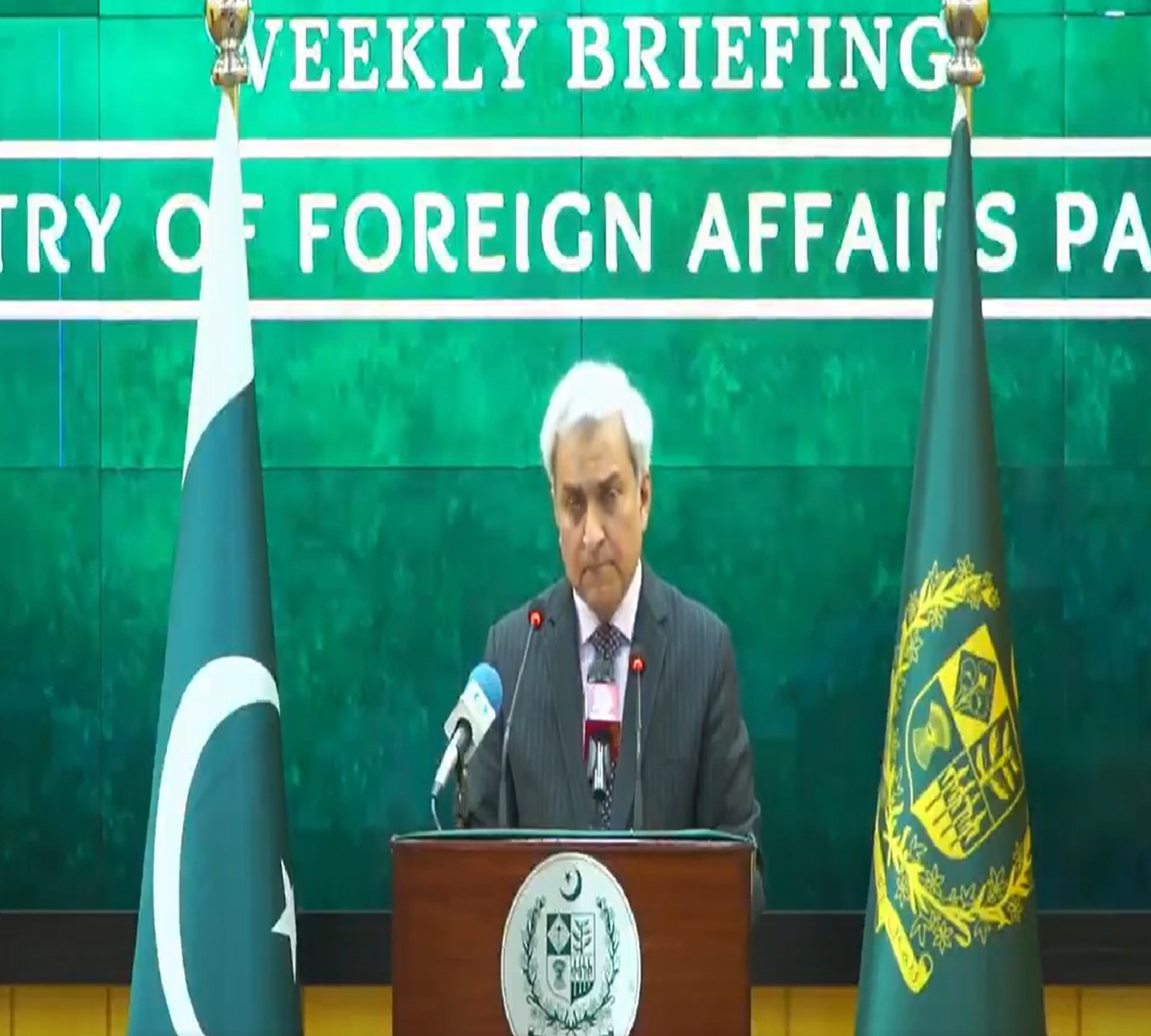
Responding to the development, Pakistan’s Foreign Ministry spokesperson, Tahir Andrabi, issued a sharp rebuttal. He stated that the Delimitation Bill 2026 is a clear violation of international law. According to Andrabi, India is attempting to alter the demographic and political structure of the region. “We categorically reject India’s so-called delimitation process,” he told reporters in Islamabad. He further characterized the legislative move as “political grandstanding” designed for domestic consumption.
Weekly Press Briefing by the Spokesperson @TahirAndrabi
On application of India’s Delimitation Bill in Indian Illegally Occupied Jammu & Kashmir and mentioning AJK in this regard. pic.twitter.com/eaq5B2zWuS
— Ministry of Foreign Affairs – Pakistan (@ForeignOfficePk) April 16, 2026
Pakistan’s reaction follows its long-standing strategy of trying to internationalize the Kashmir issue. However, New Delhi has consistently dismissed such objections as interference in its internal affairs. The Indian Ministry of External Affairs (MEA) maintains that the entire territory of Jammu and Kashmir is an integral and inalienable part of India. This bill, according to government sources, merely aligns the legal framework with that constitutional reality.
Reclaiming the 24 Vacant Seats in J&K Assembly
The most significant aspect of the Delimitation Bill 2026 for Jammu and Kashmir is the treatment of the 24 reserved seats. Currently, the J&K Assembly has an elected strength of 90, which excludes the areas under Pakistan’s illegal occupation. The new bill empowers the Delimitation Commission to readjust these constituencies “once conditions permit.” This is seen as a strategic step by the Modi government to keep the territorial claim active and legally documented.
Additionally, the Union Territories Laws (Amendment) Bill 2026 proposes increasing the number of women members nominated by the Lieutenant-Governor. This number will rise to three once the new delimitation takes effect. Union Home Minister Amit Shah has previously asserted that PoK belongs to India. He emphasized that this legislation ensures that whenever the region returns to Indian control, the electoral maps will be ready for implementation.
Regional Implications and the Road to 2029
While the Delimitation Bill 2026 has caused a diplomatic stir, its implementation remains a few years away. Home Minister Amit Shah clarified in the Lok Sabha that the new seat allocations will only take effect after 2029. The process will follow the completion of the ongoing digital census. Moreover, the government has assured southern Indian states that the expansion to 816 seats will not dilute their representation.
The sharp reaction from Pakistan is unlikely to stall the bill’s passage in the Indian Parliament. The ruling alliance holds a comfortable majority to pass the core Delimitation Bill. However, the accompanying constitutional amendments will require a two-thirds majority. As New Delhi moves ahead with its mapping of PoK, the geopolitical tension in South Asia continues to simmer. For now, the bill stands as a firm statement of India’s territorial intent, regardless of Islamabad’s rhetoric.