
Iran’s Nuclear Site Rebuilding Begins After US Bombing: Satellite Images Reveal Secret Activity
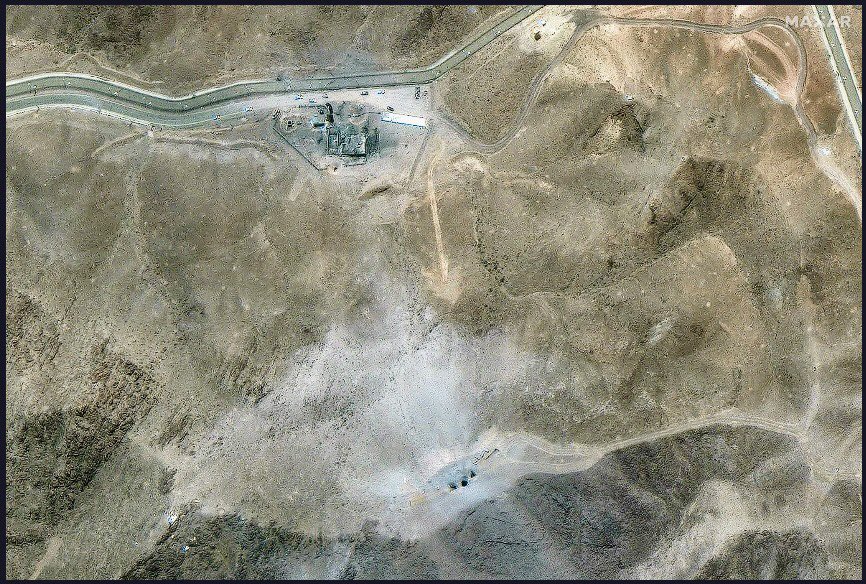
Tehran – New satellite imagery has emerged revealing significant activity at Iran’s Fordow nuclear facility, raising fresh questions about the impact of the US bombing campaign carried out under Operation Midnight Hammer. Despite assertions by former US President Donald Trump that the strikes had “completely obliterated” Iran’s nuclear program, the new images tell a different story.
The images, analyzed by defense experts and reported by Newsweek, show heavy machinery, construction vehicles, and excavation efforts at key tunnel entrances and roadways near the Fordow site. This underground facility, located near Qom, was among the prime targets in last Saturday’s US airstrike operation.
Heavy Activity at Fordow: What the Images Show
According to satellite analysis:
- Earth-moving equipment is digging new access roads and repairing damaged routes.
- Activity is focused near blast sites where bunker-busting bombs hit.
- Tunnel entrances appear to be undergoing reconstruction, and in some cases, were sealed prior to the strike, possibly as a protective measure.
Observers note that similar construction was observed just days before the strike, suggesting Iran anticipated the attack and possibly evacuated the site in advance.
Iran’s Preparations and Aftermath
Reports from Iranian state media claimed the nuclear material stored at Fordow, particularly enriched uranium, had already been moved to a “secure location”. These assertions, if true, may explain why there has been no radiation contamination reported post-strike.
The International Atomic Energy Agency (IAEA) has confirmed that centrifuges at Fordow are now non-operational, but did not assess the complete status of the site. The IAEA noted “enormous damage” to the infrastructure, though full inspection access has not been granted.
A leaked Defense Intelligence Agency (DIA) report paints a more cautious picture. It described a “low confidence” assessment that Iran’s nuclear program had been significantly delayed, citing insufficient evidence that critical components were destroyed.
Trump Administration’s Response and Controversy
President Trump had lauded Operation Midnight Hammer as a historic success, even comparing the strike to “Hiroshima” in its strategic impact.
“We hit exactly what we wanted to hit. The Iranian nuclear program has been set back by years,” Trump said.
However, in the face of the DIA’s cautious findings, top administration officials have gone on the offensive. Defense Secretary Pete Hegseth criticized what he described as a media campaign to “diminish the success” of the mission.
“Your people are trying to leak and spin that it wasn’t successful. It’s irresponsible,” Hegseth said, taking aim at The New York Times and CNN.
Trump’s legal team has since issued defamation warnings to both media outlets, demanding retractions for their reporting on the leaked intelligence assessment. In response, The Times’ legal counsel defended their journalism, saying:
“No apology will be forthcoming. We told the truth to the best of our ability. We will continue to do so.”
Iran Dismisses US Claims
Iran’s Supreme Leader Ayatollah Ali Khamenei publicly dismissed the US strike as ineffective. During a televised speech, the 86-year-old leader said:
“Anyone who heard [Trump’s] remarks could tell there was a different reality behind his words—they could do nothing.”
Iranian officials continue to insist that their nuclear infrastructure remains intact, and claim the US action has only strengthened domestic resolve to advance their nuclear capabilities.
Conclusion
The emergence of new satellite images revealing post-strike construction activity at Iran’s Fordow facility has thrown cold water on Trump’s claims of complete success. With mixed intelligence assessments and rising geopolitical tension, the world is watching closely to see how Tehran responds next—and whether another phase in the US-Iran standoff is about to unfold.