
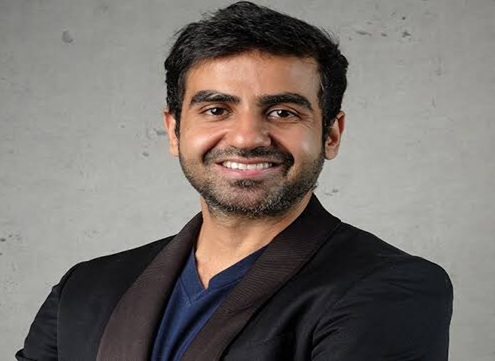
Jobs That Will Exist in 10 Years: Nikhil Kamath Questions Relevance of College Degrees
Bengaluru: Zerodha co-founder Nikhil Kamath has sparked a thought-provoking debate on the future of education and employment by questioning the relevance of traditional 4-year college degrees. Citing the World Economic Forum’s Future of Jobs Report 2025, Kamath argues that lifelong learning is now essential for anyone hoping to stay relevant in a rapidly evolving job market.
“What jobs will be relevant in 10 years?” Kamath posted on X. “Personally, I think the days of 4-year college courses are over. Lifelong learning is the new norm—for everyone.”
Such an interesting question: “What jobs will be relevant in 10 years?”
Personally, I think the days of 4-year college courses are over, lifelong learning is the new norm, for everyone… pic.twitter.com/sk3m7vfjR4— Nikhil Kamath (@nikhilkamathcio) June 26, 2025
His post comes at a time when educational models and workplace dynamics are undergoing a dramatic transformation driven by AI, automation, and green technologies.
Key Findings from WEF’s Future of Jobs Report 2025
The WEF report reveals a mixed outlook for the global workforce through 2030. Some job categories are poised for significant growth, while others face sharp decline.
📈 Jobs Expected to Grow (2025–2030)
- Frontline and Service Sector Jobs:
- Farm workers
- Delivery drivers
- Construction workers
- Salespersons
- Food processing workers
- Care Economy Roles:
- Nurses
- Social workers
- Counsellors
- Personal care aides
- Technology and Green Energy Roles:
- Big data specialists
- AI and machine learning engineers
- Fintech developers
- Software and application developers
- Renewable energy and electric vehicle engineers
- Environmental engineers
These categories are growing either due to population needs (such as healthcare), technological innovation, or the transition to sustainable energy.
📉 Jobs in Decline
Roles facing the largest decline include:
- Clerical and secretarial workers
- Administrative assistants
- Executive secretaries
- Bank tellers
- Data entry clerks
- Postal service clerks
Automation and AI are expected to displace repetitive, manual, and process-driven jobs, underscoring the importance of adaptability in today’s workforce.
Essential Skills for the Future Workforce
The report also highlighted a shift in the skill landscape, noting the importance of both technical and soft skills.
Top Core Skills in 2025:
- Analytical thinking (ranked by 70% of employers)
- Resilience, flexibility, and agility
- Leadership and social influence
- Creative thinking
- Curiosity and lifelong learning
Fastest-Growing Technical Skills:
- AI and big data
- Networks and cybersecurity
- Technology literacy
Conversely, manual dexterity and endurance are declining in importance, as automation reduces reliance on repetitive physical tasks.
Kamath’s Vision: Skills Over Degrees
Kamath’s stance reflects a broader paradigm shift in education. Increasingly, online learning, skill-based certifications, and hands-on experience are replacing conventional degrees as the benchmark of employability.
He has long been vocal about India’s outdated education system and advocates for personalized learning journeys, particularly in an era where industries are evolving faster than universities can update their curricula.