
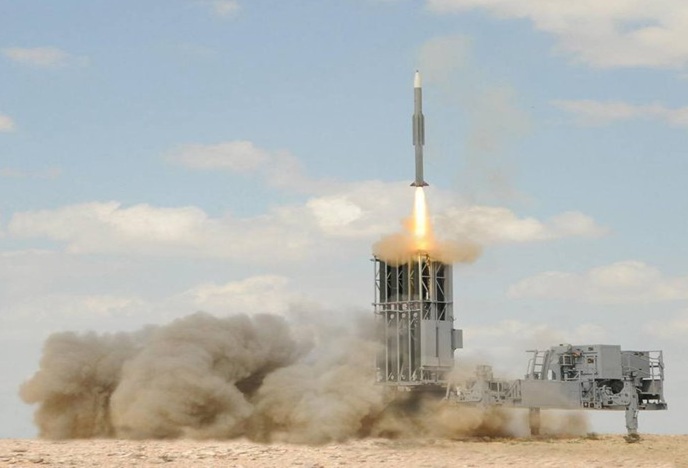
India-Israel Barak-8 Air Defence System Downs Iranian Drone Over Tel Aviv
In a landmark moment for India-Israel strategic cooperation, the Barak-8 air defence system successfully intercepted an Iranian drone entering Israeli airspace amid ongoing conflict between Iran and Israel. The incident marks the first operational use of the India-made missile system in live combat by Israel, underlining the growing global credibility of India’s defence capabilities.
The interception occurred as tensions escalated following multiple UAV incursions into Israeli territory. In a statement, the Israel Defense Forces (IDF) confirmed that the Barak system was deployed to neutralize a potential threat near Tel Aviv, identifying the aircraft as an Iranian UAV.
Our new naval anti-missile system, Barak 8, shoots down targets more than 62 mi away. Meet the Iron Dome of the sea pic.twitter.com/pvQ6KCM57O
— Israel Defense Forces (@IDF) December 3, 2015
What is the Barak-8 Air Defence System?
The Barak-8, also known as MRSAM (Medium Range Surface-to-Air Missile), is a next-generation, all-weather air defence system developed jointly by India’s DRDO and Israel Aerospace Industries (IAI). Capable of engaging multiple aerial threats — including drones, cruise missiles, and combat aircraft — the system has become a critical asset in the defence arsenals of both nations.
Key features of Barak-8 include:
- Range: 70 to 100 km
- Speed: Up to Mach 2
- Warhead: 60 kg proximity-fused explosive
- Launch: Vertical launch system with 360-degree coverage
- Guidance: Active radar seeker and integration with MF-STAR AESA radar
- Capability: Multiple target tracking and simultaneous interceptions
With these specifications, the Barak-8 is highly effective against saturation attacks, giving it a unique edge in modern asymmetric warfare.
India’s Strategic Role in Barak-8 Development
India played a crucial part in the development of the dual-pulse rocket motor, thrust vector control, and integration systems, while Israel contributed advanced seeker and avionics technology. The missile’s success reflects the synergy of both countries’ scientific and industrial capabilities.
As part of ‘Make in India’, Indian companies such as Bharat Dynamics Limited (BDL), Bharat Electronics Limited (BEL), L&T, and TATA Group are deeply involved in the manufacturing and integration processes.
Operational Use in Israel Validates Indian Defence Exports
The system’s deployment over Tel Aviv marks its first real-time battlefield success under Israeli command. Israeli defence sources noted:
“The Barak-8 system was developed to respond to evolving aerial threats. Today’s successful intercept of the Iranian drone reinforces its battlefield utility.”
The successful use of Barak-8 in hostile airspace demonstrates the global relevance of Indian defence technology and boosts confidence in its domestic and export potential.
Past Indian Deployments and Real-world Tests
India has rigorously tested and deployed Barak-8 under both naval and land configurations. One of the most notable incidents was Operation Sindoor, where the system intercepted a suspected Pakistani Fatah-II missile over Sirsa, Haryana, in 2023.
Other key milestones include:
- Integration on Indian Navy warships like INS Kolkata and INS Chennai
- Deployment aboard INS Vikramaditya and Project 17A frigates
- Induction into five Indian Army air defence regiments
- Formal handover to the Indian Air Force in September 2021 at a Jaisalmer ceremony attended by Defence Minister Rajnath Singh
Why This Interception Matters
The Barak-8’s successful interception of an Iranian drone during active hostilities offers both strategic symbolism and operational validation. It strengthens India’s position in global arms collaboration, especially in the Middle East, where airspace security is increasingly pivotal.
For Israel, the incident sends a signal that its defence ecosystem now benefits from globally co-developed systems that are combat-tested and adaptable to evolving threats like UAV swarms and missile barrages.
A Future-Ready Defence System
The Barak-8 missile system’s scalable architecture allows it to be adapted for short, medium, and long-range applications, making it an indispensable part of India and Israel’s future joint military operations.
With a combined order value exceeding $3 billion, the Barak-8 program also opens up further export opportunities to Southeast Asia, Eastern Europe, and other non-NATO partners.