
Sudarshan Chakra Mission: PM Modi’s New Defence Shield
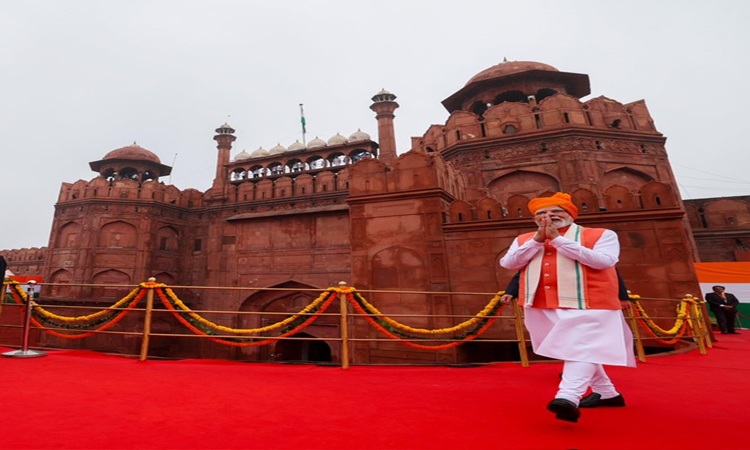
New Delhi: Prime Minister Narendra Modi, in his Independence Day address from the Red Fort, announced the launch of Mission Sudarshan Chakra, a next-generation defence initiative aimed at transforming India’s security architecture by 2035. Inspired by Lord Krishna’s divine weapon from Hindu scriptures, the project will combine cutting-edge surveillance and precision strike capabilities to neutralise enemy threats and ensure stronger retaliation.
What Is Mission Sudarshan Chakra?
PM Modi described the mission as a “national security shield” that will expand, strengthen, and modernise India’s defensive and offensive capabilities. The system will integrate a Precise Target System with advanced weaponry to protect the country’s most critical assets, including railway stations, hospitals, airports, and religious sites.
“In the next ten years, by 2035, I want to expand, strengthen, and modernise this national security shield. Drawing inspiration from Lord Shri Krishna, we have chosen the path of the Sudarshan Chakra,” Modi declared.
In Hindu mythology, the Sudarshan Chakra was Lord Vishnu’s celestial weapon, known for its speed and ability to return to its wielder after destroying enemies. Modi’s government has now adapted this symbolism to reflect India’s push for technological superiority in defence.
Akashteer: The Silent Force Behind India’s Defence
The announcement follows India’s recent military escalation with Pakistan in May, during which the Akashteer air defence system played a decisive role.
Akashteer, an indigenously developed automated Air Defence Control and Reporting System, successfully intercepted and neutralised incoming drones and missiles during Pakistan’s deadliest attack on Indian military and civilian targets.
The system works by integrating radar, communication, and tracking technologies to provide a real-time air defence picture. It automates detection, tracking, and engagement of threats, ensuring coordinated responses across control rooms and field units. Being vehicle-based, it remains mobile and adaptable to hostile environments.
Indigenous Defence Edge
Mission Sudarshan Chakra is also a reflection of India’s growing reliance on indigenous defence platforms under the Make in India initiative.
Over the past decade, India has developed advanced systems such as:
- Dhanush Artillery Gun System
- ATAGS (Advanced Towed Artillery Gun System)
- Arjun Main Battle Tank (MBT)
- LCA Tejas fighter aircraft
- Advanced Light Helicopters (ALH, LUH)
- Weapon Locating Radars and Tactical Control Radars
- Indigenous naval assets including destroyers, submarines, frigates, and carriers
By combining these systems into a cohesive framework, Mission Sudarshan Chakra seeks to build a self-reliant, high-tech defence ecosystem.
‘No Differentiation Between Terrorists and Their Supporters’
In a stern warning to Pakistan, Modi made it clear that India would no longer tolerate nuclear blackmail or cross-border terrorism. He stated that India’s armed forces will have the freedom to decide punitive measures in case of any future misadventures.
The Prime Minister hailed the success of Operation Sindoor, launched in May after the Pahalgam terror attack on April 22, which shocked the nation and the world.
“Our brave soldiers punished the enemy beyond its imagination. What the armed forces did during Operation Sindoor has not been seen in decades,” Modi said, saluting the heroes of the operation.
India had also suspended the Indus Waters Treaty and imposed economic and diplomatic measures against Pakistan as part of its “new normal” in dealing with cross-border threats.
A Roadmap for 2035
With Mission Sudarshan Chakra, India has laid down a roadmap to build a comprehensive national security shield that extends beyond traditional battlefields. From defending public infrastructure to countering drone swarms and missile attacks, the initiative reflects India’s determination to face evolving warfare.
Defence experts believe the mission signals India’s transition towards AI-driven warfare, precision targeting, and multi-layered defence systems. By 2035, India aims to join the ranks of nations with the most advanced integrated security shields.