
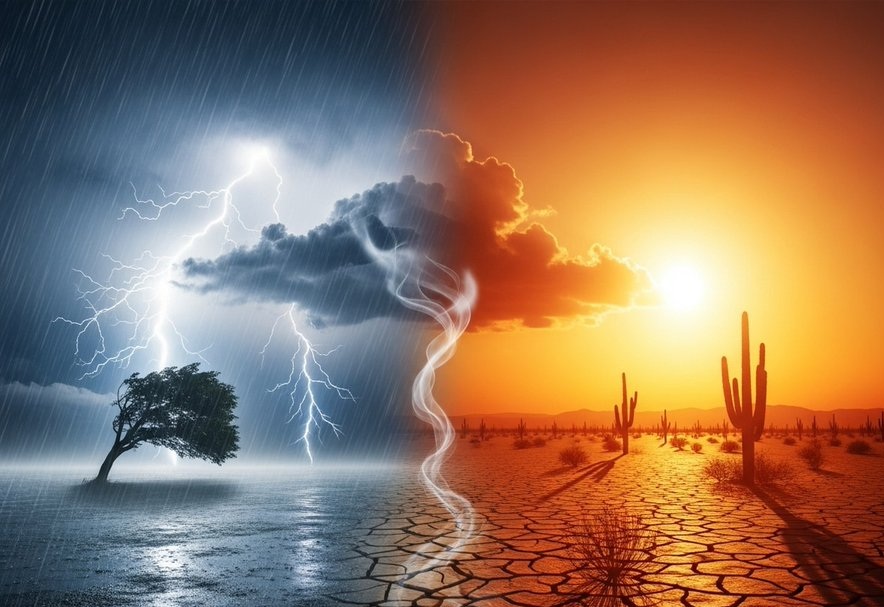
NEW DELHI — After weeks of a punishing heatwave, a major atmospheric shift is finally on the horizon. The India Meteorological Department (IMD) has confirmed that Rain coming: Multiple western disturbances to hit India will soon break the intense heat cycle. Starting late evening on April 27, 2026, a series of back-to-back weather systems will move across the northern plains. These systems originate in the Mediterranean region and travel eastward. As they arrive, they bring much-needed moisture and cooler air to a region currently reeling under record-breaking April temperatures.
Meteorologists describe this weather pattern as a rare but essential intervention. These “Western Disturbances” act as the primary mechanism for breaking prolonged heat spells during peak summer months. Current assessments indicate that the first wave will trigger isolated dust storms in Rajasthan and Punjab. However, the intensity will likely peak between April 28 and April 30. During this window, widespread thunderstorms and rainfall will cover Delhi, Haryana, and western Uttar Pradesh. For millions of citizens, this shift represents a vital turning point in an otherwise brutal summer season.
The Science of Relief: How Western Disturbances Work
A Western Disturbance is a non-monsoonal precipitation pattern driven by the westerlies. These systems pick up moisture from the Mediterranean Sea and Black Sea. When they hit the Himalayas, they are forced upward, causing rainfall over the plains and snow in the higher reaches. Consequently, the combination of cloud cover and precipitation effectively blocks the scorching solar radiation. This process is the “only ray of hope” for bringing down the mercury. Experts suggest that the Rain coming: Multiple western disturbances to hit India will successfully push temperatures below the 42°C mark by the end of the month.
The cooling effect depends heavily on the frequency of these thundershowers. In North India, dust storms usually serve as the precursor to these changes. Driven by gusty winds, these storms lift loose soil and significantly reduce visibility. While they can be disruptive, they are followed by a sudden, refreshing drop in temperature. The IMD has issued a “Yellow Alert” for several states. This alert warns residents of potential traffic delays and minor damage to temporary structures due to strong winds. Despite these risks, the arrival of rain remains the most anticipated event of the season.
Impact on Agriculture and Urban Infrastructure
The timing of Rain coming: Multiple western disturbances to hit India is particularly significant for the agricultural sector. While the wheat harvest is largely complete, the moisture will benefit summer crops and orchards. Additionally, the rain will help settle the high levels of suspended particulate matter. This natural “scrubbing” of the air will provide temporary relief from the deteriorating air quality often seen during dry heatwaves. Urban centers, which face the “heat island” effect, will see the most dramatic shift in local microclimates as the asphalt cools.
However, the IMD cautions that the relief might be temporary. While the back-to-back nature of these disturbances is rare for late April, the broader summer trend remains hot. Residents are advised to stay hydrated and avoid outdoor activities during the peak afternoon hours before the storms hit. As the first clouds gather over the horizon on April 27, the focus shifts to disaster management. Local authorities are preparing to handle potential power outages caused by falling trees during the high-velocity wind phases.
Conclusion: A Welcome Break from the Scorching Sun
The forecast of Rain coming: Multiple western disturbances to hit India brings a collective sigh of relief. From the bustling streets of Delhi to the fields of Punjab, the change in wind direction is a sign of resilience. While the storms may bring localized challenges, the primary goal of breaking the heatwave appears within reach. As the mercury begins its downward trend, the sense of relief among the populace is palpable. North India is finally ready to trade its dusty heat for the scent of rain-soaked earth.