
Global Competition and India’s Role
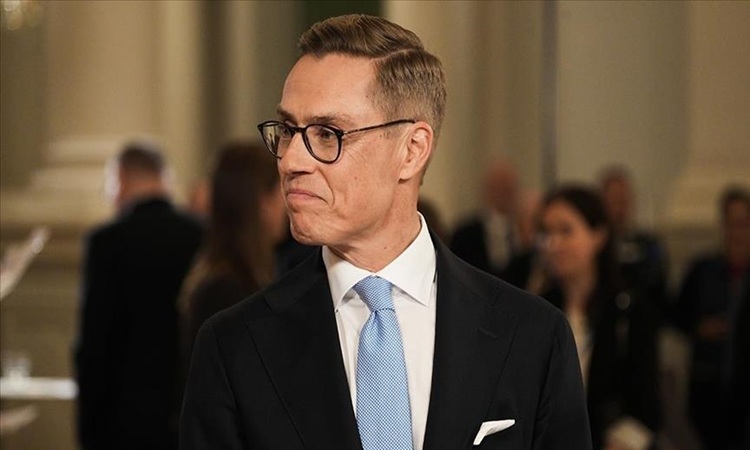
Helsinki: Finland’s President Alexander Stubb has issued a stark warning to the West, cautioning that failing to engage India and other Global South countries risks losing the ongoing global contest for influence.
Stubb emphasized that the post-Cold War era is over, pointing to Russia’s full-scale invasion of Ukraine on February 24, 2022, as a tipping point. “This has led to a jostling of power and a weakening of multilateral institutions, rules, and norms,” he said, highlighting the shifting geopolitical landscape.
Speaking on the sidelines of global diplomatic discussions, Stubb urged Western powers, particularly the United States, to adopt a more cooperative and dignified foreign policy toward India and other nations of the Global South.
Multipolarity vs. Multilateralism
On the Shanghai Cooperation Organization (SCO) summit in Tianjin, where Indian Prime Minister Narendra Modi met Russian President Vladimir Putin and Chinese President Xi Jinping, Stubb addressed the rising influence of China and Russia.
“The narrative put forward by countries in the global east, namely China and Russia, is that multipolarity will provide a solution for peaceful coexistence and global cooperation. I disagree with this approach,” Stubb remarked. He argued that multilateralism remains the most effective mechanism to drive international collaboration.
Stubb added that the SCO’s activities appear to undermine Western unity, stressing the need for strategic engagement with India. “If we don’t pursue a more cooperative foreign policy with especially the Global South, the likes of India, we’re going to lose this game,” he warned.
Implications for US-India Relations
Stubb’s warning aligns with long-standing concerns that some US policies have alienated New Delhi. Former National Security Advisor John Bolton criticized the Trump administration for undermining decades of US efforts to draw India closer, citing tariffs and mixed messaging on South Asian conflicts.
“Trump whacked India with another 25%. Did not tariff Russia. Did not tariff China, the largest purchaser of Russian oil and gas,” Bolton noted, adding that India was “incandescent” over Trump’s self-credited diplomatic efforts.
Meanwhile, former State Department adviser Mary Kissel emphasized India’s strategic indispensability to Washington. “If we consider Communist China the greatest threat to the United States, we need India. It’s just a fact. We can’t fight them alone in the Asia-Pacific,” she told Fox News.
Strategic Importance of India
Analysts note that India’s growing economic and military clout makes it a pivotal player in global geopolitics. The country’s partnerships, trade ties, and leadership in multilateral platforms significantly influence the balance of power in Asia and beyond.
Failure to engage India meaningfully risks pushing it toward alternative alliances with Russia, China, or other non-Western powers. Stubb’s comments underscore the urgency for Western countries to reassess their diplomatic strategy, ensuring that India feels respected and included in shaping the emerging global order.
Recommendations from Experts
Experts suggest that the West should:
- Strengthen economic and defense partnerships with India.
- Recognize India’s role in global governance and multilateral initiatives.
- Avoid policy missteps that could alienate Indian policymakers.
- Promote inclusive engagement with the Global South to maintain influence.
Such measures, they argue, are essential not only to counterbalance China and Russia but also to preserve Western relevance in a multipolar world.
Conclusion
Finland’s President Alexander Stubb has issued a clear wake-up call to the US and Europe: India cannot be ignored in global strategy. Multilateralism, rather than unilateral actions or selective engagement, is critical to sustaining influence in the shifting geopolitical landscape.
As the Global South gains prominence in international affairs, the West faces a choice: either adapt and cooperate or risk losing its foothold in global diplomacy. India, as a major democratic power, stands at the center of this strategic calculus.