
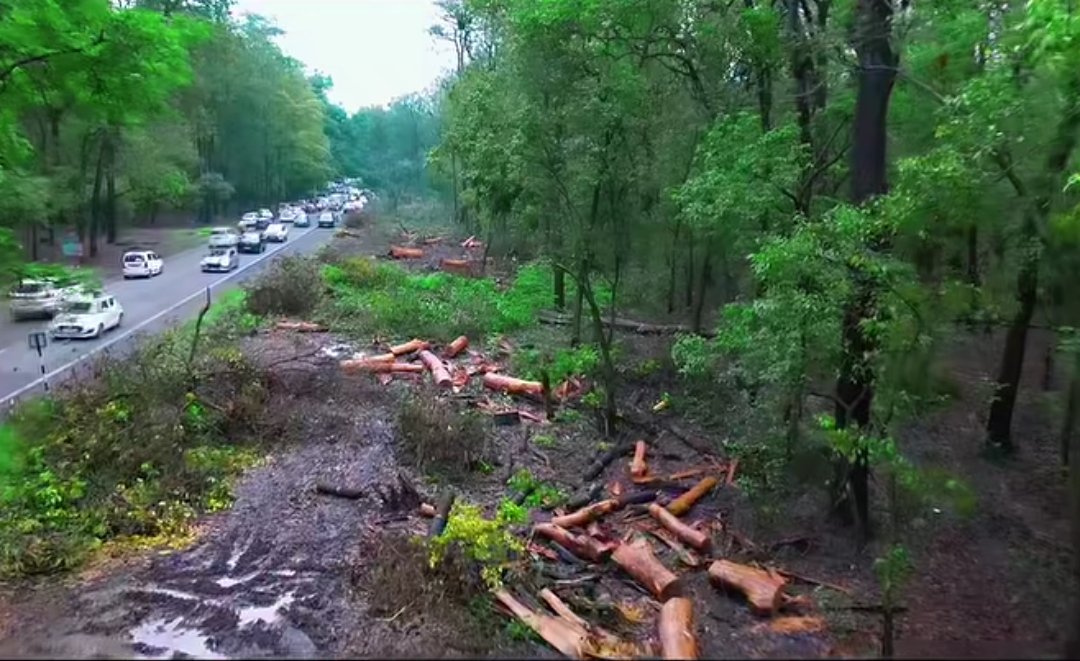
Uttarakhand Chief Minister Pushkar Singh Dhami has officially suspended tree felling for the Bhaniyawala-Rishikesh highway expansion project. This decision follows weeks of vocal protests from local residents and environmental activists concerned about the ecological impact of the road work. The Chief Minister emphasized that the government will only proceed after reaching a consensus with all relevant stakeholders.
Multiple activists have begin raising their voices against the felling of at least 3000 trees for the four laning of Bhaniyawala-Rishikesh highway in Uttarakhand. pic.twitter.com/uNj0pzCdDq
— Piyush Rai (@Benarasiyaa) July 18, 2026
This 20-km infrastructure initiative, managed by the National Highways Authority of India (NHAI), aims to widen the existing two-lane road into a four/six-lane corridor. Supporters of the project argue that it will ease traffic congestion and improve connectivity for the Char Dham Yatra and local commuters. However, the project’s passage through the sensitive Shivalik forest region sparked significant opposition.
Read More : Balochistan Declares Independence : What It Means for CPEC and Regional Stability
Understanding the Controversy
At the core of the dispute is the planned removal of over 4,000 trees. Environmentalists argue that the project threatens crucial elephant corridors and the local groundwater table. Many protesters celebrated “Black Harela”—a somber contrast to the state’s traditional green festival—to demonstrate their opposition to the deforestation.
Activists have raised alarms regarding the potential loss of canopy cover and the subsequent rise in regional temperatures. Furthermore, critics worry that the construction could fragment habitats for wildlife. This concern is especially high given the area’s proximity to the Rajaji Tiger Reserve landscape.
NHAI’s Stance and Mitigation Measures
The NHAI has consistently defended the project, stating that they have incorporated extensive wildlife protection measures into the design. These features include a major bridge-cum-elephant underpass and four additional dedicated underpasses. Furthermore, the agency has reduced the project’s Right of Way (ROW) from 60 metres to 23 metres to minimize forest land encroachment.
To address the loss of green cover, the NHAI has initiated a plan to transplant 754 trees under the guidance of the Forest Research Institute. Additionally, the authority has deposited funds for compensatory afforestation to support long-term environmental sustainability. According to official statements, the project adheres to all necessary statutory and environmental clearances.
The Path Forward: Dialogue and Sustainability
By halting the work, the state government hopes to address the concerns raised by the public. Chief Minister Dhami has directed officials to carefully review local sentiments and environmental impacts. The administration aims to balance the urgent need for modern infrastructure with the preservation of Uttarakhand’s fragile Himalayan ecosystem.
This pause provides a critical window for dialogue between the government, NHAI, and those protesting the project. A successful resolution will likely require a transparent review of environmental safeguards. Moving forward, the state must ensure that development does not come at the cost of its natural heritage.