
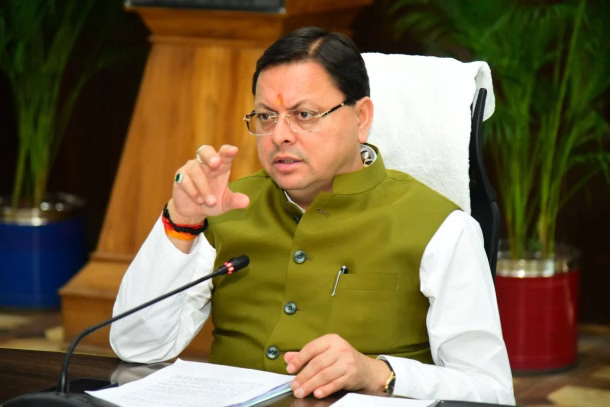
DEHRADUN — The Bharatiya Janata Party (BJP) has officially terminated months of political uncertainty in the hill state. Party National President Nitin Nabin announced this Friday that the Pushkar Singh Dhami 2027 polls leadership is now a settled matter. In a definitive televised interview, Nabin dismissed all rumors regarding a leadership change. He stated that the party will contest the 2027 Assembly elections with Chief Minister Dhami as its face. This high-level confirmation effectively silences internal factions that had been maneuvering for a transition in Dehradun.
For much of early 2026, a vocal group of dissenters within the state unit predicted an “imminent departure” for the Chief Minister. This pressure grew due to a long delay in filling vacant ministerial berths. Prominent figures, including former CM Trivendra Singh Rawat and MLA Arvind Pandey, frequently aired grievances in public. They targeted the government’s functioning, which fueled a narrative of administrative instability. However, the central leadership’s latest stance indicates that the “Dhami model” of governance has won the complete trust of the high command.
The Turning Point: Cabinet Expansion and Central Intervention
The internal friction reached a boiling point in early March during Union Home Minister Amit Shah’s visit to Haridwar. At that time, MLA Arvind Pandey attempted to organize a major gathering of leaders in Gadarpur. Reports suggested that several senior MPs and former ministers were ready to attend. This move was widely interpreted as a show of strength against the Chief Minister. However, the central leadership intervened swiftly. They effectively blocked the event to prevent a public display of rebellion.
Also Read : Uttarakhand Scraps Madrasa Board: State Curriculum Mandatory from July
Consequently, Chief Minister Dhami executed a masterstroke on March 20, 2026. He expanded the State Cabinet by inducting five new ministers, including Madan Kaushik and Khajan Dass. This strategic move brought the cabinet to its full strength of 12 members. By rewarding loyalists and balancing regional aspirations, Dhami successfully neutralized the “Operation Dissent” that had plagued his spring. Political analysts believe this expansion was the final nail in the coffin for those seeking a leadership overhaul before the Pushkar Singh Dhami 2027 polls.
A United Front for the 2027 Electoral Battle
The momentum shifted decisively following Prime Minister Narendra Modi’s massive roadshow in Dehradun on April 14. During the rally, the Prime Minister praised the state government’s resilience and people-centric policies. Capitalizing on this “Modi wave,” Dhami has begun restructuring key party roles. He is ensuring that his trusted lieutenants occupy influential positions ahead of the campaign season. National President Nitin Nabin echoed this confidence, noting that the Chief Minister has successfully navigated “complex administrative challenges.”
As the Char Dham Yatra season begins, the BJP is now focused on presenting a united front. The party aims to secure a historic “hat-trick” victory in the 2027 elections. Moreover, the focus has shifted from internal bickering to highlighting development projects in remote hill areas. By locking in the Pushkar Singh Dhami 2027 polls leadership, the BJP has cleared the deck for a streamlined campaign. Dissenters have been given a clear choice: align with the incumbent or risk political isolation.
Conclusion: Stability Over Sentiment
The central leadership’s decision emphasizes stability over individual ambitions. While local rivalries may persist, the official “Dhami-first” policy provides the party with a clear hierarchy. For the people of Uttarakhand, this means a continuation of the current policy trajectory. As the state moves toward the next electoral cycle, the BJP appears ready to fight as one cohesive unit under its youngest-ever Chief Minister.