
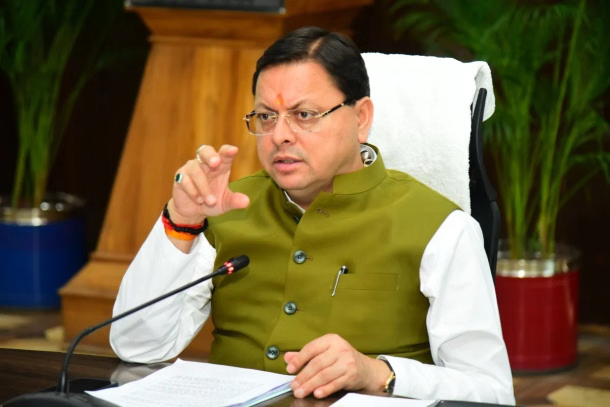
DEHRADUN — In a major policy shift, Chief Minister Pushkar Singh Dhami announced the dissolution of the Uttarakhand Madrasa Board on Monday. Speaking at a high-profile event in Haridwar, the Chief Minister confirmed that all madrasas must transition to the Uttarakhand Board curriculum. This mandate becomes effective in July 2026. This historic decision aims to standardize education across the Himalayan state. Dhami clarified that the government seeks to provide “uniform and modern education” to every student. Furthermore, he issued a stern warning. Institutions that fail to implement the state syllabus by the July deadline will face immediate closure.
The Chief Minister emphasized that the state wants to empower students with mainstream knowledge. “We have decided to dissolve the Madrasa Board after years of operation,” Dhami stated. He noted that moving under the Uttarakhand Education Board ensures students learn science, mathematics, and geography. By integrating these subjects, the government hopes to bridge the gap between traditional religious studies and modern career requirements. This move aligns with the state’s broader agenda of implementing a Uniform Civil Code (UCC) and streamlining administrative oversight.
Religious Leaders and Seers Support the Reform
Several prominent Hindu religious leaders attended the Haridwar event and expressed strong support for the decision. Swami Chidanand Muni of Parmarth Niketan welcomed the move as a step toward national integration. He noted that a broader curriculum helps students understand global issues. Additionally, he argued that combining spiritual values with modern science creates well-rounded citizens. However, some leaders took a more assertive stance. Mahant Ravindra Puri, President of the Akhil Bharatiya Akhara Parishad, called for similar measures nationwide.
The atmosphere at the event reflected a growing push for “Devbhoomi” to maintain its distinct cultural identity. Acharya Mahamandaleshwar Swami Kailashanand Giri suggested that religious education should not be the sole focus in the “land of the gods.” These remarks highlight the ideological shift currently shaping the state’s education policy. While the government frames the move as educational reform, the backing from influential seers underscores the political and cultural dimensions of scrapping the Uttarakhand Madrasa Board.
Muslim Organizations and Opposition Raise Legal Concerns
While the government moves forward, Muslim community leaders and legal experts are raising red flags. Maulana Khalid Rashid Firangi Mahali of the All India Muslim Personal Law Board previously labeled the move as unlawful. Critics argue that the Madrasa Board itself could have implemented modern reforms. For instance, Maulana Mufti Shahabuddin Razvi Barelvi questioned why a separate Minority Education Bill was necessary. He suggested that the existing board was capable of managing exams and policy updates without being dissolved.
Opposition parties are currently reviewing the legal implications of the announcement. They argue that the sudden dissolution might infringe upon the constitutional rights of minorities to manage their institutions. Moreover, there are concerns regarding the infrastructure required to retrain teachers for the state syllabus. Despite these objections, the Dhami administration appears resolute. The government insists that the transition is necessary for the “better future” of the youth in the state.
Implementation and the Road to July 2026
The education department is now preparing a roadmap for the transition. From July, officials will conduct inspections to verify the adoption of state-prescribed textbooks. The state board will also take over the certification process for students formerly under the Madrasa Board. This centralization aims to ensure that certificates from these institutions carry the same weight as mainstream schools. Consequently, students will find it easier to apply for higher education and government jobs.
As the deadline approaches, the focus remains on how smoothly the transition occurs. The state has promised support for institutions that comply with the new norms. However, the threat of closure remains a significant pressure point. For the families of students currently enrolled in these madrasas, the shift represents a major change in their academic journey. Whether this move leads to total integration or further legal battles will become clear as the new academic session begins in July.