
The Dawn of Mission Aagaman
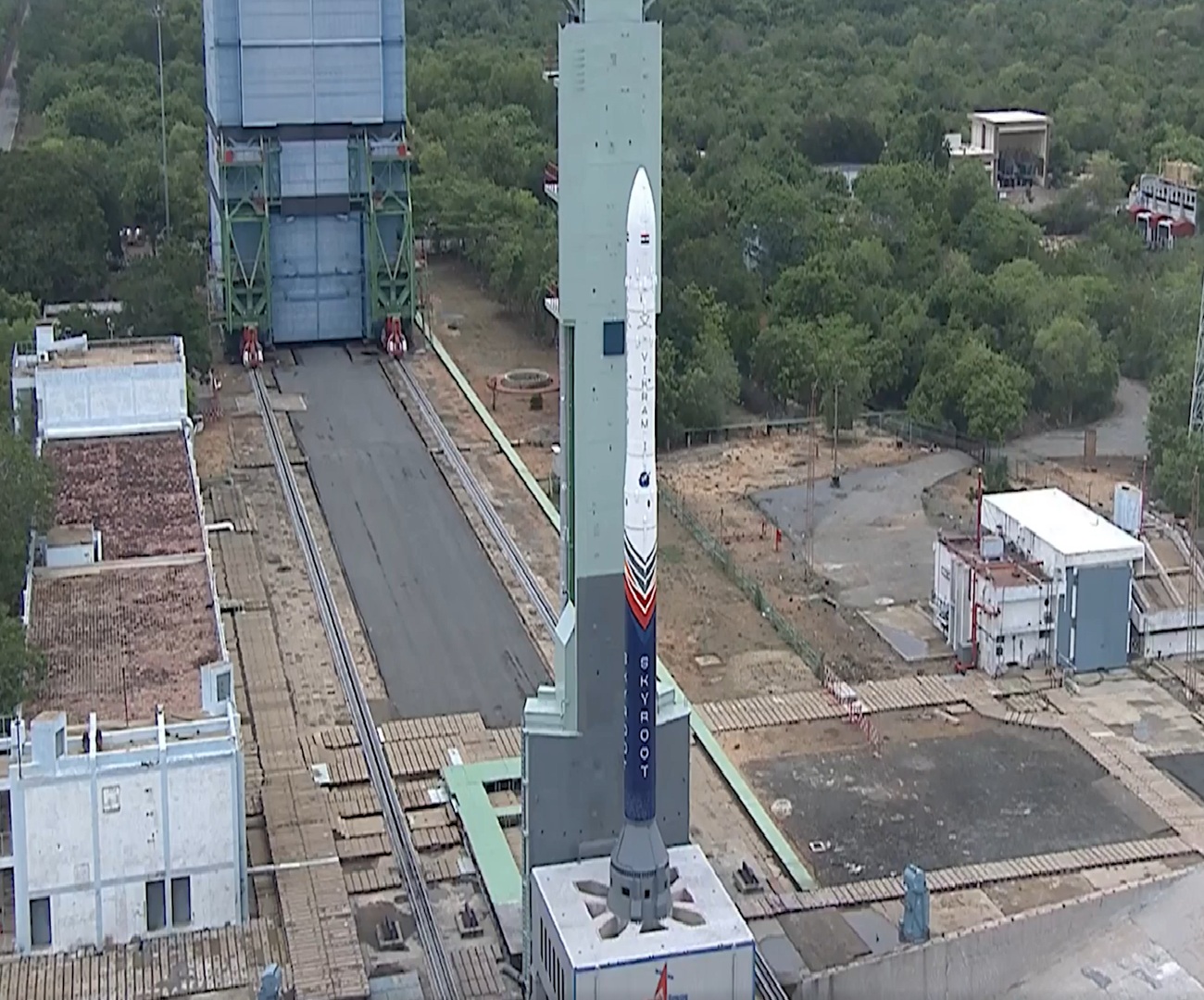
The historic Skyroot Aerospace Vikram-1 launch took place successfully from Sriharikota on Saturday, July 18, 2026. Consequently, India officially entered the global commercial orbital market with massive momentum. The seven-storey-tall orbital rocket lifted off majestically at precisely 12:05 PM. Therefore, spectators witnessed a groundbreaking milestone for the domestic aerospace landscape.
🚨 𝗟𝗶𝗳𝘁𝗼𝗳𝗳 𝗼𝗳 𝗦𝗸𝘆𝗿𝗼𝗼𝘁 𝗔𝗲𝗿𝗼𝘀𝗽𝗮𝗰𝗲’𝘀 𝗩𝗶𝗸𝗿𝗮𝗺-𝟭 𝗿𝗼𝗰𝗸𝗲𝘁 𝗮𝘁 𝟭𝟮:𝟬𝟱 𝗣𝗠 𝗜𝗦𝗧 𝗳𝗿𝗼𝗺 𝘁𝗵𝗲 𝗙𝗶𝗿𝘀𝘁 𝗟𝗮𝘂𝗻𝗰𝗵 𝗣𝗮𝗱 𝗮𝘁 𝗦𝗛𝗔𝗥! 🚀
The era of commercial spaceflight has begun in India 🇮🇳#Skyroot | #Vikram1 pic.twitter.com/yba2WRW1Ck
— ISRO Spaceflight (@ISROSpaceflight) July 18, 2026
Additionally, the spacecraft deployed multiple technology demonstration payloads into a low Earth orbit. The vehicle successfully reached its targeted altitude of 450 kilometers. Meanwhile, the entire team at the Satish Dhawan Space Centre celebrated this flawless execution. This inaugural orbital flight was appropriately named Mission Aagaman, which signifies a grand arrival.
Furthermore, this mission proves that local private enterprises can build world-class space infrastructure. Skyroot Aerospace has now become the first private Indian company to achieve an orbital launch. Historically, only the United States and China possessed such private space capabilities. However, India has now officially joined this elite global space club.
Also Read : Uttarakhand Halts Tree Felling for Rishikesh Highway Amid Public Outcry
Specifically, the rocket carried unique payloads that highlighted incredible engineering innovation. For example, the cargo included a lab-grown diamond named Diamond Lotus from Bengaluru. Moreover, a small robotic arm designed for orbital debris removal was safely deployed. This advanced robotic mechanism was created by Cosmoserve Space to promote space sustainability.
Additionally, the flight carried a handwritten postcard from Prime Minister Narendra Modi. The postcard proudly bore the inspiring national phrase “Vande Mataram” into orbit. Consequently, millions of citizens celebrated this deep emotional connection to the stars. These fascinating details illustrate why the Skyroot Aerospace Vikram-1 launch captures global attention.
Chandrababu Naidu Extends Warm Congratulations
Andhra Pradesh Chief Minister N Chandrababu Naidu expressed immense pride regarding this scientific triumph. Specifically, he congratulated the entire team on social media immediately after the launch. He stated that the successful flight proves India’s private sector matches global standards. This wave of optimism followed the flawless Skyroot Aerospace Vikram-1 launch from the east coast.
Moreover, Naidu thanked the Indian Space Research Organisation (ISRO) for their vital guidance. He also lauded the Indian National Space Promotion and Authorization Centre (IN-SPACe). Additionally, he praised NewSpace India Limited (NSIL) for supporting these bright young entrepreneurs. Therefore, the Chief Minister acknowledged the collaborative spirit driving this historic achievement.
Furthermore, Naidu emphasized that this launch marks the dawn of a vibrant new era. In this era, state institutions and private ingenuity merge seamlessly to push boundaries. Consequently, this success will surely inspire future generations of ambitious young innovators. The leader safely predicted that India’s journey to the stars will continue to soar.
Meanwhile, Prime Minister Narendra Modi also shared his enthusiastic support for the project. Previously, he had unveiled the flight-ready rocket configuration at the Infinity Campus. He noted that recent space sector reforms created remarkable opportunities for growth. Therefore, government backing clearly accelerated this monumental milestone for commercial space technology.
High-Tech Innovations Powering Vikram-1
The technical specifications of the vehicle reveal an extraordinary feat of modern engineering. Specifically, Vikram-1 is a four-stage, seven-storey-tall orbital rocket with massive lift capability. It utilizes an all-carbon composite airframe to minimize structural mass significantly. Thus, the lightweight design allows for maximum efficiency during intense orbital insertion.
Moreover, the first three stages rely entirely on powerful solid-fuel rocket boosters. However, the crucial fourth stage features a cutting-edge liquid propulsion system. This liquid upper stage functions as an advanced Orbital Adjustment Module. Conveniently, this module can start, stop, and restart multiple times in space.
Additionally, engineers utilized 3D-printed liquid engines to build this innovative upper stage. This additive manufacturing method reduces the overall number of complex components. Consequently, the production lead time drops by an impressive eighty percent. Therefore, the Skyroot Aerospace Vikram-1 launch highlights a major manufacturing shift.
Furthermore, the rocket successfully deployed the SOLARAS S3 satellite for Earth observation. It also successfully placed the SCOPE satellite into its precise low Earth orbit. These satellites will provide high-resolution intelligence data for various downstream applications. Hence, the commercial viability of this private vehicle is already firmly established.
A Turning Point for the Indian Space Ecosystem
Industry experts view this success as a massive turning point for commercial spaceflights. For instance, the Indian Space Association declared this mission a truly defining milestone. They noted that Skyroot Aerospace effectively shattered legacy boundaries with this flight. Accordingly, the domestic space industry is fully primed to manage complex missions.
Moreover, the global small satellite market suffers from a severe supply constraint. Meanwhile, the demand for dedicated commercial launch services continues to expand rapidly. Therefore, this new launch vehicle provides an affordable, on-demand solution for global clients. Skyroot Aerospace aims to establish a steady, predictable launch cadence very soon.
Additionally, the close partnership between ISRO and private startups deserves high praise. ISRO generously provided access to their advanced static test facilities at Sriharikota. Furthermore, their expert safety teams ensured secure operations around the clock. Consequently, this public-private synergy serves as a golden model for other industries.
In conclusion, the successful Skyroot Aerospace Vikram-1 launch opens vast economic opportunities. The country has solidified its reputation as a leading global technology hub. Young scientists now have a proven pathway to manifest their boldest dreams. As a result, India’s private space sector will undoubtedly reach magnificent new heights.