
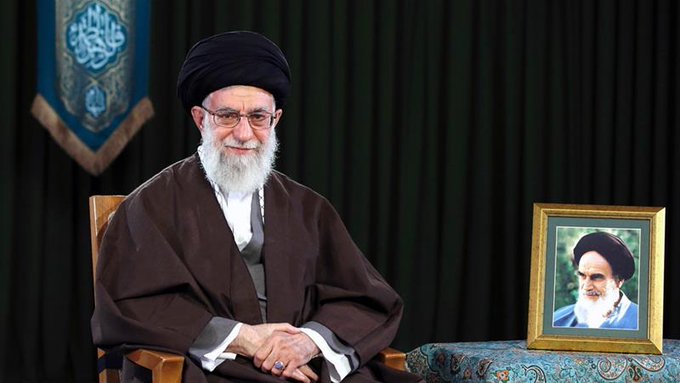
Who Is Ayatollah Ali Khamenei? Inside the Power, Wealth, and Future Succession of Iran’s Supreme Leader
Ayatollah Khamenei: Iran’s Supreme Leader, His Rise, Wealth, and the Future of His Succession
Ayatollah Ali Khamenei, the Supreme Leader of Iran, is one of the most powerful and enigmatic figures in the Middle East. Since assuming the role in 1989 after the death of Ayatollah Ruhollah Khomeini, Khamenei has held ultimate authority over Iran’s political, military, and religious institutions for over three decades.
As the second person to hold the office of Supreme Leader in the Islamic Republic, Khamenei’s influence stretches far beyond what is visible on paper. While Iran has a president and parliament, Khamenei exercises de facto control over all state affairs, from nuclear policy and foreign relations to domestic repression and clerical appointments.
Early Life and Rise to Power
Born on July 17, 1939, in Mashhad, northeastern Iran, Khamenei was raised in a religious family and trained as a cleric. He became involved in anti-Shah activism during the 1960s and was repeatedly imprisoned and exiled under the regime of Mohammad Reza Shah Pahlavi.
Khamenei was a close associate of Ayatollah Khomeini, the architect of the 1979 Islamic Revolution. After the revolution, Khamenei held several prominent positions, including President of Iran from 1981 to 1989, before being appointed Supreme Leader by the Assembly of Experts following Khomeini’s death.
Notably, he did not initially meet the traditional requirements for the position, such as being a Grand Ayatollah. However, a political consensus emerged in his favor, largely due to his loyalty and alignment with the clerical establishment.
How Powerful Is Khamenei?
As Supreme Leader, Khamenei wields absolute authority over:
- The Iranian Armed Forces, including the Revolutionary Guards (IRGC)
- The judiciary, which answers directly to him
- The Guardian Council, which vets electoral candidates
- All major decisions in foreign policy and nuclear strategy
- State media and religious foundations (bonyads)
This control makes him more influential than the president or any elected official in Iran. According to Iran’s constitution, the Supreme Leader has final say over all matters of state, both spiritual and temporal.
What Is Ayatollah Khamenei’s Net Worth?
While exact figures are difficult to verify due to Iran’s lack of financial transparency, several investigative reports have claimed that Khamenei controls a financial empire worth tens of billions of dollars.
One 2013 Reuters investigation found that Setad Ejraiye Farmane Hazrate Emam, an organization under his direct control, manages assets reportedly exceeding $95 billion USD, spanning real estate, business holdings, and confiscated properties.
Critics argue that Setad and other foundations operate with little oversight, enabling Khamenei to maintain financial leverage across the Iranian economy. Officially, neither the Supreme Leader’s office nor Iranian authorities have confirmed any personal wealth figures.
Succession: Who Could Replace Khamenei?
At 85 years old, Ayatollah Khamenei’s health and future remain key concerns for Iran’s leadership. The question of succession is highly guarded, but several names frequently surface in speculation:
- Mojtaba Khamenei
Khamenei’s son, Mojtaba, is a powerful cleric with close ties to the IRGC and influential conservative clerics. Critics warn that his ascension could signal the rise of a hereditary theocracy.
- Ebrahim Raisi
Current President of Iran and former judiciary chief, Raisi is considered a potential successor. His hardline credentials, loyalty to Khamenei, and leadership experience make him a likely candidate, although his legitimacy is questioned due to past involvement in political executions.
- Ayatollah Mahmoud Hashemi Shahroudi (Deceased)
Before his death in 2018, Shahroudi was seen as a top contender. His passing highlighted the unpredictability and secrecy surrounding the succession process.
The Assembly of Experts, a body of clerics elected to an 8-year term, is constitutionally responsible for choosing the next Supreme Leader. However, many members are closely aligned with Khamenei’s conservative camp, raising questions about the transparency and competitiveness of the process.
What Lies Ahead for Iran?
Khamenei’s eventual departure will mark a turning point in Iran’s history. As the Islamic Republic faces economic pressure, widespread protests, and diplomatic isolation, the choice of his successor will shape the country’s trajectory for decades.
Analysts argue that any transition could open a rare window for reform or instability, depending on the political alignment of the next Supreme Leader. The balance between the IRGC, the clergy, and the conservative establishment will be critical.