
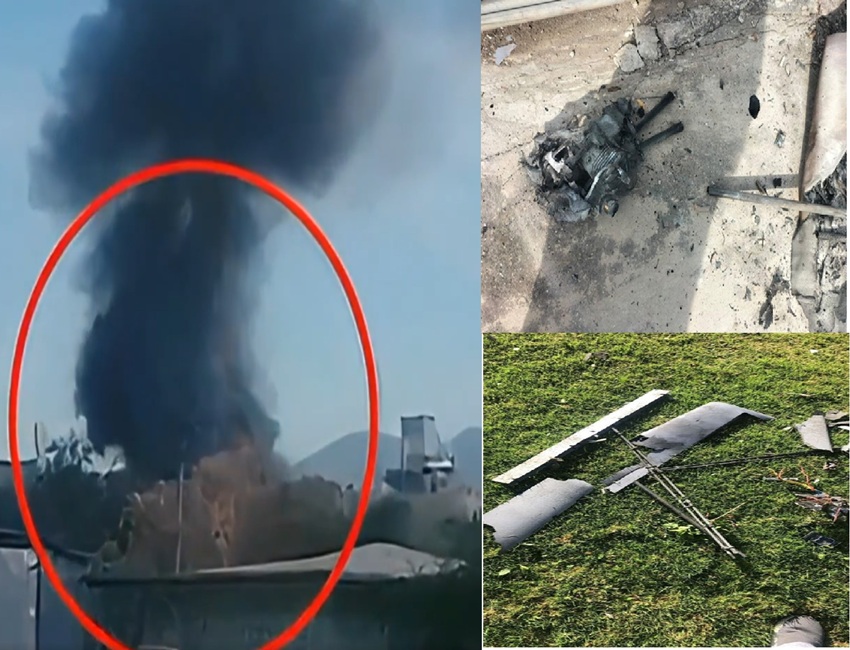
KOHAT, Pakistan – The cross-border conflict between Pakistan and Afghanistan reached a dangerous new threshold on Friday, March 13, 2026. The Taliban government claimed responsibility for a series of drone strikes targeting the Kohat Army Camp in Khyber Pakhtunkhwa. This bold retaliation follows a night of intensive Pakistani aerial operations that reportedly struck high-value targets deep within Afghan territory, including the capital city of Kabul.
Taliban Retaliates with Drone Strikes on Kohat Garrison
The Afghan Ministry of National Defense confirmed that its forces deployed suicide drones against the Kohat military cantonment. This facility is a historic garrison town and a primary hub for the Pakistan Army’s 9th Infantry Division. Taliban officials stated that the strikes specifically targeted the Kohat Fort, a command center for combat operations, and residential facilities for senior military officers.
Also Read : US Denies IRGC Claims of Ballistic Missile Strike on USS Abraham Lincoln
However, Pakistani security officials have challenged the Taliban’s claims of “heavy human casualties.” Islamabad reported that its air defense systems successfully intercepted three “rudimentary drones” before they could impact their primary targets. While the military infrastructure remained largely intact, falling debris caused minor injuries to at least two civilians in the surrounding areas.
Operation Ghazab Lil Haq: Pakistan’s “Precision Strikes”
The drone attack on Kohat was a direct response to Pakistan’s renewed aerial campaign, dubbed Operation Ghazab Lil Haq (Righteous Fury). On Thursday night, Pakistani fighter jets conducted what Islamabad termed “precision strikes” against militant infrastructure. The targets included a corps headquarters and an ammunition dump in Kabul, as well as a militant training camp and an oil storage facility near the Kandahar airfield.
Afghan government spokesperson Zabihullah Mujahid condemned the strikes, alleging they hit civilian homes and a fuel depot belonging to Kam Air, a private airline that services United Nations aircraft. According to Kabul police, at least four civilians, including women and children, were killed in the Guzar area of Kabul’s 21st district. In a statement on X, Mujahid warned that this “oppression will not go unanswered.”
Durand Line Tensions and the Global Economic Impact
The escalating war along the Durand Line has effectively frozen diplomatic efforts to stabilize the region. Pakistan maintains that the Taliban continues to provide safe haven to the Tehreek-e-Taliban Pakistan (TTP), a group Islamabad blames for a surge in domestic terrorism. Conversely, the Taliban denies these charges, framing the militancy as an internal Pakistani issue.
The conflict is also creating ripples in the global energy market. As both nations exchange strikes near critical infrastructure, including oil storage sites, regional trade has ground to a halt. Analysts warn that if the fighting continues, it could destabilize the broader South Asian corridor, complicating major regional economic projects.