
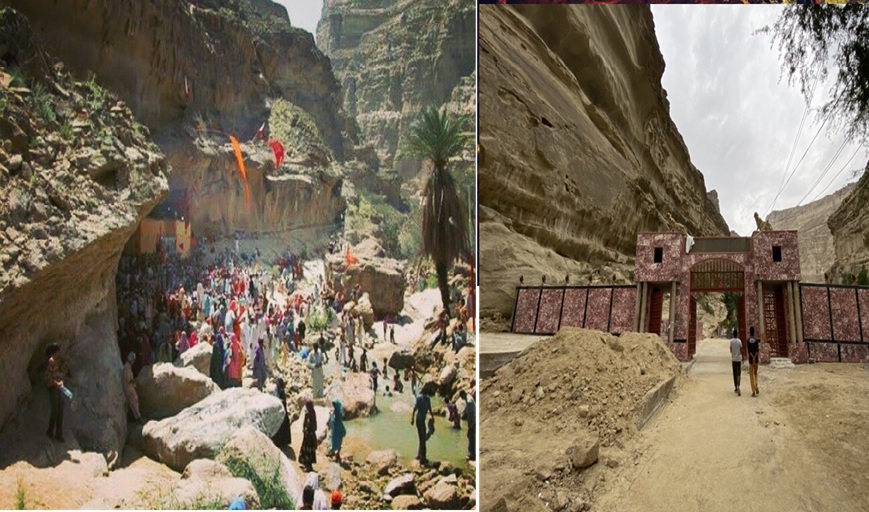
Pakistani Muslim worship Hindu Shakti Peetha in Balochistan
A Hindu Shrine in a Muslim Heartland
Balochistan : Nestled within Pakistan’s rugged Hingol National Park in Balochistan lies the sacred Hinglaj Mata Temple. Known locally as ‘Nani Mandir’, this ancient cave shrine is one of the 51 Shakti Peethas in Hinduism. Remarkably, it’s not only protected but also revered by the local Muslim communities of Balochistan, a living testament to syncretic faith in South Asia.
Hinglaj Mata Temple has become more than a religious site. It’s a beacon of communal harmony where faith transcends religious identity. For the nomadic Baloch Muslims, she is a guardian spirit—an ancestral protector they call Nani, meaning grandmother.
Mythology and Geography: The Sacred Origins
Where Sati’s Head Fell
According to Hindu mythology, Hinglaj Mata marks the spot where Goddess Sati’s head fell after Lord Vishnu dismembered her body to calm a grieving Lord Shiva. Each location where her body parts landed became a Shakti Peetha—sites of immense spiritual energy. Hinglaj, believed to be the resting place of Sati’s head, is thus among the holiest.
The temple is located approximately 250 kilometers from Karachi, deep inside the mountainous terrains of Hingol National Park. Pilgrims must traverse desert valleys, salt flats, and dry riverbeds—often barefoot—to reach the site. The journey, called Hinglaj Yatra, is considered a major spiritual undertaking.
The Yatra: A Pilgrimage of Devotion and Endurance
A Journey Through Fire and Faith
For centuries, Hindu devotees—especially Sindhi and Baloch Hindus—have braved the harsh terrain of Balochistan to perform the annual Hinglaj Yatra. Walking for three to four days in groups known as Sangars, they sing devotional hymns and carry saffron flags as they cross the unforgiving landscape.
Many Sindhi Hindus, even after migrating to India post-Partition, still regard Hinglaj Mata as their Kuldevi (family goddess). Despite borders and politics, faith continues to unite them with their spiritual homeland.
Local Muslim Reverence: Nani Mandir’s Unique Role
A Shrine Shared by All
What sets Hinglaj Mata apart from other Shakti Peethas is the deep-rooted respect it commands from local Muslims. To the Baloch tribes, Hinglaj Mata is Nani, the benevolent protector of their land, livestock, and lives.
During the Yatra, local Muslims open their homes to pilgrims, provide food and water, and guide them through the desert. Their reverence is not ceremonial but deeply spiritual. Legends abound of divine retribution against anyone who attempts to harm the temple, strengthening local belief in her protective powers.
Miracles and Rituals: The Hingol River Connection
Healing Waters and Sacred Threads
Before entering the cave shrine, pilgrims bathe in the Hingol River. The water, believed to be sacred, is said to have healing properties. Despite the region’s arid climate, the river never runs dry—something locals attribute to Nani’s divine grace.
Even Muslim families occasionally tie threads on nearby trees or make silent prayers for the health and well-being of their loved ones. These shared practices highlight a deeper unity in belief, one that blurs the lines between Hinduism and Islam.
Before Borders: A Legacy That Lives On
Pre-Partition Pilgrimages
Before 1947, pilgrims from Sindh, Punjab, and Gujarat traveled freely to Hinglaj. Though the creation of Pakistan made such journeys difficult, the shrine’s sacredness has endured. The caretakers today are primarily Muslim, who ensure that rituals continue uninterrupted and the site remains untouched by vandals or extremists.
Hinglaj Mata Temple has thus evolved into more than a religious symbol. It represents the enduring spirit of cultural and religious co-existence in a region often portrayed through the lens of conflict.
A Living Example of Syncretism
Scholars and interfaith activists view Hinglaj Mata as a prime example of South Asia’s pluralistic traditions. It embodies how folk beliefs, Sufi influences, and local customs blend into a spiritual fabric that is inclusive rather than divisive.
At a time when religious intolerance and identity politics dominate headlines, Hinglaj Mata’s story serves as a powerful reminder that faith can unite just as strongly as it divides.