
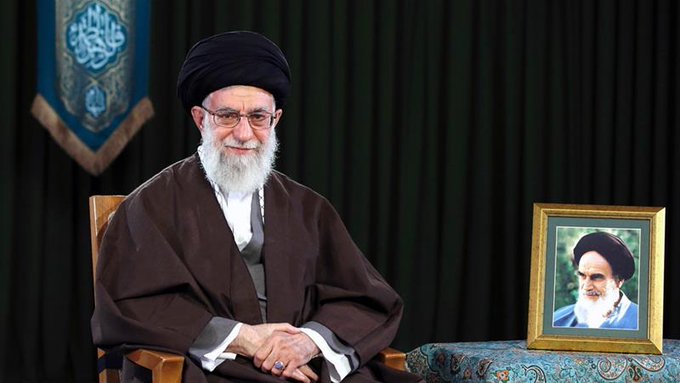
Khamenei Names Successors, Retreats to Bunker as Israeli Strikes Ravage Iran
Tehran, June 21 – As Israeli airstrikes rock the Iranian capital in one of the most intense military campaigns in decades, Supreme Leader Ayatollah Ali Khamenei has taken extraordinary steps to preserve the continuity of the Islamic Republic. According to a report by The New York Times, the 86-year-old cleric has moved to a secure underground bunker, suspended electronic communications, and preemptively named his potential successors — signaling deep internal anxiety about leadership survival in the face of all-out war.
Iran’s Supreme Leader Under Siege
Officials in Tehran confirm that Ayatollah Khamenei is now communicating exclusively through a trusted aide, avoiding all electronic devices to evade surveillance or targeted strikes. Amid fears of assassination, he has designated three senior clerics as potential successors and tasked the Assembly of Experts to act swiftly in the event of his death.
This is the first time in Iran’s post-revolution history that a living supreme leader has prepared for immediate succession under wartime conditions. The move underscores the gravity of the crisis, which officials describe as the worst military assault since the Iran-Iraq War of the 1980s.
Israeli Bombardment Devastates Tehran
In recent days, Israeli airstrikes have destroyed key infrastructure, including military bases, nuclear research centers, and major urban facilities in and around Tehran. Iranian officials state that more damage has been inflicted in a single week than during the eight-year war with Iraq. The situation has pushed the regime to the edge, forcing emergency action to stabilize leadership and morale.
Fighting a War on Two Fronts
Iran’s military is battling on both domestic and foreign fronts. In addition to Israeli jets, covert Israeli drone teams have reportedly launched attacks from within Iran — a revelation that indicates major intelligence failures and has led to widespread paranoia inside Iranian command circles.
The Ministry of Intelligence has issued sweeping internal restrictions:
- Communication blackouts
- Grounding of senior officials
- Mandatory citizen surveillance
- Harsh penalties for suspected collaboration
Multiple senior military commanders have been killed, prompting the immediate installation of contingency appointments to maintain chain-of-command continuity.
US Intervention Looms
Iranian leaders are deeply concerned about the potential involvement of the United States, especially with reports that the Pentagon may deploy its 30,000-pound bunker-buster bomb capable of reaching Iran’s most fortified nuclear facility at Fordo.
While Tehran has vowed retaliation, many within its leadership acknowledge that a direct conflict with the US could escalate the war to catastrophic levels. Iran’s air defenses are already stretched thin, and any strike from the US would likely inflict irreparable strategic damage.
Succession Planning Breaks Political Taboo
Traditionally a sensitive and secretive topic, succession is now a top priority in Tehran. Mojtaba Khamenei, the Supreme Leader’s son, has reportedly been excluded from consideration, despite previous speculation. With President Ebrahim Raisi’s death in a helicopter crash in 2024, the field of viable successors has narrowed.
The Assembly of Experts has been instructed to act with urgency should Khamenei be killed, ensuring that no power vacuum emerges.
Tehran Under Lockdown
The capital city is nearly paralyzed.
- Internet shutdowns,
- Road checkpoints,
- Suspended foreign communications,
have created an atmosphere of wartime lockdown.
Despite the chaos, civic solidarity is on display. Social media videos show Tehranis rationing food, helping neighbors, and expressing support for national unity.
Unexpected National Unity Amid Crisis
Critics and reformists, including jailed Nobel laureate Narges Mohammadi, have condemned the Israeli strikes despite their opposition to the regime.
“Democracy cannot come through violence and war,” Mohammadi told the BBC.
Her comments reflect a rally-around-the-flag moment, as the Iranian populace unites under threat — setting aside political divides in the face of what many describe as a war for national survival.