
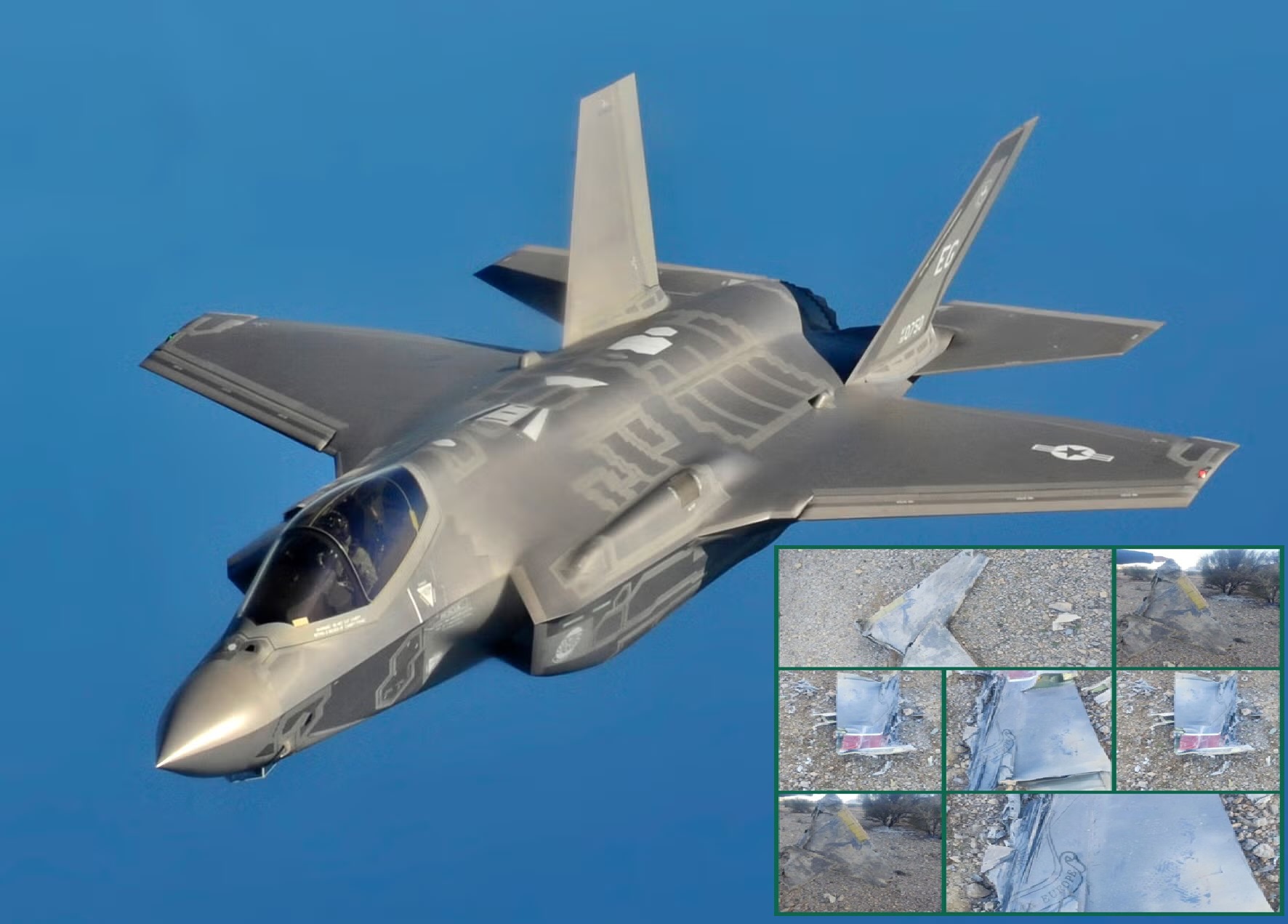
TEHRAN — Tensions in the Middle East reached a new peak on Friday, April 3, 2026. The Islamic Revolution Guards Corps (IRGC) claimed that Iran shoots down second US F-35 fighter jet within the last twelve hours. According to state-affiliated media, the advanced stealth aircraft was intercepted over central Iran. Military officials reported that the jet belonged to the Lakenheath squadron. They further asserted that the aircraft was completely destroyed upon impact. Consequently, the IRGC noted that the survival of the pilot remains highly unlikely due to the nature of the crash.
This claim comes as the conflict, dubbed Operation Epic Fury, enters its sixth week of intense aerial and missile exchanges. While the US Central Command (CENTCOM) has not yet officially confirmed this specific loss, the report has already sent shockwaves through global defense circles. Earlier in March, CENTCOM did confirm a significant “friendly fire” incident in Kuwait. In that event, Kuwaiti air defenses mistakenly downed three U.S. F-15E Strike Eagles during an Iranian drone swarm.
Escalation of Operation Epic Fury
The current military campaign began on February 28, following a series of high-profile assassinations and retaliatory strikes. Operation Epic Fury aims to dismantle the security apparatus of the Iranian regime. Despite the reported loss of the stealth jet, CENTCOM Commander Admiral Brad Cooper recently expressed confidence in the mission’s progress. He stated that the coalition has achieved significant “space superiority,” which is a critical enabler in modern high-tech warfare.
However, the reported news that Iran shoots down second US F-35 suggests that Iranian air defenses remain a potent threat. The IRGC claims to be using a “new advanced defense system” specifically designed to track low-observable targets. If verified, these losses would mark a historic challenge to the perceived invincibility of fifth-generation stealth technology. The F-35 program, which costs approximately $450 billion, relies heavily on its ability to evade radar.
Also Read : Where Is Iran’s Supreme Leader Mojtaba Khamenei? Russian Envoy Confirms He Is in Iran
Retaliatory Missile Strikes on Tel Aviv and Eilat
Simultaneous with the reports from central Iran, the IRGC launched a massive wave of long-range missiles toward Israel. On Friday morning, sirens blared across Tel Aviv and the southern port city of Eilat. The Israeli military confirmed that it identified several incoming threats from Iranian territory. In response, Israel’s multi-layered defense systems, including the Arrow and David’s Sling, were activated to intercept the missiles.
The Iranian military’s central command, Khatam Al-Anbiya, stated that these strikes target both Israeli cities and US regional bases. This follows a pattern of high-frequency retaliatory operations characterized by drone swarms and ballistic missile volleys. Moreover, the US has recently deployed additional A-10 attack jets and the USS George H.W. Bush aircraft carrier to the region. These reinforcements aim to provide better counter-drone capabilities and maintain maritime security in the Strait of Hormuz.
The Strategic Significance of the F-35 Loss
The F-35 Lightning II is the cornerstone of modern Western air power. It functions as a “quarterback” in the sky, fusing data from various sensors to provide a real-time battlefield view. Therefore, a successful strike against this platform raises serious questions about current electronic warfare capabilities. Each jet costs over $100 million, making any loss a significant financial and strategic blow to the coalition’s aerial campaign.
As the situation develops, the international community remains on high alert. President Trump previously briefed the nation that strikes would continue until all operational objectives are met. However, if the news that Iran shoots down second US F-35 is confirmed by the Pentagon, it may force a tactical shift in how stealth assets are utilized. For now, the skies over central Iran remain a highly contested and deadly combat zone.