
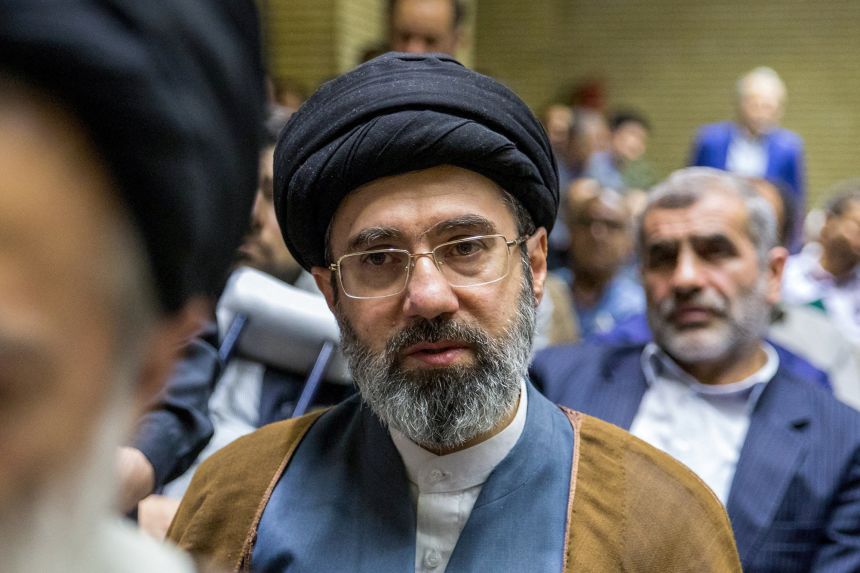
Tehran: Since being appointed Iran’s new supreme leader nearly a month ago, Mojtaba Khamenei has remained absent from public view, deepening questions about his health and status as international attention remains focused on Iran’s response to ongoing conflict. Although several written statements attributed to him have been released and broadcast on state television, the lack of appearances by Mojtaba Khamenei has fueled intense speculation about his condition and leadership role.
Russian Envoy Issues Statement on Mojtaba Khamenei
Addressing rumors, the Russian ambassador to Tehran confirmed that Mojtaba Khamenei is in Iran and has not been flown abroad for medical treatment. Alexey Dedov told media outlets that while the supreme leader is in the country, he has been avoiding public appearances “for understandable reasons” amid ongoing tensions.
Officials have not provided specific details on why Mojtaba Khamenei has stayed out of the public spotlight, but the repeated confirmations that he remains in Iran aim to quell speculation that he might be elsewhere or incapacitated.
Background of Mojtaba Khamenei’s Rise
Mojtaba Khamenei assumed the position of Supreme Leader on March 8, 2026, after the death of his father, former supreme leader Ayatollah Ali Khamenei, who was killed during airstrikes by US and Israeli forces late last month. The Assembly of Experts formally elected him as the third supreme leader under Iran’s constitution, despite ongoing debate about his visibility and role.
Before becoming supreme leader, Mojtaba was a cleric with longstanding ties to Iran’s political and security apparatus, including influence within the Islamic Revolutionary Guard Corps and other internal power structures. His appointment has already sparked deep discussion at home and abroad about continuity of leadership during the war.
Continued Silence Raises Questions
Despite official reassurances, the ongoing absence of Mojtaba Khamenei from public view continues to raise questions about direct leadership in Tehran during a critical moment of conflict. Some global analysts note that while state media publish occasional messages or statements attributed to him, the lack of public appearances contributes to uncertainty about who is actually directing key strategic decisions.
Also read : Former Nepal PM KP Sharma Oli Arrested Over 2025 Gen Z Protest Crackdown
Meanwhile, Iran’s government and security apparatus have maintained that military operations and political leadership remain intact. The written messages from Mojtaba Khamenei have been used to reaffirm alliances and policy positions, including support for regional allies, which indicates efforts to project continuity despite his absence from public audiences.
What This Means for Iran’s Leadership
Observers argue that while the office of the supreme leader remains constitutionally central to Iran’s governance, the ongoing invisibility of Mojtaba Khamenei underscores the increasing power of institutional and security bodies such as the IRGC and other senior clerics. This shift suggests that public presence may be strategically downplayed as Iran navigates the complexities of war and international pressure.