
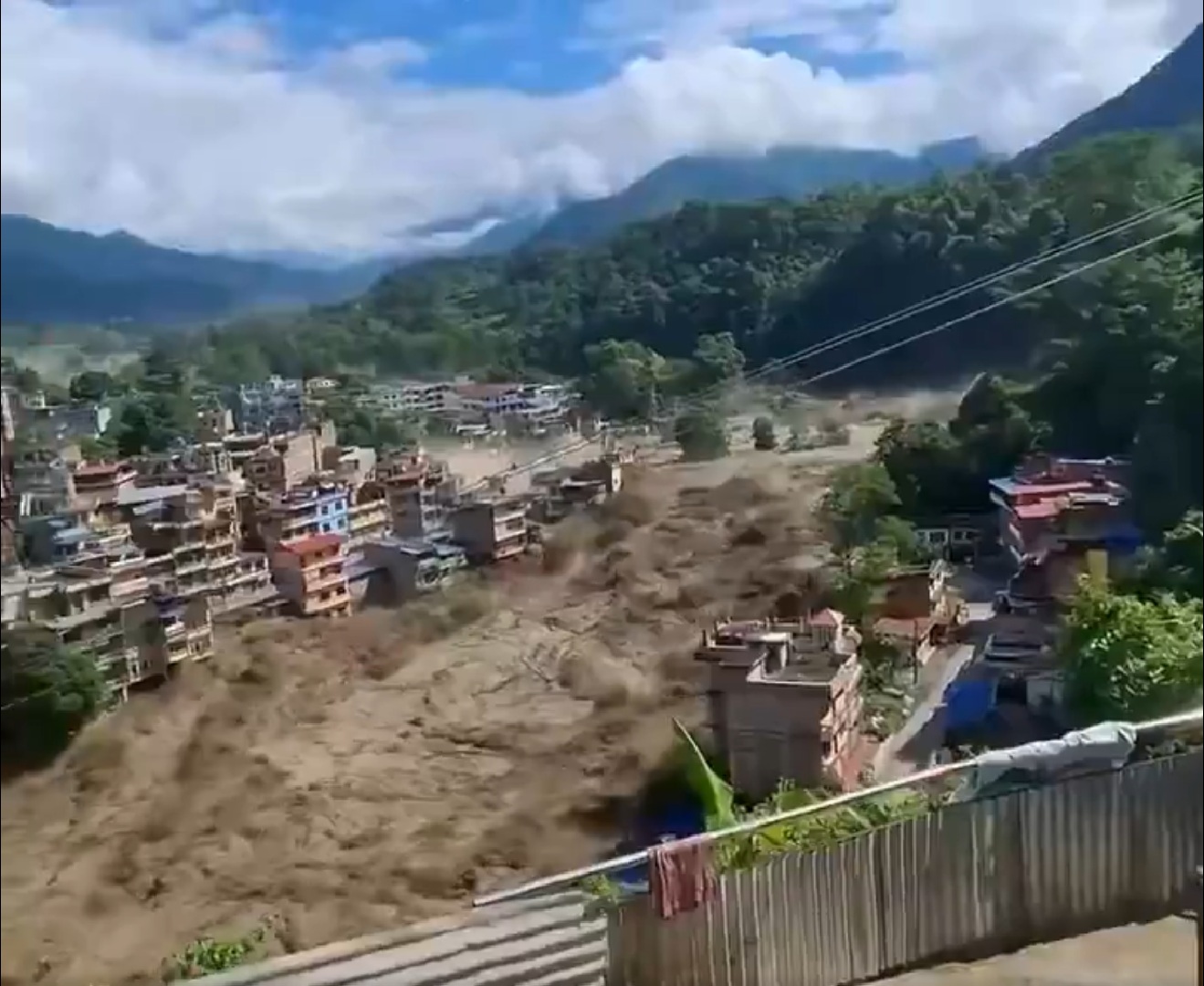
A sudden catastrophe caused massive destruction in Nepal on August 26, 2026, after a massive glacial collapse occurred near the Nepal-Tibet border. The event unleashed millions of tons of mud, ice, and debris into the Lhende Khola. This debris-laden surge rapidly entered the Bhote Koshi and Trishuli river systems.
What caused the massive destruction in Nepal on August 26, 2026? A glacial collapse sent a 9-meter wall of water down the Trishuli River, leaving over 160 dead. Details & updates here! 🚨🏔️https://t.co/pGjfKhNWL2#NepalFloods #RasuwaDisaster #Himalayas #GlacialCollapse… pic.twitter.com/pWjxNy14MU
— India This Week (@indiathisweekk) August 27, 2026
The sudden flood destroyed entire towns across the northern Rasuwa and Nuwakot districts. Officials confirm over 160 deaths, while more than 1,000 people remain missing. Many tourists and foreign pilgrims were trapped along popular trekking and pilgrimage routes when the wall of water struck.
Also Read : Mojtaba Khamenei Health Status Fuels Speculation Amid Unseen Iran Leadership
What Caused the Sudden Glacial Collapse?
Scientists believe a colossal ice avalanche measuring roughly 2,000 feet in width collapsed high in the Himalayas. The sheer velocity of the fall melted ice instantly and created massive displacement downwards. The resulting seismic wave registered as a 5.2-magnitude event on long-period monitoring sensors.
The water level along the Trishuli River rose by nine meters within just 30 minutes. This extraordinary rise confirms an upstream glacial break rather than standard monsoon rain accumulation. Furthermore, hydrologists continue to inspect the upper catchment to ensure no secondary landslide dams remain.
Timure and Syabrubesi Face Unprecedented Devastation
The floodwaters destroyed the riverside settlement of Timure Bazaar and the Rasuwagadhi customs office at the border. Witnesses saw a wall of brown mud sweep away buses, multi-story buildings, and concrete bridges within seconds. The surge also battered the gateway town of Syabrubesi.
The massive destruction in Nepal on August 26, 2026, severely crippled national infrastructure. Crucial road links connecting Kathmandu to China were completely severed. Additionally, major hydroelectric plants—including the 111-MW Rasuwagadhi project—sustained severe structural damage.
Emergency Search and Rescue Efforts Underway
The Nepalese government deployed security forces to carry out urgent search operations. The Nepal Army and rescue teams are utilizing military helicopters to reach isolated mountain valleys. Meanwhile, neighboring authorities in Tibet mobilized rescue units to search the border region.
Relief teams face immense challenges due to destroyed motorable bridges and blocked highways. International emergency agencies are actively monitoring downstream river corridors to prevent further loss of life. As search efforts continue, experts stress the urgent need for real-time mountain hazard monitoring across the fragile Himalayan belt.