
Punjab : For decades, construction workers in Punjab remained among the most overlooked sections of society. While they built the state’s roads, schools, hospitals and homes, they continued to live in hardship, struggling with delayed welfare benefits and a system weighed down by bureaucracy. Under the Bhagwant Mann-led Punjab Government, this situation has begun to change in a concrete and measurable manner.
The shift has been driven by a clear change in governance approach. Instead of requiring workers to chase paperwork and approvals, the state has restructured the welfare delivery system itself. The Punjab Building and Other Construction Workers’ Welfare Board (BOCW), which serves nearly two lakh registered construction workers, has been overhauled to function with greater speed, transparency and accountability.
Structural Reforms and Technology-Driven Delivery
When the new government assumed office, welfare benefits took an average of more than 200 days to be processed, while labour cards remained valid for just one year. Many workers were left uncertain about whether support would ever reach them. Rather than making minor adjustments, the government opted for structural reforms by removing unnecessary conditions and simplifying procedures across multiple schemes.
One significant change was the removal of the Bal Aadhaar requirement for maternity benefits, which had earlier forced families to obtain Aadhaar for newborns simply to access financial support. Application processes across 14 schemes were simplified, reducing multiple approval layers. Departments now share data internally, ensuring workers are not repeatedly asked to submit documents already available with the government.
Also read : Punjab Police Cracks Down on Gangsters and Drugs in ‘Gangstran Te Vaar’ Campaign
Earlier, construction workers had to make repeated visits to schools and government offices for education-related benefits and Aadhaar verification, often losing daily wages in the process. With the system now fully digital, Aadhaar verification and linkage take place automatically, eliminating the need for physical visits. Health insurance coverage for registered workers has also been enhanced to ₹10 lakh, allowing cashless treatment across hospitals without paperwork during emergencies.
Measurable Impact and Growing Coverage
The impact of these reforms is clearly visible. Average processing time for welfare benefits has been reduced by nearly 64 percent, falling from over 200 days to around 73 days, with further reductions expected. Welfare disbursement has increased significantly, rising from ₹93 crore in 2020–21 to ₹125 crore in the first three quarters of 2025–26, with projections crossing ₹150 crore by the end of the financial year.
Also read : Sanjeev Arora Announces Comprehensive Overhaul of Urban Local Bodies in Punjab
This year alone, more than 81,000 construction workers have received benefits—almost three times the earlier coverage. These improvements have enabled timely payment of school fees, smoother handling of medical emergencies without debt, marriage assistance through Shagun schemes, and long-term financial security for families through fixed deposits for newborn girls.
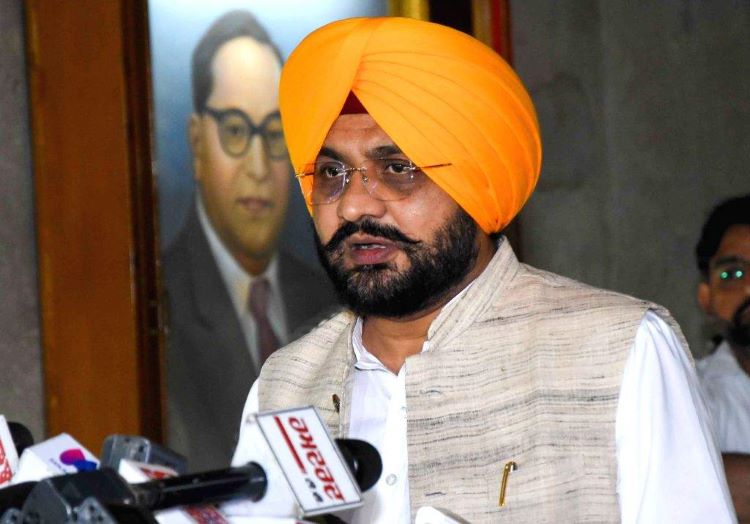
The recent Labour “Kirt” Conference further highlighted the government’s intent to strengthen welfare delivery at the ground level, including the launch of the BOCW Handbook to standardise processes. Labour Minister Tarunpreet Singh Sond stated that under Chief Minister Bhagwant Mann’s leadership, Punjab is not only building world-class infrastructure but also recognising and supporting the workers who build it, urging more construction workers to enrol with the BOCW Board.
At a time when labour welfare often remains confined to announcements, Punjab’s reforms stand out for their scale, seriousness and results. By prioritising dignity, efficiency and timely support, the state has demonstrated that welfare, when delivered effectively, becomes a matter of justice rather than charity.