
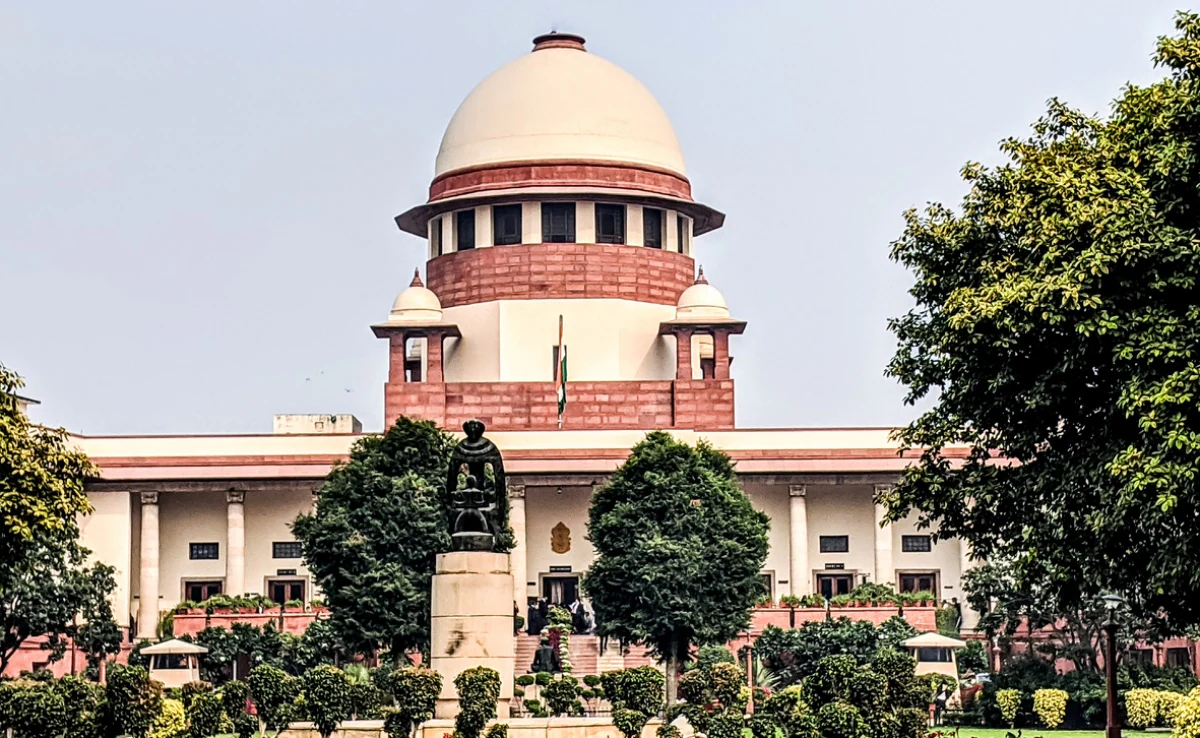
In a landmark judgment, the Supreme Court of India has ruled that adoptive mothers cannot be denied mothers maternity leave based on the age of the child. The decision reinforces the principle that adoption is equal to biological parenthood in the eyes of the law and ensures equal rights for all mothers.
Law Restricting Leave Declared Unconstitutional
A bench comprising Justice JB Pardiwala and Justice R Mahadevan struck down Section 60(4) of the Code on Social Security, 2020 as unconstitutional.
The provision had limited mothers maternity leave benefits to women adopting children below three months of age. The court observed that such a restriction was arbitrary and failed to acknowledge the realities of adoptive parenting.
Also read : BJP Candidate List West Bengal 2026: Suvendu Adhikari Fielded From Nandigram & Bhabanipur
This ruling ensures that mothers maternity leave is not denied based on outdated classifications.
Adoption Recognised as Equal Parenthood
While delivering the judgment, the court emphasised that biological connections alone do not define a family.
“Adoption is an equally valid pathway. It is not biology that constitutes, it is the shared meaning,” the bench stated.
The judges highlighted that adoptive mothers carry the same responsibilities and emotional commitments, making them equally deserving of mothers maternity leave, regardless of the child’s age.
12 Weeks Leave for All Adoptive Mothers
Following the verdict, adoptive mothers will now be entitled to 12 weeks of mothers maternity leave from the date of adoption, irrespective of the child’s age.
Under the Maternity Benefit Act, 1961, women are entitled to 26 weeks of paid maternity leave, but earlier provisions restricted adoptive mothers unless the child was under three months old.
The court’s decision removes this barrier, making mothers maternity leave more inclusive and aligned with constitutional rights.
Call for Paternity Leave Framework
The court also urged the government to introduce a statutory framework for paternity leave. Currently, there is no uniform policy in the private sector, while government employees receive limited benefits.
The bench noted that expanding parental leave policies alongside mothers maternity leave would better support modern family structures.
A Progressive Step for Parental Rights
The ruling by the Supreme Court of India is being seen as a progressive move toward inclusive family rights. By ensuring equal access to mothers maternity leave, the court has strengthened legal protections for adoptive families and reaffirmed that all forms of parenthood deserve equal recognition.