
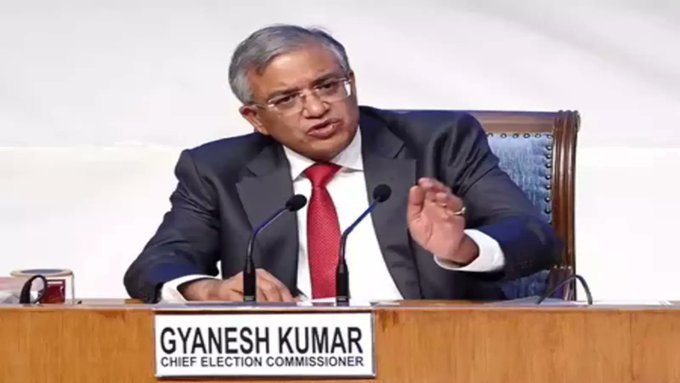
NEW DELHI — The political atmosphere in the capital has turned volatile as opposition parties prepare a second attempt to remove CEC Gyanesh Kumar. Following the historic defeat of the Constitution (131st Amendment) Bill, 2026, in the Lok Sabha, senior leaders from the INDIA bloc are now collaborating on a fresh removal notice. Sources indicate that a core group of five senior MPs from the Congress, Trinamool Congress (TMC), Samajwadi Party, and DMK is currently drafting the motion. Unlike the previous attempt, which saw 193 signatories, the opposition now aims to gather at least 200 signatures to demonstrate a stronger legislative consensus.
This move follows the rejection of an earlier notice by Lok Sabha Speaker Om Birla and Rajya Sabha Chairman C.P. Radhakrishnan on April 6. The presiding officers then ruled that the allegations did not meet the “high constitutional bar” for “proved misbehaviour.” However, the opposition remains undeterred. They argue that the recent parliamentary victory against the government’s seat-redistribution plan provides the necessary momentum. Consequently, they intend to present the new notice by early next week, likely targeting both Houses of Parliament simultaneously.
Allegations of Executive Influence and Mass Disenfranchisement
The heart of the opposition’s grievance lies in the perceived compromise of the Election Commission’s independence. They allege that CEC Gyanesh Kumar has consistently acted under executive influence since his politically charged appointment. A major point of contention is the Special Intensive Revision (SIR) exercise recently conducted in Bihar and West Bengal. Opposition leaders claim this process led to the large-scale deletion of eligible voters, particularly from vulnerable groups and minority communities.
Read More : Tangkhul Naga Body Warns of Strong Response After Deadly Ukhrul Ambush
In West Bengal alone, reports suggest nearly 91 lakh names were shaved off the electoral rolls. The opposition labels this as a “systemic disenfranchisement” disguised as a purity drive. Furthermore, the draft notice reportedly cites a “graded response” approach by the Commission. Leaders argue that while opposition candidates face swift censures, violations by the ruling party often receive delayed or lenient treatment. These actions, they claim, constitute a clear failure to uphold constitutional integrity during a critical election year.
Presiding Officers Demand Specific Proof of Misconduct
Despite the mounting political pressure, the path to removing a Chief Election Commissioner is notoriously difficult. Under Articles 324(5) and 124(4) of the Constitution, a CEC can only be removed through a process similar to that of a Supreme Court judge. In their previous 17-page rejection note, the presiding officers noted that administrative disagreements do not equate to intentional misuse of power. They asserted that electoral roll updates fall within the commission’s duties and are open to judicial scrutiny.
The Speaker and Chairman further argued that many issues raised by the opposition were either speculative or already under judicial consideration. For example, they noted that differences in public statements do not provide sufficient evidence of misconduct. Therefore, the opposition’s new strategy reportedly focuses on gathering “specific and demonstrable” evidence. They are currently compiling internal commission data and court observations to bolster their case before the next submission.
The Road Ahead: A High-Stakes Constitutional Battle
The timing of this renewed push is critical. With the final phases of the 2026 Assembly elections approaching, the credibility of the Election Commission is under intense global scrutiny. If the opposition manages to cross the 200-signature mark, it will put significant pressure on the parliamentary chairs to admit the motion. Admitting such a motion would necessitate the formation of a joint inquiry committee, a first in India’s electoral history.
As the drafting continues, the government has dismissed the move as “politically motivated obstructionism.” Ministers have reiterated their faith in the independence of CEC Gyanesh Kumar and the electoral process. However, the opposition insists that their first step is to prove that the previous support for removal was not an underestimate. For the voters of India, this standoff represents a fundamental debate over the checks and balances that protect the world’s largest democracy.