
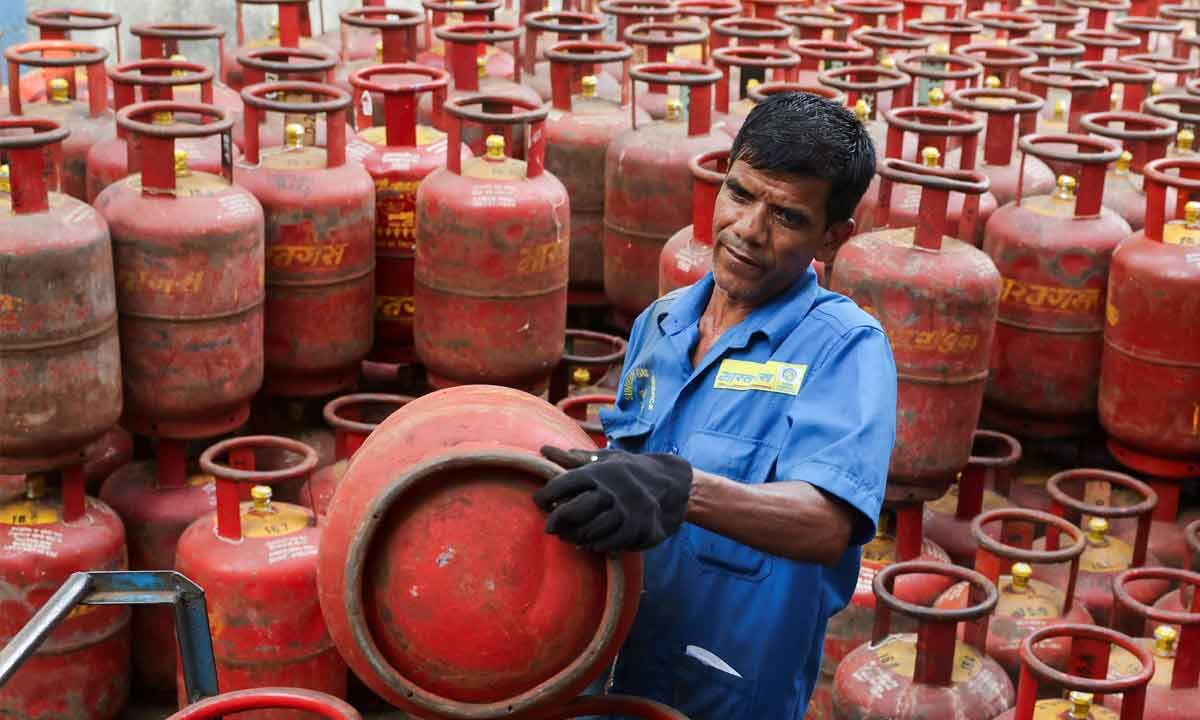
India is staring at a prolonged India LPG supply crisis, with full recovery of the supply chain likely to take up to four years, according to a senior government official. The disruption has been linked to geopolitical tensions in the Middle East, which have significantly impacted global energy routes.
The instability surrounding the Strait of Hormuz—a crucial passage that handles nearly 90% of India’s LPG imports—has emerged as a key concern. Although a temporary ceasefire is in place following tensions involving Iran, United States, and Israel, the situation remains fragile and continues to disrupt supplies.
A senior official stated that based on inputs from suppliers, restoration could take at least three years, and possibly longer. Some critical supply sources remain shut, although it is unclear whether production has completely stopped or reserves have been exhausted. This uncertainty is further deepening the India LPG supply crisis.
India depends on imports to meet nearly 60% of its LPG demand, with major supplies coming from Gulf countries such as the United Arab Emirates, Qatar, and Saudi Arabia. However, recent disruptions have reduced their contribution to about 55%, adding pressure on domestic availability and worsening the India LPG supply crisis.
LPG price hike hits households, small businesses as India LPG supply crisis worsens
The supply crunch has already impacted prices across the country. Domestic LPG cylinders have become costlier by ₹60, while commercial cylinders have seen a hike of ₹115. The rising prices are affecting households as well as sectors like hospitality and small businesses, and are also expected to increase the government’s subsidy burden amid the ongoing India LPG supply crisis.
In response, the government is pushing for a transition to Piped Natural Gas (PNG) in areas where infrastructure is available. Households have been encouraged to shift within a stipulated timeframe, as PNG offers a more stable and potentially economical alternative. However, adoption remains limited, with only about 1.6 crore households—around 12–13%—currently connected.
Also Read : TCS Nashik Suspends Seven Muslim Employees Amid Sexual Harassment Allegations
To accelerate the transition, the government is planning an investment of ₹5,000–6,000 crore to expand the PNG network, potentially covering up to half of the pipeline infrastructure costs. Additionally, alternative cooking solutions such as electric appliances, biogas, and green hydrogen are being explored to reduce dependence on imports and address the long-term challenges posed by the India LPG supply crisis.