
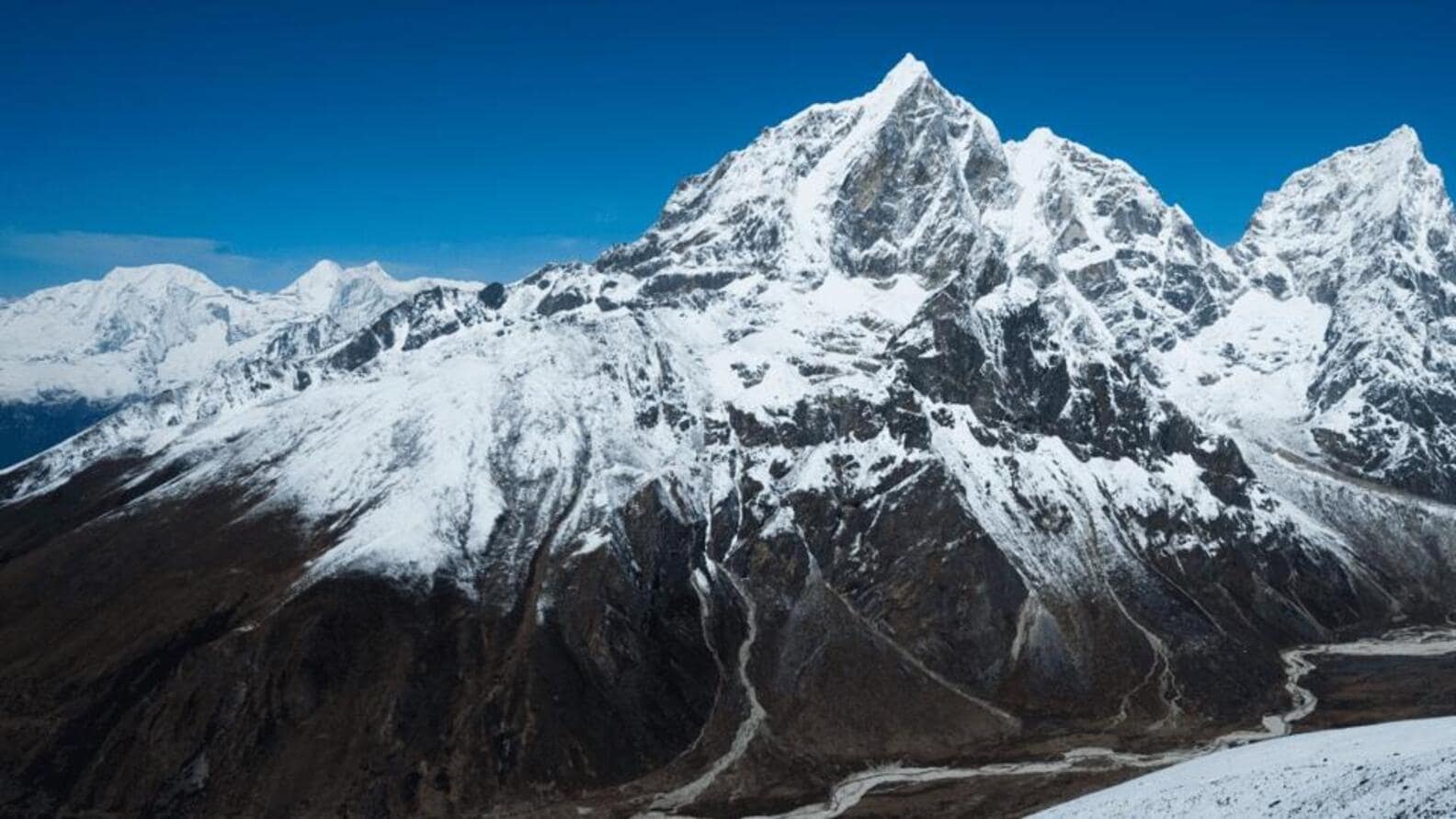
The Himalayan glacier melting crisis has intensified dramatically, with the rate of glacier loss across the Hindu Kush Himalayas doubling since 2000, according to a new report by the International Centre for Integrated Mountain Development. The findings highlight growing risks of catastrophic floods and long-term water insecurity for billions of people dependent on these glaciers.
Rising Climate Threat in the Himalayas
The latest data reveals that the Himalayan glacier melting crisis is accelerating, with the past decade witnessing more frequent extreme melt years. The region, which holds the largest volume of ice outside the polar areas, is now under severe threat due to rising temperatures and climate change.
The report titled HKH Glacier Outlook 2026 draws from 50 years of glacier monitoring, showing that nearly 89% of recorded years since 1974 experienced negative mass balance—meaning glaciers lost more ice than they gained.
Deadly Consequences Already Visible
The Himalayan glacier melting crisis is no longer a distant concern but a present-day reality. India has witnessed several disasters linked to glacier instability, including the Chamoli disaster, which claimed over 200 lives, and the 2023 glacial lake outburst flood in Sikkim that resulted in more than 50 deaths.
Also read : Uttam Nagar Security Alert Delhi: Heavy Police Deployment Ahead of Eid and Navratri
These incidents underline the increasing frequency of extreme events such as glacial lake outburst floods (GLOFs), posing serious threats to lives and infrastructure in mountainous regions.
Uneven but Worrying Glacier Loss
The Himalayan glacier melting crisis varies across river basins. While the Indus Basin lost around 6% of its glacier area between 1990 and 2020, the Ganga and Brahmaputra basins recorded sharper declines of 21% and 16% respectively.
Scientists warn that smaller glaciers—particularly those under 0.5 square kilometres—are shrinking the fastest. These glaciers make up nearly 75% of the region and are highly vulnerable, increasing risks of local water shortages and sudden floods.
Global Call for Urgent Action
Experts say the Himalayan glacier melting crisis demands immediate global attention. Pema Gyamtsho emphasized that the doubling of ice loss rates should serve as a wake-up call for policymakers and governments worldwide.
India has also acknowledged the urgency, with Kirti Vardhan Singh stating that glacier retreat is an “immediate reality” impacting water security, biodiversity, and livelihoods.
A Critical Decade Ahead
As climate change continues to accelerate, the Himalayan glacier melting crisis is entering a critical phase. The glaciers of the Hindu Kush Himalayas support major Asian river systems and are essential for food, water, and energy security across the region.
Without urgent action, experts warn that the ongoing ice loss could have irreversible consequences, making this decade crucial for monitoring, adaptation, and global climate response.