
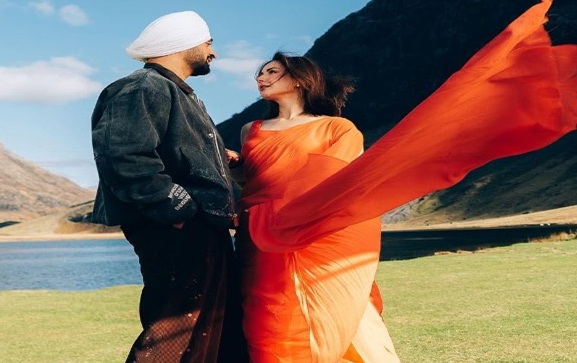
BJP Supports Diljit Dosanjh Over Sardaar Ji 3 Amid Nationwide Backlash, Calls Boycott Demands Unfair
Mumbai/New Delhi – Popular Punjabi actor-singer Diljit Dosanjh has found strong support from the Bharatiya Janata Party (BJP) amid mounting controversy over his upcoming film Sardaar Ji 3, which features Pakistani actress Hania Amir in a lead role. The backlash, largely driven by calls for a boycott and even the revocation of Dosanjh’s Indian citizenship, has drawn criticism from multiple quarters—including BJP leaders, who have described the outrage as “disproportionate” and “irrational.”
The Controversy: A Pakistani Actress in an Indian Film
The controversy erupted after it was revealed that Hania Amir, a well-known actress from Pakistan, is part of the cast of Sardaar Ji 3. The announcement was met with widespread criticism on social media, with some calling for a complete boycott of the film, and others questioning Diljit Dosanjh’s patriotism.
The Federation of Western India Cine Employees (FWICE) went so far as to write to the Indian government, urging them to take action against the film and revoke Dosanjh’s Indian citizenship, citing national sentiment and past terror attacks involving Pakistan.
BJP Steps In: “Don’t Weaponise Patriotism”
In a post on X (formerly Twitter), BJP national spokesperson R P Singh strongly defended Dosanjh, describing him as a “celebrated artist”, “global ambassador of Indian culture”, and “national asset.”
.@diljitdosanjh is not just a celebrated artist—he’s a national asset and a global ambassador of Indian culture. FWICE’s call to revoke his Indian citizenship over an inadvertent and pre-incident film shoot is not only unfair but shockingly disproportionate.
The film featuring a…
— RP Singh National Spokesperson BJP (@rpsinghkhalsa) June 27, 2025
“Attacking Diljit’s patriotism is simply irrational,” Singh wrote. “Calls to revoke his citizenship are shockingly disproportionate. The movie was shot before the Pahalgam terror attack.”
He pointed out the inconsistency in public outrage, noting that Indian cricket teams play Pakistan, and news channels often host Pakistani guests for viewership. He questioned why similar outrage isn’t directed at those instances.
“Should news anchors also give up their citizenship for engaging Pakistani guests? Let’s not weaponise patriotism—it weakens our moral standing,” Singh added.
Singh urged FWICE to reconsider its demands, emphasizing that art and culture should not be victimized in the name of nationalism.
Diljit Responds: “Casting Isn’t In My Control”
Amid the backlash, Diljit Dosanjh has responded briefly, stating that casting decisions were not under his control and that the film’s production was completed before recent political developments. However, the actor has faced criticism for not explicitly condemning Hania Amir’s remarks on India and Operation Sindoor.
FWICE Stands Firm: “Have They Forgotten Uri, Pulwama?”
In a strongly worded statement, FWICE President Ashoke Pandit criticized the BJP’s stance and reiterated the federation’s demand for punitive action.
“How have they forgotten Uri, Pulwama, or the Mumbai attacks?” Pandit asked. “Diljit is being careless about the emotions of this country.”
FWICE maintains that allowing Pakistani artists in Indian cinema, particularly in sensitive times, is a betrayal of national sentiment. The organization has been vocal in opposing cultural collaborations with Pakistan following various cross-border attacks.
Overseas Release, No Domestic Screening
Despite the controversy, Sardaar Ji 3 was released overseas on June 27, receiving a moderate reception from the Punjabi diaspora. However, the film is not being screened in India, as exhibitors and distributors fear public backlash and protests.
This self-imposed restriction has only intensified the debate, with many arguing that political tensions should not overshadow artistic expression.
Conclusion
The Sardaar Ji 3 controversy reflects the ongoing tensions between cultural exchange and political sentiment in India. While Diljit Dosanjh remains a beloved figure in music and film, the episode has sparked a larger debate on freedom of expression, nationalism, and public accountability. As BJP and FWICE continue to clash over the issue, the question remains: where should India draw the line between art and patriotism?