
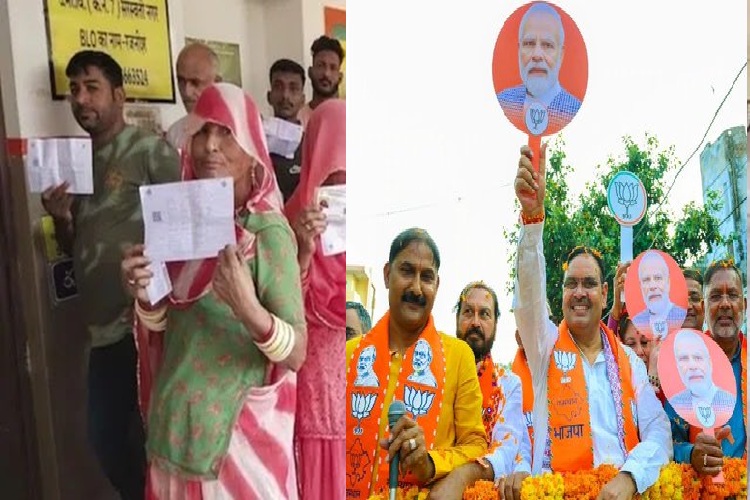
JAIPUR — The BJP storms Rajasthan civic polls with 163 seats out of the 309 urban local bodies where results were declared on Monday. The opposition Congress trailed behind with 103 seats, while independent candidates claimed 43 civic bodies.
Key Takeaways from the Local Body Election Verdict
- The Bharatiya Janata Party secures a decisive mandate in Rajasthan urban local body elections.
- Of 309 civic bodies declared, BJP wins 163 seats while Congress trails with 103.
- Independent candidates claim 43 seats, maintaining a decisive hold in several ward committees.
- Overall voter turnout reaches 73.56 percent across two polling phases.
Also Read : Bhajan Lal Sharma RBM Hospital Visit: CM Reviews Care After Wall Collapse
Vote counting began at 8:00 AM across state designated centers amid tight security. The sweeping victory clears the path for board formation in 10 municipal corporations, 47 municipal councils, and 252 municipalities.
| Civic Body Category | Total Bodies Declared | BJP Seats Won | Congress Seats Won | Independents & Others |
| Municipal Corporations | 10 | 6 | 3 | 1 |
| Municipal Councils | 47 | 26 | 14 | 7 |
| Municipalities | 252 | 131 | 86 | 35 |
| Total Urban Local Bodies | 309 | 163 | 103 | 43 |
Record Voter Participation Across Two Polling Phases
Polling for the crucial urban elections took place in two distinct phases on September 9 and September 11. Electoral officials recorded an impressive overall voter turnout of 73.56 percent across both polling phases.
This figure represents a significant increase of over three percentage points compared to the previous urban local body elections. A massive total of 38,889 candidates entered the electoral arena across all contested wards.
| Political Party / Group | Candidates Fielded | Seats Won (Bodies) | Overall Candidate Share |
| Bharatiya Janata Party (BJP) | 9,290 | 163 | 23.89% |
| Indian National Congress (INC) | 9,027 | 103 | 23.21% |
| Independent Candidates | 18,732 | 43 | 48.17% |
| Rashtriya Loktantrik Party (RLP) | 948 | 0 | 2.44% |
| Aam Aadmi Party (AAP) | 311 | 0 | 0.80% |
| Bahujan Samaj Party (BSP) | 298 | 0 | 0.77% |
| CPI (M) | 185 | 0 | 0.48% |
| Bharat Adivasi Party (BAP) | 98 | 0 | 0.25% |
High Political Stakes for Chief Minister Bhajan Lal Sharma
The election outcome carries huge political weight for Chief Minister Bhajan Lal Sharma’s administration. Following its victory in the 2023 assembly elections, the BJP sought to solidify its base in urban Rajasthan.
The mandate validates the ruling party’s policy initiatives over the past three years. Party workers celebrated at local headquarters as trends confirmed majorities in key urban hubs, including Jaipur, Ajmer, Udaipur, and Kota.
As BJP storms Rajasthan civic polls with 163 seats, state leaders pointed to grassroots governance as the primary driver of success. The party’s campaign focused heavily on infrastructure development, urban sanitation, and streamlined public utility delivery.
Congress Retention and Independent Influence
For Congress, the elections served as a test to prove its organizational strength after losing state power. While the party fell behind overall, it managed notable victories in select municipal pockets, securing 103 bodies.
Congress campaign managers highlighted strong performances in regional strongholds, including a majority win in Jhalawar Municipal Council. However, the overall result underscores the challenge Congress faces in reclaiming urban voter confidence.
Independent candidates played an influential role by capturing 43 local bodies. Their victory in key wards means both major political parties must engage independent members when electing mayors and council chairpersons scheduled for September 21.
Road Ahead for Board Formations
With ward councillor outcomes decided, focus shifts toward selecting municipal heads. The State Election Commission set September 21 for mayor and chairperson elections. Elections for deputy mayors and vice-chairpersons follow on September 22.
As the BJP storms Rajasthan civic polls with 163 seats, the party holds clear leverage in most urban centers. These results set a clear baseline for urban voter sentiments ahead of future state-wide political contests.