
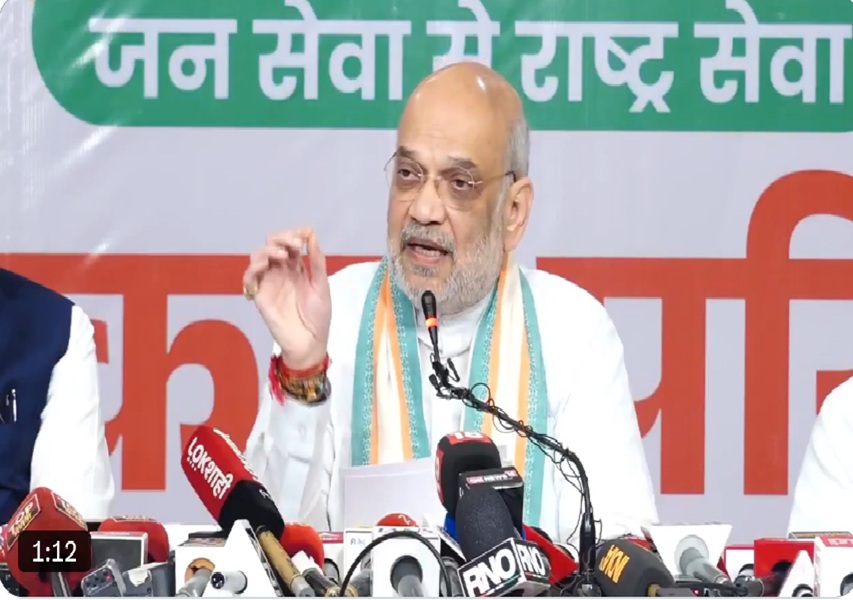
September 14, 2026, MUMBAI — Union Home Minister Amit Shah declared that 21 states under National Democratic Alliance governance will enact the Uniform Civil Code in NDA states prior to the 2029 general elections. Speaking during a media interaction in Mumbai, Shah framed civil legal uniformity as a core policy objective of the ruling coalition. The announcement coincided with the launch of the Seva Sankalp Abhiyan, marking two and a half decades of Prime Minister Narendra Modi’s public governance.
Key Takeaways of National Legislative and Security Reforms
- Union Home Minister Amit Shah confirmed that 21 NDA-governed states will roll out civil law frameworks before 2029.
- Uttarakhand serves as the operational baseline, while Gujarat, Assam, and Madhya Pradesh advance state legislation.
- Legal modifications under the Bharatiya Nyaya Sanhita drove a 30% surge in state conviction metrics within one year.
- Counter-insurgency initiatives resulted in over 9,000 surrenders and 14 peace accords across Northeastern territories.
- Defense operations including Operation Sindoor reconfirmed India’s zero-tolerance security framework.
The proposed statutory rollout intends to establish common legal parameters across personal matters, replacing varying religion-specific personal laws. Shah underscored that establishing standardized provisions for marriage, divorce, asset inheritance, and child adoption advances constitutional principles and gender equity. Uttarakhand’s enacted civil code, operational since early 2025, provides the administrative template for other NDA-administered regions.
| State Jurisdiction | Current UCC Statutory Status | Primary Scope & Exemptions |
| Uttarakhand | Enacted & Fully Operational (Jan 2025) | Standardized marriage/divorce, live-in registration, ST exemption |
| Gujarat | Legislation Passed; Awaiting Assent | Ban on polygamy, equal inheritance rights, customary safeguards |
| Assam | Bill Passed in State Assembly | Unified family laws, mandatory registration, tribal exclusion |
| Madhya Pradesh | Assembly Approved (July 2026) | Adoption rules, triple talaq prohibition, live-in regulation |
| Maharashtra | Drafting Committee Active | State-level expert panel evaluating statutory recommendations |
Also Read : AAP Rajya Sabha Nominees Vetting: Arvind Kejriwal Vows Strict Scrutiny After 7 MPs Join BJP
Judicial Modernization Drives Higher Conviction Rates
Alongside civil law standardization, Shah pointed to substantial operational updates within India’s criminal justice system. The implementation of the Bharatiya Nyaya Sanhita has restructured prosecution workflows across multiple states. Recent analytical data indicates that several regional jurisdictions recorded up to a 30% rise in criminal convictions within twelve months of adopting the modernized codes.
The Ministry of Home Affairs maintains an ambitious target to resolve criminal cases and deliver final judicial verdicts within three years of chargesheet filings. Shah noted that the legislative repeal of practice-based discrimination, including triple talaq, reinforced statutory protection and legal rights for Muslim women nationwide.
| Legal Reform Parameter | Previous Framework | Updated Modern Framework | Administrative Impact |
| Criminal Law Statutory Code | Indian Penal Code (1860) | Bharatiya Nyaya Sanhita | 30% conviction rate increase across states |
| Case Resolution Timeline | Multi-year procedural delays | Timed 3-year target | Streamlined forensic & digital evidence processing |
| Personal Law Protections | Religion-based personal codes | Uniform Civil Code framework | Standardized rights for inheritance & adoption |
| Gender-based Remedies | Non-uniform personal statutes | Abolition of Triple Talaq & Halala | Equal statutory protection for female litigants |
Integration and Border Safety Drive National Security Strategy
Addressing internal security, Shah outlined structural shifts across Kashmir, the Northeast, and red-corridor regions. The revocation of Articles 370 and 35A was accomplished without civil violence or casualties, fully consolidating Kashmir’s constitutional standing. Parallel developments in counter-insurgency operations led to the neutralisation of five decades of Left-Wing Extremism.
In the Northeast, the Union government executed over 14 distinct peace accords, leading to the peaceful surrender of more than 9,000 active insurgents. Furthermore, defensive measures including targeted cross-border strikes, air operations, and Operation Sindoor established a clear policy of zero tolerance toward external security threats.
| Security Sphere | Executed Government Strategy | Key Outcome Recorded |
| Jammu & Kashmir | Abrogation of Articles 370 and 35A | Complete integration achieved without civilian casualties |
| Northeastern Region | 14+ Signed Peace Agreements | 9,000+ insurgent surrenders and infrastructure growth |
| Left-Wing Extremism | Focused intelligence & tactical operations | Five decades of active Naxalite insurgency ended |
| Counter-Terrorism | Operation Sindoor & Air Strikes | Zero-tolerance posture established against cross-border threats |
Structural Expansion of the Civil Legal Framework
The strategic emphasis on enforcing the Uniform Civil Code in NDA states signals a clear transition toward state-led statutory integration. While national implementation remains under broader consultation with parliamentary allies, state-level legislation provides immediate legal uniformity across regional jurisdictions.
Constitutional provisions under Article 44 direct the state to work toward a uniform legal structure for all citizens. As additional states draft localized civil codes, the NDA administration expects unified personal laws to become standard across most Indian territories ahead of the 2029 national polls.
(Published By, Senior Political & National Security Affairs Editor)