
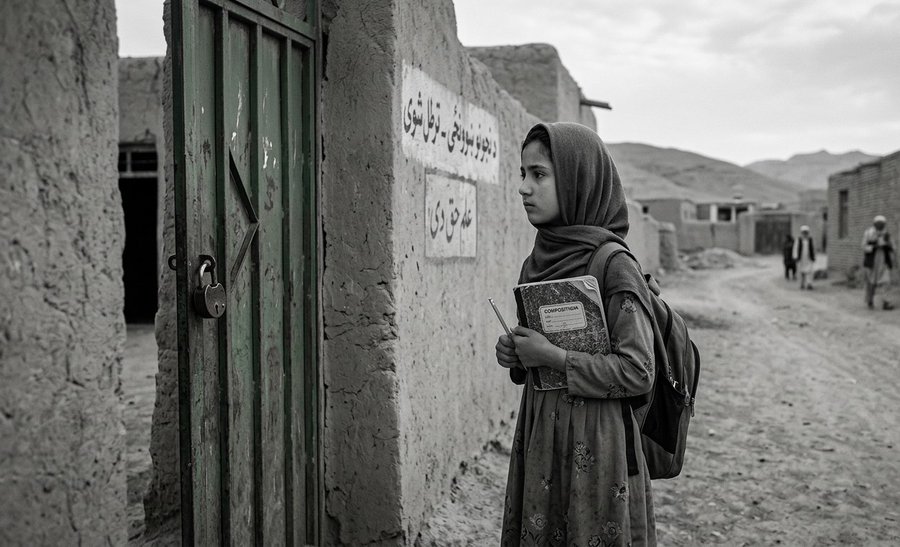
KABUL/GENEVA — The World Happiness Report 2026 has officially confirmed that Afghanistan remains the unhappiest country on Earth. For the ninth consecutive year, the war-torn nation occupies the final spot (147th) in the annual UN-sponsored survey. While Finland continues its reign as the world’s happiest nation, the gap between the top and bottom of the list has reached a record high. The report, released on the International Day of Happiness, highlights a devastating decline in life satisfaction across South Asia’s most volatile region.
Researchers determine these rankings through six key variables: GDP per capita, social support, and healthy life expectancy. They also measure freedom to make life choices, generosity, and perceptions of corruption. Afghanistan’s score of 1.45 out of 10 reflects a population in deep distress. Notably, Afghan women recorded the lowest average life satisfaction globally, scoring just 1.2. This sharp decline correlates directly with the restrictive policies implemented by the de facto Taliban authorities since 2021.
The “Crushing Impact” of Restricted Freedoms
The primary driver behind Afghanistan’s low ranking is the systemic erasure of women from public life. Under current rule, women remain excluded from education above the sixth grade and most professional employment. In January 2026, the situation worsened when thousands of female civil servants were notified that their salaries would be terminated. These “cascading edicts” have not only crippled the economy but also triggered a mental health crisis.
International human rights bodies warn that nearly 45% of the Afghan population currently requires humanitarian assistance. A combination of prolonged drought, mass returns of refugees, and severe aid cuts has pushed millions to the brink of starvation. Consequently, the lack of personal freedom and social support has made a “happy life” nearly impossible for the average citizen. While neighboring countries like Pakistan (104th) and Iran (97th) also face challenges, they remain significantly higher in the World Happiness Report 2026 rankings.
Sierra Leone, Malawi, and Zimbabwe Round Out the Bottom
Afghanistan is not alone in its struggle, though it is the only nation to score below three points. Sierra Leone (146th) and Malawi (145th) follow closely as the second and third unhappiest nations. In Sierra Leone, the lingering effects of civil war and persistent political instability continue to hinder development. Despite efforts to improve governance, poverty remains the biggest obstacle to well-being in the West African nation.
Similarly, Malawi faces high rates of food insecurity and limited healthcare access. The report notes that while some regions show resilience, the lack of basic infrastructure in Malawi keeps life evaluations low. Zimbabwe (144th) also features near the bottom, largely due to hyperinflation and a long-standing economic crisis. These conditions have eroded the purchasing power of citizens, making daily survival a stressful endeavor.
Read : Iran Shoots Down Second US F-35: Stealth Jet Destroyed in Central Iran
The Global Contrast: The Nordic Model and Emerging Stars
In stark contrast, the World Happiness Report 2026 shows that Northern European countries have mastered the art of well-being. Finland (1st), Iceland (2nd), and Denmark (3rd) dominate the top spots. These nations excel because they provide robust social safety nets, high levels of trust in government, and income equality. Interestingly, Costa Rica has emerged as a standout performer this year, rising to 4th place—the highest ever for a Latin American country.
India has also seen a marginal improvement, moving to 116th place from 118th in the previous year. While the “Goldilocks Rule” of moderate social media use helped youth well-being in some regions, the global average of 2.5 hours of screen time is now considered harmful. As the world analyzes these figures, the 2026 report serves as a reminder that true development must look beyond GDP to include mental health and human rights.