
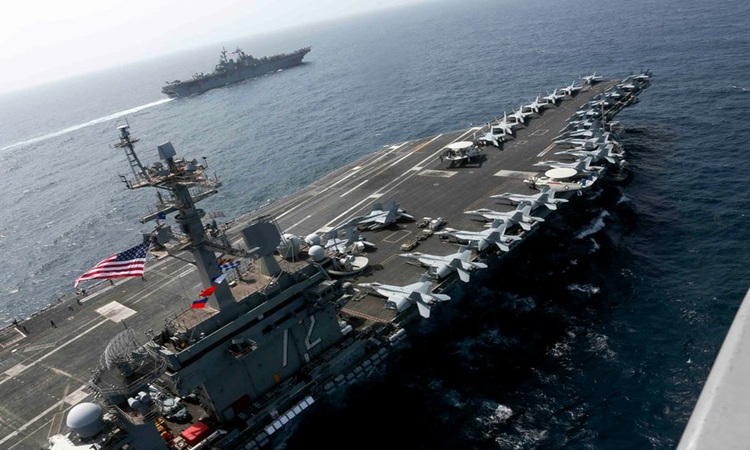
USS Abraham Lincoln Near Iran as Protests Rock the Nation
The USS Abraham Lincoln near Iran is now one of the defining developments in a rapidly escalating geopolitical crisis. On January 26, 2026, the U.S. Navy deployed the aircraft carrier USS Abraham Lincoln and several accompanying warships toward Middle East waters. This move comes amid one of the deadliest domestic uprisings in recent Iranian history, driven by economic despair and widespread demands for political change.
Protests that began on December 28, 2025 over soaring inflation and a collapsing rial have quickly transformed into nationwide calls to end the Islamic Republic. Independent rights groups estimate that tens of thousands have been killed in the crackdown, although exact figures vary due to an internet shutdown and government information controls.
The presence of the USS Abraham Lincoln strike group near Iran highlights the growing possibility of direct international involvement. U.S. officials say the carrier and its escorting destroyers are positioned to protect American forces and interests, and potentially respond to further turmoil inside Iran.
Rising Death Toll, Unrest Across Cities
Iran’s domestic turmoil is unprecedented. Activist-linked organisations, like the Human Rights Activists News Agency (HRANA), report over 6,000 deaths in the government’s crackdown on demonstrators. Additionally, more than 41,000 arrests have been recorded amid nationwide dissent.
Also Read :US Weather Disaster: Powerful Snowstorm Leaves 29 Dead, Triggers Widespread Blackouts
By contrast, official Iranian sources have presented lower casualty figures, partly attributing the unrest to “terrorists” rather than peaceful protesters. These divergent numbers reflect both the scale of the conflict and the difficulties in verifying information due to an extensive communication blackout.
The protests spread to hundreds of cities, involving broad swaths of Iranian society, including students, workers, and bazaar merchants. Many analysts see this movement as the largest challenge to the nation’s clerical leadership since the 1979 Islamic Revolution.
U.S. Naval Deployment: Signal of Strength or Escalation?
The USS Abraham Lincoln near Iran serves as a stark symbol of rising tensions between Tehran and Washington. According to U.S. Central Command, the carrier strike group is currently operating in the Indian Ocean, with capabilities that could support regional security or, if authorized, military action.
President Donald Trump has publicly referred to the deployment as a “massive fleet heading in that direction,” suggesting that the U.S. is prepared for multiple scenarios. While Trump insists he hopes military force remains unnecessary, officials say the added presence provides strategic flexibility.
The U.S. has also moved additional air assets, including fighter jets and cargo flights, into regional bases. These steps demonstrate a heightened state of readiness, even as diplomatic avenues remain open.
Iranian Government Reaction and IRGC Warnings
Tehran’s response to the U.S. naval deployment has been stern. The Islamic Revolutionary Guard Corps (IRGC) claims its forces are “more ready than ever,” threatening retaliation if any hostile action is taken against Iranian territory or assets.
State media and pro-government outlets have amplified warnings about potential counterattacks, including imagery and rhetoric aimed at dissuading U.S. action. Such messaging reflects Iran’s efforts to maintain internal support amid growing unrest.
The Iranian leadership has also accused Western powers of fuelling the protests — an allegation widely rejected by opposition figures and international observers. These escalating exchanges increase the risk of miscalculation that could rapidly transform a political crisis into military conflict.
Global Responses and the Road Ahead
The international community remains deeply divided. Western governments and human rights groups have condemned Tehran’s lethal crackdown while urging restraint and calls for independent investigations. Meanwhile, regional states are cautious about endorsing any military confrontation.
As the USS Abraham Lincoln near Iran continues its deployment, world leaders are closely monitoring developments. The coming days will be critical in determining whether diplomatic channels can ease tensions or if the region faces even greater instability.