
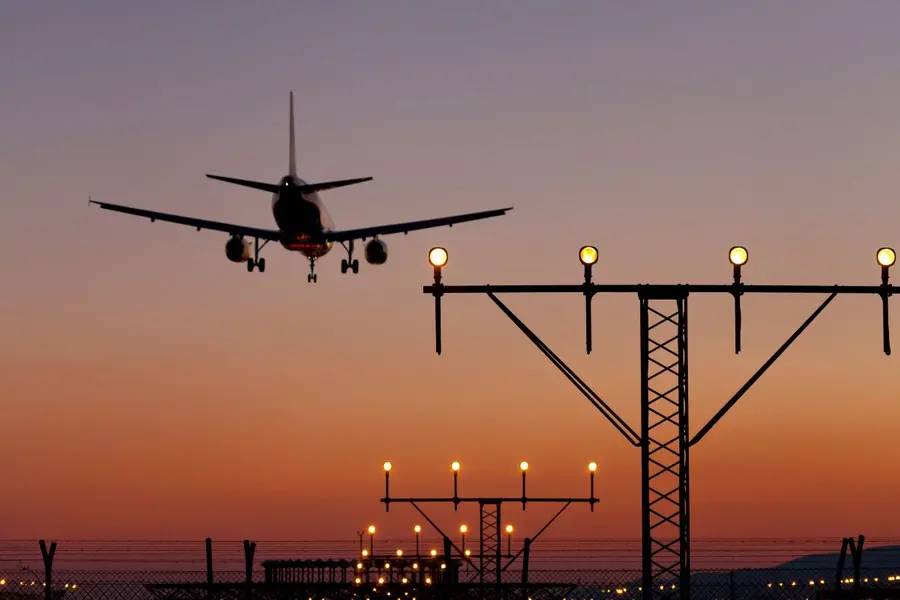
Abu Dhabi: The UAE airspace reopened on Tuesday after a brief shutdown triggered by escalating regional tensions, as Iran continued its missile and drone attacks in a conflict involving the United States and Israel that has now entered its third week.
Officials confirmed that the UAE airspace reopened after aviation authorities conducted a detailed assessment of the security and operational situation across the country. The move was coordinated with defense and aviation agencies to ensure the safety of flights, passengers, and air crews.
UAE Intercepts Hundreds of Missiles and Drones
According to the UAE Ministry of Defense, the country’s air defense systems have intercepted more than 300 ballistic missiles and 1,600 drones since the conflict intensified in the region. Authorities said the defensive operations successfully prevented major damage and ensured the safety of key infrastructure.
The decision to reopen the skies came after the General Civil Aviation Authority (GCAA) reviewed the evolving security conditions. Officials said the UAE airspace reopened only after confirming that aviation operations could safely resume.
Also read : Dubai Airport Flights Resumption: Operations Restart After Drone Strike Disruption
The regulator added that authorities are continuing real-time monitoring of regional developments to maintain the highest levels of aviation safety.
Airspace Closure Was a Precautionary Measure
The temporary closure of the country’s airspace lasted nearly two hours. Officials described it as an “exceptional precautionary measure” aimed at protecting flights, air crews, and national territory during rapidly changing regional security developments.
Authorities stressed that the step was necessary to minimize potential risks as missile and drone activity continued across parts of the Middle East.
Dubai Airport Operations Gradually Resume
The disruption also affected operations at Dubai International Airport, one of the world’s busiest aviation hubs. The airport resumed a limited flight schedule on Monday after a drone strike hit a fuel depot, triggering a fire.
Officials confirmed that no injuries were reported in the incident. The attack marked the fourth drone-related event reported at the airport since the conflict escalated.
As the UAE airspace reopened, airport authorities began restoring flight schedules while coordinating with airlines to manage delays and rerouting.
Airlines Adjust Middle East Flight Routes
Airlines across the region have been forced to reassess their operations due to the increasingly volatile airspace in the Middle East.
British Airways announced on Monday that it has extended a temporary reduction in its Middle East flight schedule. The changes affect flights operating to and from several cities, including:
- Abu Dhabi
- Amman
- Manama
- Doha
- Dubai
- Tel Aviv
The airline said it is closely monitoring the situation and staying in direct contact with affected passengers to provide alternative travel arrangements.
Relief Flights for Stranded Travelers
To support travelers impacted by the disruptions, British Airways has already operated eight relief flights from Muscat. The airline has also added additional flights to Singapore and Bangkok to help passengers continue their journeys.
Situation Remains Under Close Watch
While the UAE airspace reopened quickly after the precautionary closure, aviation and defense authorities said the situation remains fluid. Continuous monitoring of regional security developments will determine whether further operational adjustments are required in the coming days.
Experts say that with the Iran-related conflict still unfolding, airlines and governments across the Middle East will likely continue implementing safety measures to protect passengers and aviation infrastructure.