
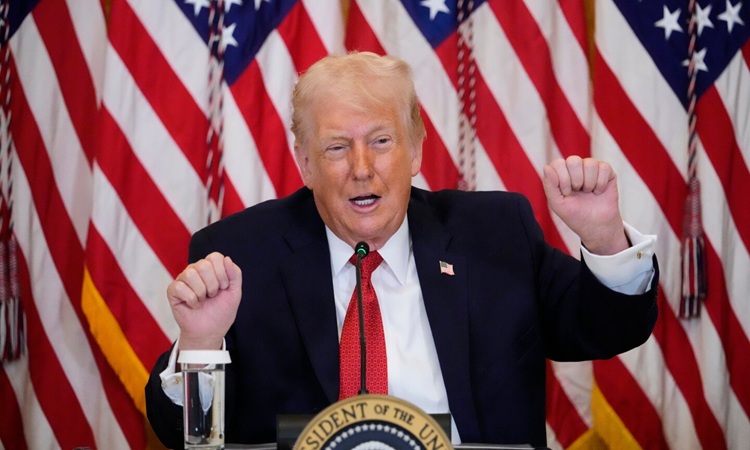
WASHINGTON – In a significant shift for global energy markets and Middle East stability, President Donald Trump announced Friday that the United States is considering “winding down” its military operations against Iran. Speaking from the White House, the President claimed that American forces have nearly achieved their primary strategic goals after three weeks of intense hostilities. However, the President coupled this de-escalation signal with a firm demand: other nations must now take the lead in securing the Strait of Hormuz.
The announcement comes as the administration seeks to alleviate a global energy crisis triggered by the conflict. Since the outbreak of war on February 28, 2026, the Strait of Hormuz—a chokepoint for 20% of the world’s oil and gas—has been effectively paralyzed. In a strategic move to lower soaring fuel prices, the U.S. Treasury also confirmed a temporary easing of sanctions on roughly 140 million barrels of Iranian oil currently stranded at sea.
The Five Pillars of American Success in Iran
Also Read : IS PAKISTAN LIKELY TO JOIN THE IRAN WAR?
President Trump outlined five specific military milestones that he believes justify a reduction in U.S. involvement. According to a post on Truth Social, these objectives include the total degradation of Iran’s missile capabilities and the destruction of its naval and air forces.
“We are getting very close to meeting our objectives,” the President stated. He emphasized that the U.S. has successfully protected regional allies, including Israel, Saudi Arabia, and the United Arab Emirates. Furthermore, the administration claims to have eliminated Iran’s path to a nuclear weapon. Despite these claims of success, the President rejected any talk of an official ceasefire. “You don’t do a ceasefire when you’re literally obliterating the other side,” he told reporters.
Shifting the Burden of Maritime Security
The most controversial aspect of the President’s update involves the future of the Strait of Hormuz. Trump explicitly stated that the United States should not be responsible for policing the waterway, as it no longer relies on the route for its own energy needs. He argued that the countries most dependent on Middle Eastern oil—specifically citing NATO allies and Asian nations like China and Japan—must “guard and police” the channel themselves.
While the U.S. has offered to assist these nations if asked, the President insisted such help “shouldn’t be necessary” once the immediate Iranian threat is eradicated. This stance has met with a mixed response from the international community. While some European nations have expressed a willingness to contribute to a “safe maritime framework,” many remain hesitant to deploy warships into a zone still active with drone and missile threats.
Global Market Reaction and Energy Relief
The decision to temporarily lift sanctions on Iranian oil shipments is aimed at stabilizing a volatile global economy. Treasury Secretary Scott Bessent noted that unlocking the 140 million barrels will provide “certainty and reassurance” to market participants. This waiver is set to last until April 19, allowing refiners in India and across Asia to resume purchases.
Despite the talk of winding down, the situation remains precarious. Reports indicate the Pentagon is still moving thousands of Marines toward the region. While the President envisions a quick conclusion to the “great military efforts,” the task of clearing mines and ensuring the safe passage of thousands of stranded seafarers could take weeks, if not months.