
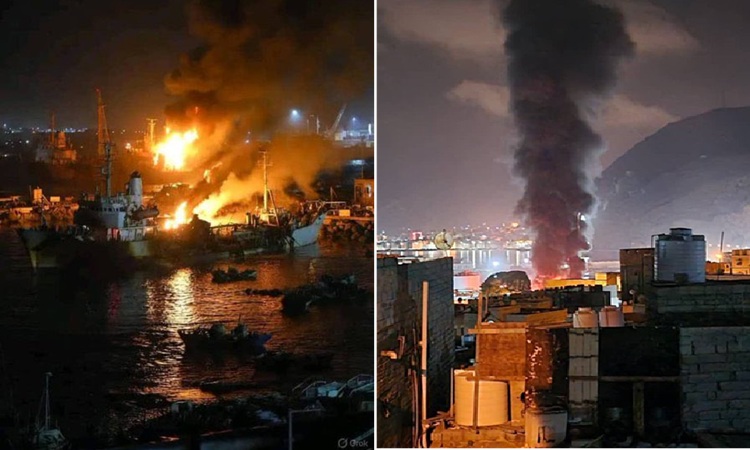
Riyadh | December 30 : Saudi Arabia has issued an open and unusually strong warning to the United Arab Emirates after launching airstrikes on Yemen port city of Mukalla. Riyadh described Abu Dhabi’s alleged actions as “extremely dangerous,” signalling a sharp escalation between the Gulf allies.
The Saudi-led coalition said it carried out the strikes on Tuesday after detecting a weapons shipment intended for the UAE-backed Southern Transitional Council. The statement marked one of the clearest public confrontations between Saudi Arabia and the UAE during Yemen’s long war.
According to the Saudi Press Agency, two vessels arrived in Mukalla from Fujairah, a port on the UAE’s eastern coast. Saudi officials alleged the ships disabled their tracking systems before unloading weapons.
The coalition claimed the cargo included arms and armoured vehicles. These supplies were allegedly meant for separatist forces operating in southern Yemen.
ALSO READ : Iran Declares Total War Against US, Israel, Europe
Saudi Coalition Details Mukalla Operation
In an official statement, the Saudi-led coalition said the weapons posed an imminent threat to security. Therefore, it authorised a limited airstrike operation.
“The ships’ crew had disabled tracking devices,” the statement said. It added that the vessels unloaded large quantities of weapons.
Saudi authorities said the coalition targeted the shipment early in the morning. The timing aimed to reduce the risk of civilian casualties.
Moreover, officials stressed that the strike focused only on military equipment. They did not confirm casualties or damage assessments.
Another coalition statement repeated the warning. It said the weapons threatened peace and stability in Yemen.
Saudi Arabia also directly linked the UAE to recent separatist advances. Officials cited regional media while describing Abu Dhabi’s role as dangerous.
UAE and STC Respond Cautiously
The UAE did not immediately respond to requests for comment. Abu Dhabi has yet to issue an official statement.
Meanwhile, the Southern Transitional Council acknowledged the airstrikes through its AIC satellite channel. However, it offered no operational details.
The silence has fuelled speculation about growing divisions within the anti-Houthi coalition. Analysts say the lack of coordination is now visible.
Saudi Arabia and the UAE have long cooperated in Yemen. However, they support rival local forces.
Riyadh backs Yemen’s internationally recognised government and allied forces. In contrast, the UAE supports the STC, which seeks southern autonomy.
Mukalla’s Strategic Importance
Mukalla lies in Yemen’s Hadramout governorate and holds strategic value. The port city sits around 480 kilometres northeast of Aden.
The STC recently seized Mukalla after clashes with Saudi-backed National Shield Forces. The takeover intensified regional tensions.
Aden has remained the centre of anti-Houthi power since 2014. That year, Houthi rebels captured Sana’a.
Control over Mukalla strengthens the STC’s economic and military position. Therefore, Saudi Arabia views the shift as alarming.
Last week, Saudi airstrikes targeted STC positions elsewhere. Many observers saw those strikes as an earlier warning.
Tuesday’s attack suggests those warnings went unheeded.
Emergency Measures and Regional Fallout
Following the Mukalla strikes, Yemen’s anti-Houthi authorities declared a state of emergency. They imposed a 72-hour shutdown.
The ban covered border crossings, airports, and seaports. Access now requires Saudi approval.
Officials said the move aims to prevent further arms transfers. It also signals Saudi Arabia’s tightening control.
Analysts warn the escalation could strain Saudi-UAE relations further. The rivalry complicates coordination against the Iran-backed Houthis.
Moreover, instability now threatens the wider Red Sea region. Shipping routes and energy security remain at risk.
Experts say the rift weakens the anti-Houthi front. It also increases the risk of internal conflict.
Despite shared interests, Saudi Arabia and the UAE now appear divided. Their competition for influence in southern Yemen is intensifying.