
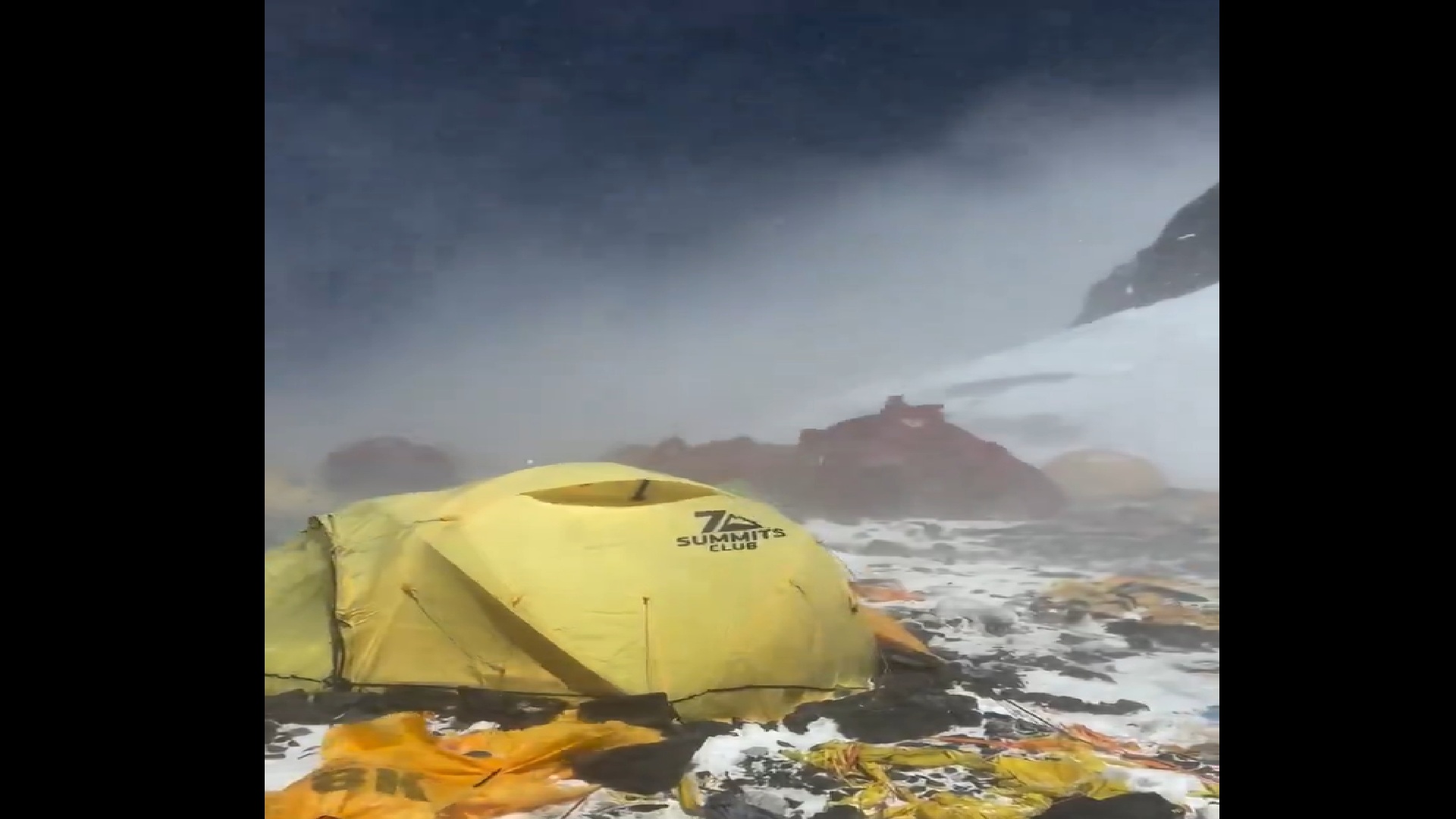
Mount Everest Trash Crisis, The Grim Reality of Camp IV
Mount Everest is facing an uncomfortable ecological truth. The legendary peak is rapidly transforming into the highest garbage dump on Earth. Recent observations from Camp IV, positioned at a grueling 7,900 meters above sea level, reveal an environmental disaster. What should be one of the most pristine and sacred spaces on our planet is currently choked by commercial greed.
This is Camp IV on Mount Everest (~7,900 m)—the highest campsite on Earth. What should be one of the most sacred, extraordinary places on our planet is being choked by commercial greed.
Torn tents frozen into the ice, empty oxygen tanks, and abandoned gear litter the South Col.… pic.twitter.com/all51BZDwJ
— India This Week (@indiathisweekk) June 2, 2026
The dangerous South Col is littered with torn tents frozen directly into the ice, empty oxygen tanks, and abandoned mountaineering gear. In the infamous Death Zone, human survival hangs by a thread. Consequently, trash is often the very first thing that exhausted climbers drop. However, as luxury commercial expeditions rapidly scale up their operations, the mountain is being treated like a landfill.
The sheer volume of high-altitude pollution has jeopardized the sanctity of the Sagarmatha National Park. During the spring season alone, the Sagarmatha Pollution Control Committee (SPCC) collected a staggering 88 tonnes of waste from the area.
While the majority was recovered from the lower base camp, the upper camps remain the most difficult to clean. An estimated 40 to 50 tons of toxic garbage still remain stranded in the upper death zone.
Scrapping Failed Regulations for Permanent Solutions
For more than a decade, the Nepalese government relied on a traditional waste deposit scheme to manage the Mount Everest trash crisis. The regulation required climbers to deposit $4,000, which was refundable only if they brought back 18 pounds of garbage.
However, tourism officials recently admitted that this system has completely failed. Climbers frequently bypassed the rules by only collecting waste from lower, easily accessible camps. Additionally, the scheme became a major administrative burden without making a meaningful dent in the high-altitude pollution.
Also Read : 16-Year-Old Sachin Kumar from Uttarakhand Summits Mount Everest, Praised by CM Dhami – indiathisweek.in
To combat this escalating environmental disaster, Nepal has officially implemented its comprehensive five-year Everest Cleaning Action Plan. Running from 2025 through 2029, this policy-backed initiative introduces much stricter regulations.
The government is scrapping the old refundable deposit. Instead, officials are transitioning toward a mandatory, non-refundable cleanup fee. This structural shift will directly fund a permanent mountain welfare system dedicated entirely to high-altitude conservation.
Innovative Measures to Protect the Fragile Ecosystem
The newly implemented five-year action plan targets the root causes of the Mount Everest trash crisis. Under these updated guidelines, expedition agencies must formally disclose all nylon ropes and ladders used on the slopes.
Furthermore, the state mandates that all promotional banners and traditional prayer flags utilized above base camp must be completely biodegradable. To streamline operations, a temporary garbage collection station is being established at Camp II to process debris coming down from Camp IV.
| Regulatory Focus Area | New Policy Requirement | Intended Ecological Impact |
| Expedition Fees | Non-refundable cleanup funding | Secures permanent capital for high-altitude waste removal |
| Gear Accountability | Mandatory tracking of ropes and ladders | Prevents structural gear from being permanently frozen into ice |
| Material Standards | Strictly biodegradable banners and flags | Eliminates synthetic microplastic accumulation on slopes |
| Altitude Monitoring | Deployment of specialized Mountain Rangers | Enforces real-time environmental compliance in the Death Zone |
Balancing Financial Profit with Ecological Survival
The underlying driver of the Mount Everest trash crisis remains uncontrolled commercialization. Overcrowding in the dangerous Death Zone reached a historic peak when more than 274 climbers summited in a single day.
To curb this unsustainable human traffic, Nepal has increased the spring-season climbing royalty fee to $15,000 per foreign climber. The government hopes this financial barrier will encourage selectivity and reduce the strain on the mountain’s fragile ecosystem.
Ultimately, the elite Sherpas who consistently risk their lives to clean up this frozen wasteland deserve better. The mountain itself deserves better.
The success of the current five-year cleanup roadmap depends entirely on rigid enforcement and transparency. The world is watching closely to see if these definitive structural changes can finally restore the threatened sanctity of Earth’s highest peak.