
Early Life and Troubled Beginnings
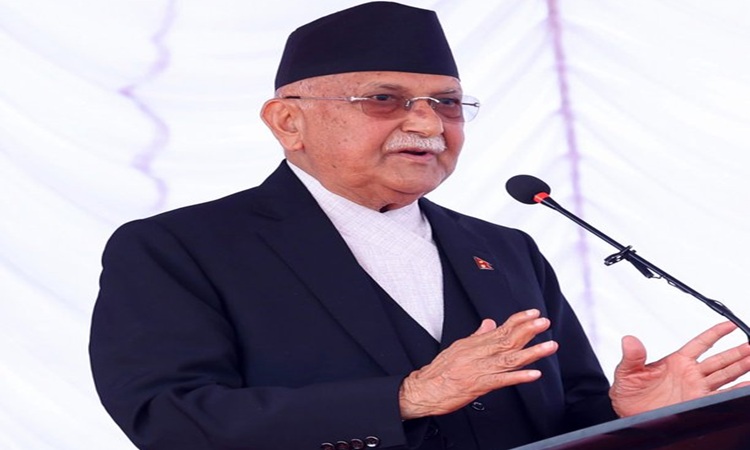
Khadga Prasad Sharma Oli, better known as KP Sharma Oli, was born in 1952 in eastern Nepal’s Terhathum district. His early years were marked by hardship. He dropped out of school at a young age and entered politics in his teens, inspired by communist leaders and revolutionary ideology.
Oli’s entry into politics was not through speeches or elections but through rebellion. At just 22 years old, he was convicted of murdering a farmer, Dharma Prasad Dhakal. This crime landed him in prison, where he spent 14 years behind bars. Despite the stigma, Oli later claimed that his prison years strengthened his resolve and shaped his identity as a communist leader.
The Jhapa Rebellion and Communist Roots
By the mid-1960s, Oli was already deeply involved in leftist activism. Influenced by Marxist and Leninist philosophies, he joined the Communist Party at the age of 18. He soon became a key figure in the Jhapa Rebellion of 1971, a violent uprising inspired by India’s Naxalite movement.
The rebellion failed, but it catapulted Oli into prominence within Nepal’s underground communist movement. He was imprisoned multiple times in different districts, but his persistence made him a respected figure among radicals.
One of Oli’s early political mentors was Ramnath Dahal, a communist leader who guided him into active politics. This mentorship proved pivotal in Oli’s rise from an obscure activist to a national leader.
Years in Prison and a Royal Pardon
Oli’s long imprisonment, though a setback, became the foundation of his political persona. In jail, he built networks, read extensively, and refined his ideological stance. By the mid-1980s, he was released after receiving a royal pardon, at a time when Nepal was still under the monarchy.
His time behind bars gave him credibility among communists, who viewed him as a “revolutionary survivor.” This reputation helped him secure leadership positions once he re-entered public life.
Rise During Democratic Struggles
In the 1990s, Nepal witnessed mass movements against the Panchayat regime. Oli played an active role, aligning himself with democratic aspirations while retaining his communist identity. His fiery speeches, uncompromising stance, and populist style earned him a loyal base.
By the mid-1990s, he was firmly established in the Communist Party of Nepal (Unified Marxist-Leninist). His ability to blend nationalism with populism made him stand out among party leaders.
The Prime Ministerial Journey
Oli first became Prime Minister in 2015, after securing 338 out of 597 parliamentary votes. His tenure coincided with the aftermath of Nepal’s devastating earthquake and the introduction of its new constitution.
His first term, however, was short-lived. In 2016, he resigned after losing a no-confidence vote when coalition partners withdrew support.
Oli returned stronger in 2018, this time as part of a grand alliance with Maoist leader Pushpa Kamal Dahal “Prachanda.” The two merged their parties to form the Nepal Communist Party and agreed to share power. With this merger, Oli briefly commanded one of the strongest mandates in Nepal’s democratic history.
Controversy and Centralisation of Power
Despite his promises of “Samriddha Nepal, Sukhi Nepali” (Prosperous Nepal, Happy Nepali), Oli’s governance soon drew criticism. He centralized authority, bringing investigative bodies under the Prime Minister’s Office, and was accused of undermining democratic norms.
His clashes with India over border disputes boosted his nationalist image, but internal conflicts with Prachanda over power-sharing weakened him.
In 2020, Oli controversially dissolved Parliament, claiming lawmakers obstructed his agenda. The Supreme Court struck down his move, reinstating Parliament and weakening his grip. By 2021, he was forced out, replaced by Sher Bahadur Deuba.
Legacy of a Polarizing Leader
Oli’s journey — from a school dropout and convicted murderer to Nepal’s Prime Minister — remains one of the most dramatic political rises in South Asia. Supporters hail him as a nationalist who stood up to India and strengthened Nepal’s communist movement. Critics view him as an authoritarian who undermined institutions and betrayed democratic promises.
What is undeniable is that Oli’s rise was shaped by his early hardships, his prison years, and the mentorship of leaders who helped channel his rebellious energy into mainstream politics. His story is not just about one man’s ambition but also about Nepal’s turbulent transition from monarchy to democracy.