
Iran’s Supreme Leader Khamenei Reappears from Bunkers on Ashura Amid Post-War Tensions with Israel
Khamenei Emerges on Ashura After Israel War: A Message of Defiance and Unity
Tehran | July 6, 2025 — In a highly symbolic move, Iran’s Supreme Leader Ayatollah Ali Khamenei made his first public appearance on Saturday, July 5, coinciding with Ashura, one of the holiest days in the Shiite Muslim calendar. The timing of this appearance — following Iran’s devastating 12-day war with Israel — has been widely interpreted as an attempt to project unity, religious resilience, and leadership stability amid deep national anxiety.
A Symbolic Return to the Public Eye
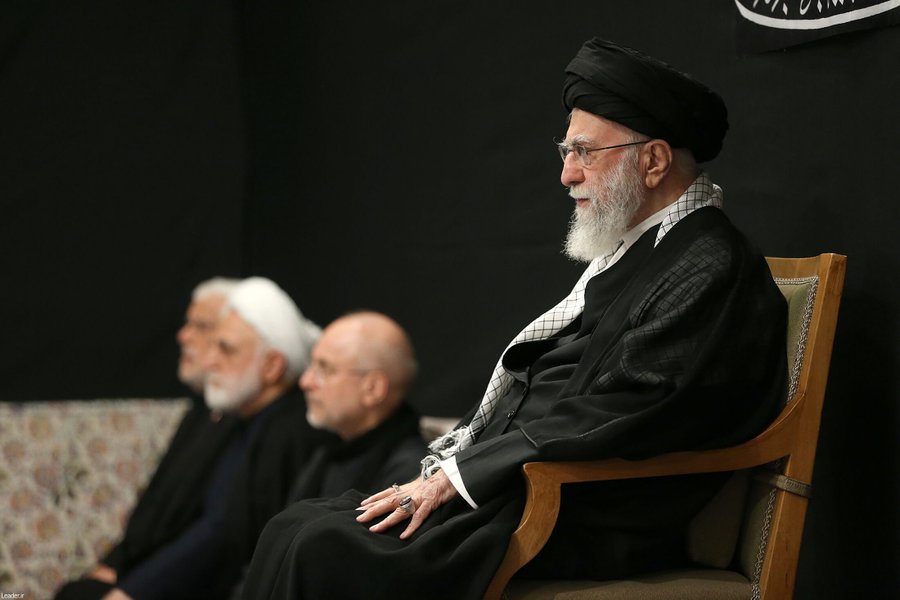
The 86-year-old leader, who had remained unseen throughout the Iran-Israel conflict, was seen attending a mourning ceremony at a mosque near his residence in Tehran, as shown in footage broadcast by Iranian state television. The ceremony marks the eve of Ashura, which commemorates the martyrdom of Imam Hussein, a symbol of resistance and sacrifice in Shiite belief.
As Khamenei entered the mosque, attendees rose in unison, chanting slogans and expressing loyalty. He did not make a formal speech but was seen engaging with senior cleric Mahmoud Karimi, asking him to sing the anthem “O Iran”, a patriotic song that gained renewed popularity during the recent war.
In a post on X (formerly Twitter), the official account stated:
“Tonight’s mourning ceremony on the eve of Ashura was held in the presence of Imam Khamenei, July 5, 2025.”
Why Ashura Matters Now
Ashura is not just a religious commemoration — it represents themes of resistance against oppression, sacrifice, and justice. By appearing in public on this day, Khamenei’s move was widely seen by analysts as a strategic signal: reaffirming the spiritual legitimacy of Iran’s leadership while countering narratives of vulnerability and weakness after the war.
“This was not just a religious act, but a calculated political move,” said Dr. Amini Reza, a political analyst based in London. “It was meant to reassure the domestic population that the leadership remains intact and resilient.”
Security Concerns During the Conflict
Khamenei’s absence during the conflict had fueled speculation. Several reports, especially from opposition-affiliated media, alleged that the Supreme Leader had been sheltering in a bunker due to credible threats. Some sources even claimed the deaths of 20 senior military commanders, though Iranian state media has neither confirmed nor denied these reports.
Throughout the war — which erupted on June 13, 2025 — Khamenei only issued pre-recorded messages, one of which declared victory over Israel and warned the United States against further escalation after the bombing of Iranian nuclear sites.
Former U.S. President Donald Trump, in a controversial statement during the conflict, remarked that while American intelligence knew Khamenei’s location, there were “no immediate plans to target him — at least for now.”
Aftermath of the Iran-Israel War
Despite a shaky ceasefire, the geopolitical fallout continues. Iran’s nuclear program is under increased international scrutiny after the expulsion of UN inspectors and significant reported damage to nuclear infrastructure.
Meanwhile, Iran’s retaliatory missile strikes during the war killed at least 28 people in Israel, with several key military sites damaged, although many projectiles were intercepted by Israeli defense systems.
Domestically, Iran has acknowledged heavy casualties, with some estimates suggesting over 900 deaths and thousands more injured. However, official figures remain undisclosed.