
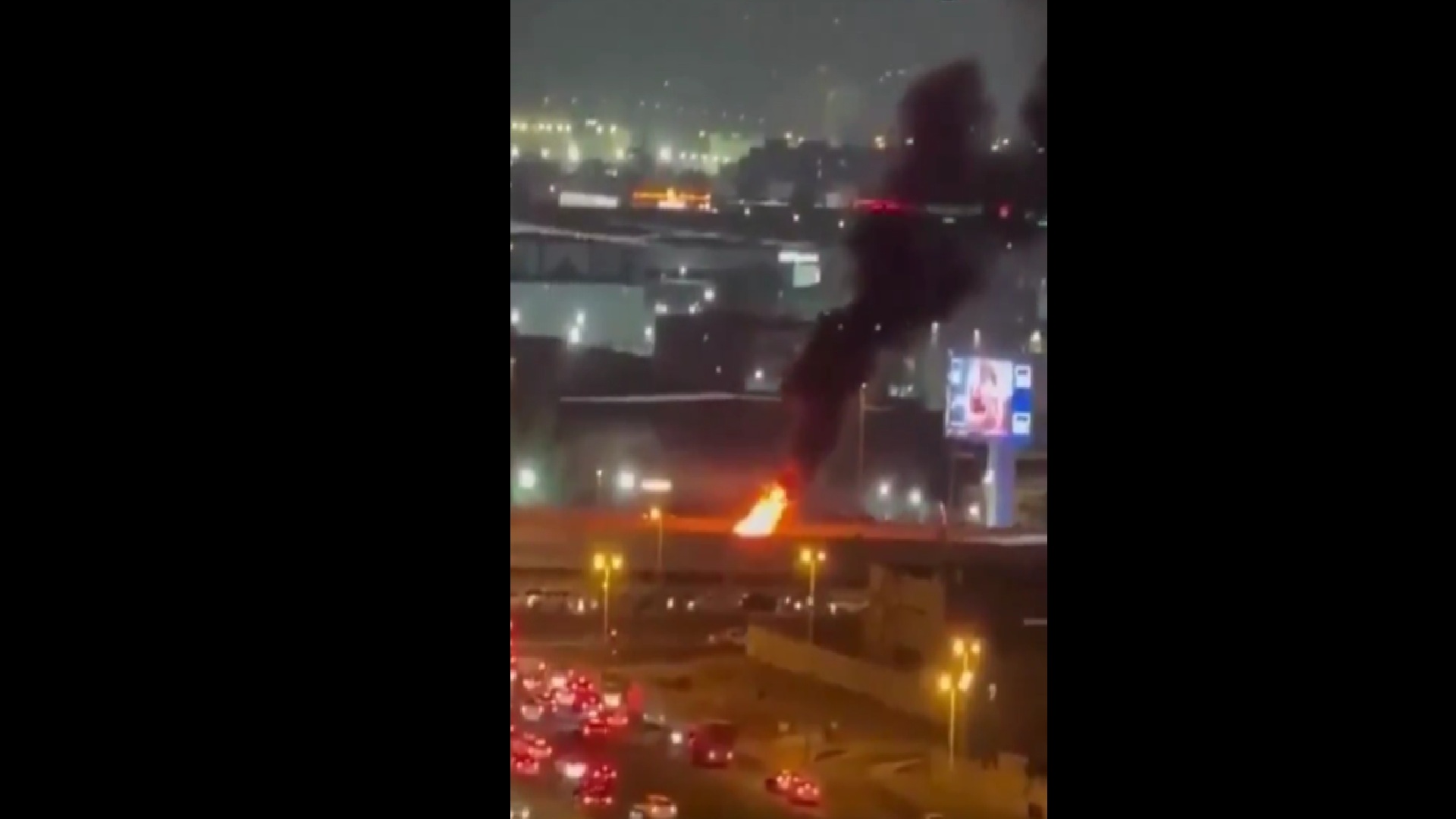
DUBAI, UAE — Authorities in Dubai have confirmed the tragic death of a Pakistani driver in the Al Barsha district. The incident occurred on Saturday, March 7, 2026, when falling fragments from an intercepted missile struck his vehicle. This fatality marks one of the most significant civilian losses in the city since the regional Iran vs US-Israel war began.
The Dubai Media Office stated that the driver died not from a direct hit, but from debris generated during a mid-air interception. UAE air defense systems were actively engaging a massive wave of incoming drones and ballistic missiles when the fragments fell. Emergency responders arrived quickly, but the motorist was pronounced dead at the scene.
Dual Impact: Al Barsha and Dubai Marina
The Al Barsha tragedy was not the only debris-related incident that evening. Simultaneously, fragments from the same interception operation struck the “23 Marina” tower, a 90-story residential skyscraper. While the building’s facade sustained minor damage and plumes of smoke were visible, officials confirmed that no one was injured in the Marina.
Viral videos on social media briefly caused panic as they showed debris hitting the high-rise. However, the Dubai Media Office moved fast to clarify that the skyscraper was not a direct target. Together, these events illustrate the secondary risks of modern aerial warfare in a densely populated urban center.
Also Read : Asif Merchant Convicted: The Iran-Backed Plot to Kill Donald Trump Foiled
The Rising Toll of the Iran vs US-Israel War
The death in Al Barsha brings the total civilian death toll in the UAE to four since the conflict started. The victims include two Pakistani nationals, one Nepali, and one Bangladeshi resident. According to the Ministry of Defense, the UAE has faced an unprecedented barrage of aerial threats.
On Saturday alone, the UAE successfully intercepted:
- 15 out of 16 ballistic missiles.
- 119 out of 121 unmanned aerial vehicles (UAVs).
Since the outbreak of hostilities on February 28, the UAE has neutralized over 200 missiles. President Sheikh Mohamed bin Zayed Al Nahyan addressed the nation on Saturday. He emphasized that the safety of all residents remains the highest priority. He vowed that the nation would emerge stronger from this period of war.
Why Interceptions Pose Risks to Civilians
Even a perfect interception can be dangerous. When an interceptor missile destroys a hostile target, it creates “kinetic debris.” These fragments of metal and unspent fuel can travel several kilometers before hitting the ground. Military experts note that several factors influence where this debris lands:
Interception Altitude: Higher altitudes allow debris to scatter over a wider area.
Wind Speed: High-altitude winds can carry fragments away from the original flight path.
Projectile Mass: Larger ballistic missiles create heavier, more lethal fragments.
UAE Air Defense: A Multi-Layered Shield
The UAE operates one of the world’s most sophisticated defense networks. This system uses early-warning radar and high-altitude interceptors to stop threats before they reach residential areas. Despite these successes, the Attorney General has warned residents against filming or sharing footage of interceptions. Such actions can cause public panic or reveal sensitive defense locations.
Residents are urged to follow official mobile safety alerts. These systems currently advise people to stay indoors during active “red alert” periods. As the Iran vs US-Israel war continues, Dubai maintains its status as a resilient global hub, even while navigating the indirect consequences of regional instability.