
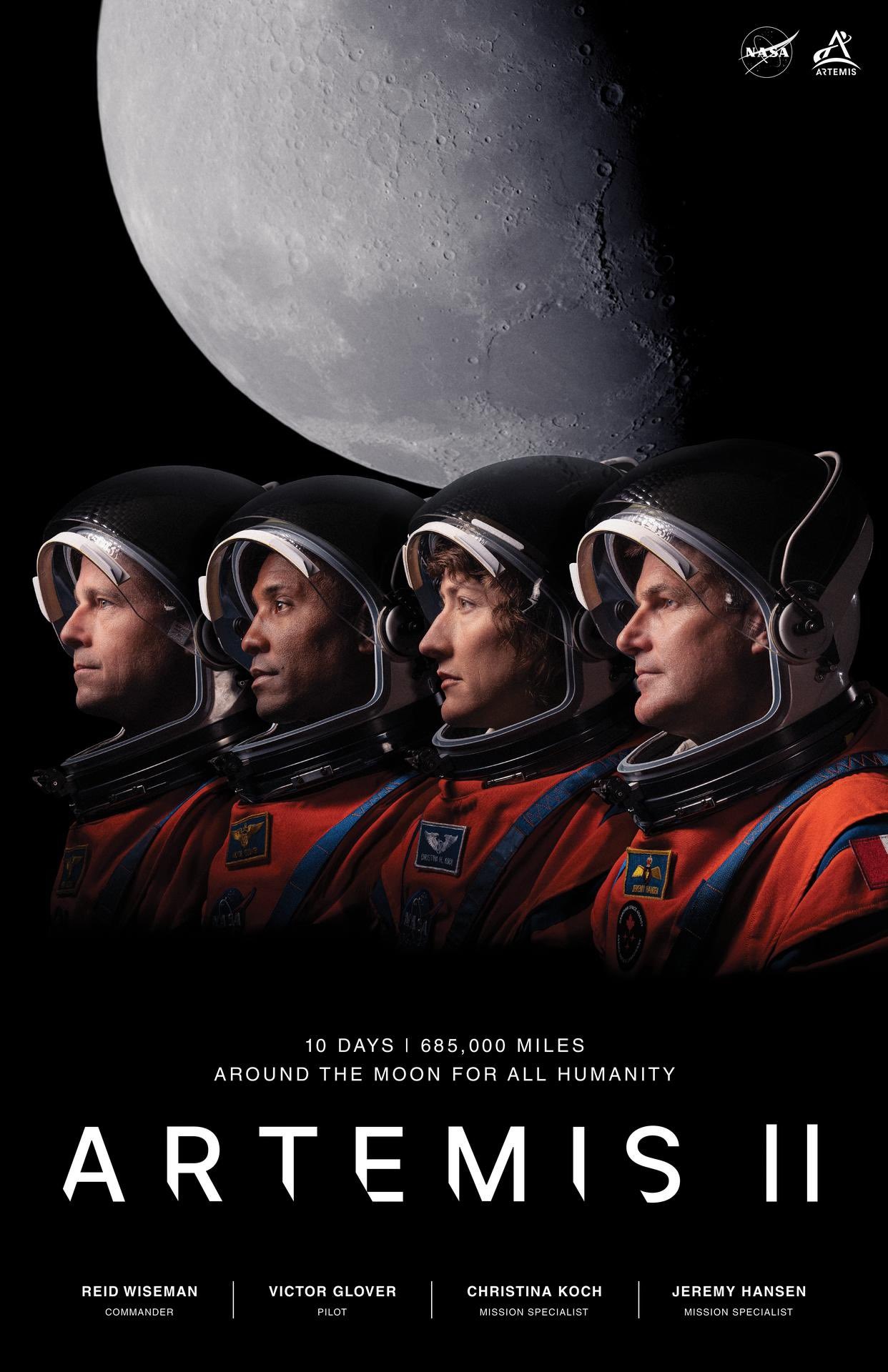
The Artemis II mission splashdown early this Saturday signaled the triumphant return of humanity to deep space. After a 10-day voyage, the Orion spacecraft bobbed safely in the Pacific waters, successfully concluding the first crewed lunar mission in over 50 years. The return was not without high drama. NASA controllers in Houston held their breath during a six-minute communication blackout as the capsule hit the atmosphere.
LIVE: They are coming home.
Watch as the Artemis II crew returns to Earth, splashing down at around 8:07pm ET (0007 UTC April 11). https://t.co/n3vZE2rcFv
— NASA (@NASA) April 10, 2026
Traveling at a staggering 40,000 kilometers per hour, Orion endured temperatures reaching 2,760 degrees Celsius. This friction turned the air around the craft into a red-hot plasma. However, the upgraded heat shield held firm, addressing previous concerns regarding erosion. Once the parachutes deployed and Commander Reid Wiseman’s voice crackled over the radio, the tension in Mission Control transformed into roaring applause.
Breaking Records: Farthest Journey from Earth
The crew of four achieved a milestone that had stood since 1970. They traveled over 406,771 kilometers away from Earth, surpassing the record set by the Apollo 13 mission by more than 6,400 kilometers. During their flyby, the astronauts became the first humans to witness the lunar far side with their own eyes. Previously, only robotic probes had captured this crater-heavy terrain.
Welcome home Reid, Victor, Christina, and Jeremy! 🫶
The Artemis II astronauts have splashed down at 8:07pm ET (0007 UTC April 11), bringing their historic 10-day mission around the Moon to an end. pic.twitter.com/1yjAgHEOYl
— NASA (@NASA) April 11, 2026
The mission’s diversity also set a new standard for space exploration. Commander Reid Wiseman was joined by Christina Koch, the first woman on a lunar voyage, and Victor Glover, the first person of color. Jeremy Hansen further made history as the first non-American to visit the Moon. This inclusive crew contrasts sharply with the Apollo era, reflecting NASA’s modern “Moon to Mars” vision.
A Portfolio of Cosmic Wonders: From Earthset to Meteorites
While in orbit, the crew captured thousands of high-resolution images that are now being analyzed by scientists. One standout photograph, dubbed “Earthset,” shows the delicate blue arc of our planet rising over the stark, gray lunar horizon. This image is already being compared to the iconic “Earthrise” photo from 1968. Additionally, the astronauts reported seeing flashes of light on the lunar surface, which were identified as meteorite strikes.
The crew also witnessed a solar eclipse from space. Pilot Victor Glover described the sight as something humans were likely never evolved to see. The Moon appeared as a perfect black orb silhouetted by a brilliant halo of solar light. Amidst these scientific marvels, the mission remained deeply human. In a moving gesture, the crew requested to name a pair of lunar craters in honor of the spacecraft and Commander Wiseman’s late wife, Carroll.
All four of the Artemis II astronauts have been successfully extracted from the Orion spacecraft following splashdown and are now on the USS John P. Murtha. Next up, they will be escorted to the medical bay where they will undergo post-mission medical evaluations. pic.twitter.com/v96RFKEUNN
— NASA (@NASA) April 11, 2026
Technical Success and the Path to Artemis III
Despite the overall success of the Artemis II mission splashdown, the voyage faced minor technical hurdles. The Orion capsule’s toilet system experienced intermittent malfunctions, and engineers noted valve issues within the drinking water and propellant systems. Nevertheless, NASA Administrator Jared Isaacman emphasized that these are the types of challenges deep-space missions are designed to test.
Looking forward, NASA is now accelerating preparations for Artemis III, scheduled for 2027. That mission will involve complex docking maneuvers in Earth’s orbit. If successful, it will lead to Artemis IV in 2028, which aims to land humans near the lunar South Pole. With China aiming for a 2030 lunar landing, this successful splashdown keeps the United States at the forefront of the new space race.