
CM Yogi Adityanath Reviews UP Leather Policy for 22L Jobs
Lucknow, August 2, 2025 — Uttar Pradesh Chief Minister Yogi Adityanath has reviewed the draft of the Uttar Pradesh Footwear, Leather and Non-Leather Sector Development Policy 2025. The ambitious policy aims to generate up to 22 lakh jobs by adopting a cluster-based industrial development strategy centered around micro, small, and medium enterprises (MSMEs).
Chaired at a high-level meeting with the MSME department, Adityanath emphasized that the policy must be “result-oriented” to unlock the untapped potential of the leather and footwear sectors. The initiative is expected to strengthen UP’s position in global manufacturing and enhance job opportunities for skilled artisans and youth across the state.
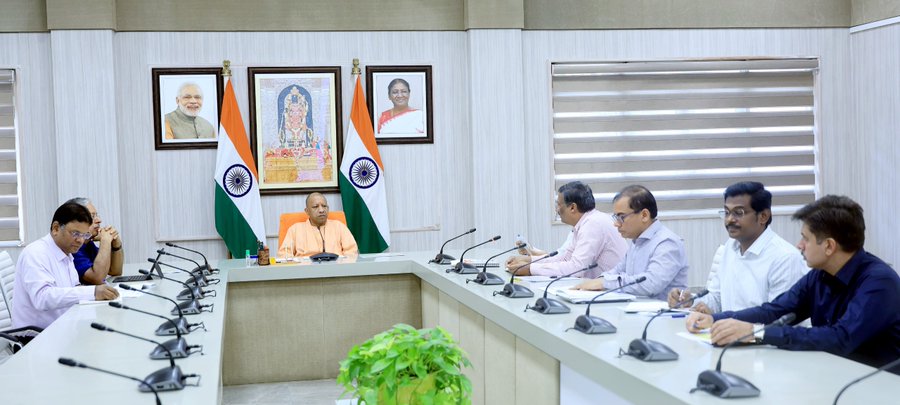
#UPCM @myogiadityanath ने आज जनपद लखनऊ स्थित अपने सरकारी आवास पर आयोजित एक उच्चस्तरीय बैठक में सूक्ष्म, लघु एवं मध्यम उद्यम तथा निर्यात प्रोत्साहन विभाग के कार्यों की समीक्षा की।
मुख्यमंत्री जी ने कहा कि @UPGovt ने फुटवियर, लेदर और नॉन-लेदर विनिर्माण के क्षेत्र को वैश्विक… pic.twitter.com/5CbiH7sewI
— CM Office, GoUP (@CMOfficeUP) August 1, 2025
Leveraging UP’s Leather Manufacturing Strengths
The state already hosts some of India’s largest leather clusters, with Agra hailed as the ‘Footwear Capital’ and Kanpur-Unnao housing over 200 operational tanneries. These industrial hubs provide a strong foundation for a globally competitive ecosystem.
Adityanath underlined the importance of identifying region-specific industrial clusters and integrating design, research, training, and production under one roof. “An integrated approach will not only draw large-scale investment but will also generate lakhs of new employment opportunities,” he said.
To support this vision, the government plans to build flatted factory complexes—modern and efficient workspaces to accommodate industrial units of varying sizes.
Expanding Scope Beyond Footwear
The proposed policy also covers ancillary industries essential to the footwear and leather value chain. These include manufacturers of buckles, zips, soles, laces, dyes, chemicals, and tags.
Additionally, special focus will be given to units producing machinery for leather cutting, stitching, moulding, and non-leather safety footwear. This approach aims to establish a “design-to-delivery” ecosystem that localizes every component of production and distribution.
Moreover, Adityanath highlighted the need for advanced strategies in skilling, packaging, and marketing, which would enhance product quality and boost competitiveness in international markets.
Parallel Push: Industrial Land Policy Reform
The meeting also included a discussion on the Uttar Pradesh Industrial Asthan Policy, intended to overhaul the current system of land allotment and lease execution.
Officials pointed out existing issues such as inefficient land use, unauthorized mortgaging, idle plots, and delays in lease approvals. The new policy aims to address these challenges by offering transparent, time-bound processes through digital platforms.
Key proposals include:
- E-auctions for plot allotments
- Area-based pricing (with anchor unit rates set by the state)
- A lease-rent model to reduce upfront capital expenditure
- Capital subsidies, logistics and power support
- Single-window clearance for faster implementation
Adityanath directed the development of a centralized online portal to manage incentive disbursement and monitor implementation in a fully digital, transparent manner.
Aiming for Global Leadership
India is currently the world’s second-largest producer and consumer in the leather sector, and Uttar Pradesh plays a significant role in this landscape. With strategic reforms, the state aims to become a leading global hub for leather and non-leather manufacturing.
The chief minister’s roadmap offers a clear, pragmatic, and scalable framework that links grassroots skills with international markets. If implemented efficiently, this initiative could redefine UP’s industrial growth trajectory while offering livelihoods to millions.