
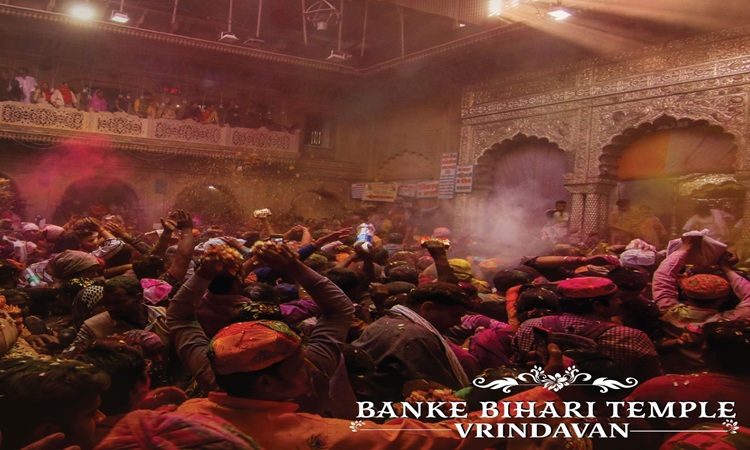
Committee issues strict directions at Banke Bihari temple
Vrindavan’s historic Banke Bihari temple is set for reforms after a high-powered committee, formed on Supreme Court orders, directed priests to disclose the names of all sewaks working under them. The panel also ruled that their number must be restricted to only one or two.
The decision came during a meeting chaired by Justice (retired) Ashok Kumar at the temple premises on Saturday. The committee noted that many priests deploy 10 to 15 outsiders as sewaks on a daily rotational basis. These individuals, it observed, often obstruct devotees and allegedly extort money in exchange for early or priority darshan.
The panel made it clear that the practice must end immediately. “There shall be a total ban on this practice,” the committee stated. It asked priests, also known as goswamis or sevayats, to comply within three days by submitting the names of their official sewaks.
Concerns over devotee experience and corruption
Justice Kumar, along with other committee members, inspected the lanes and entry points around the temple to assess how devotees move through the area. He emphasised the need for an action plan to regulate the flow of pilgrims and reduce hardships faced by common visitors.
The committee argued that excessive deployment of sewaks not only crowds the temple premises but also opens doors for corrupt practices. By limiting the number of sewaks and ensuring transparency, the committee hopes to restore discipline and fairness.
The meeting was attended by retired judge Mukesh Mishra, Mathura district and sessions judge Vikas Kumar, Mathura district magistrate CP Singh, and representatives from the Goswami community.
VIP parchis banned, but protocol remains
A major issue raised during the meeting was the misuse of VIP parchis (slips), which allowed select devotees priority entry. Justice Kumar clarified that while VIP protocol for special guests remains, the illegal use of parchis is banned completely.
“What has been banned is the VIP parchi, not VIP protocol,” he said. According to the committee, around 1,000 to 1,200 VIP parchis were issued daily. To worsen matters, colour photocopies of these slips were circulated, enabling multiple devotees to bypass regular queues with the same parchi.
This system, the committee noted, unfairly disadvantaged ordinary devotees who had no access to VIP parchis. The practice, it added, may have developed due to earlier mismanagement but will no longer be tolerated.
Towards greater accountability at Vrindavan’s key shrine
The Supreme Court had earlier ordered the formation of this committee to streamline temple management and ensure a better experience for lakhs of devotees who visit Banke Bihari every year. The new restrictions mark the first significant step toward accountability.
The committee stressed that both priests and authorities must cooperate for the reforms to succeed. Transparency in the appointment of sewaks and fair regulation of devotee flow are expected to restore trust in the temple’s management.
By addressing corruption and banning practices like VIP parchis, the panel hopes to ensure equal treatment of all devotees, regardless of social or financial status.