
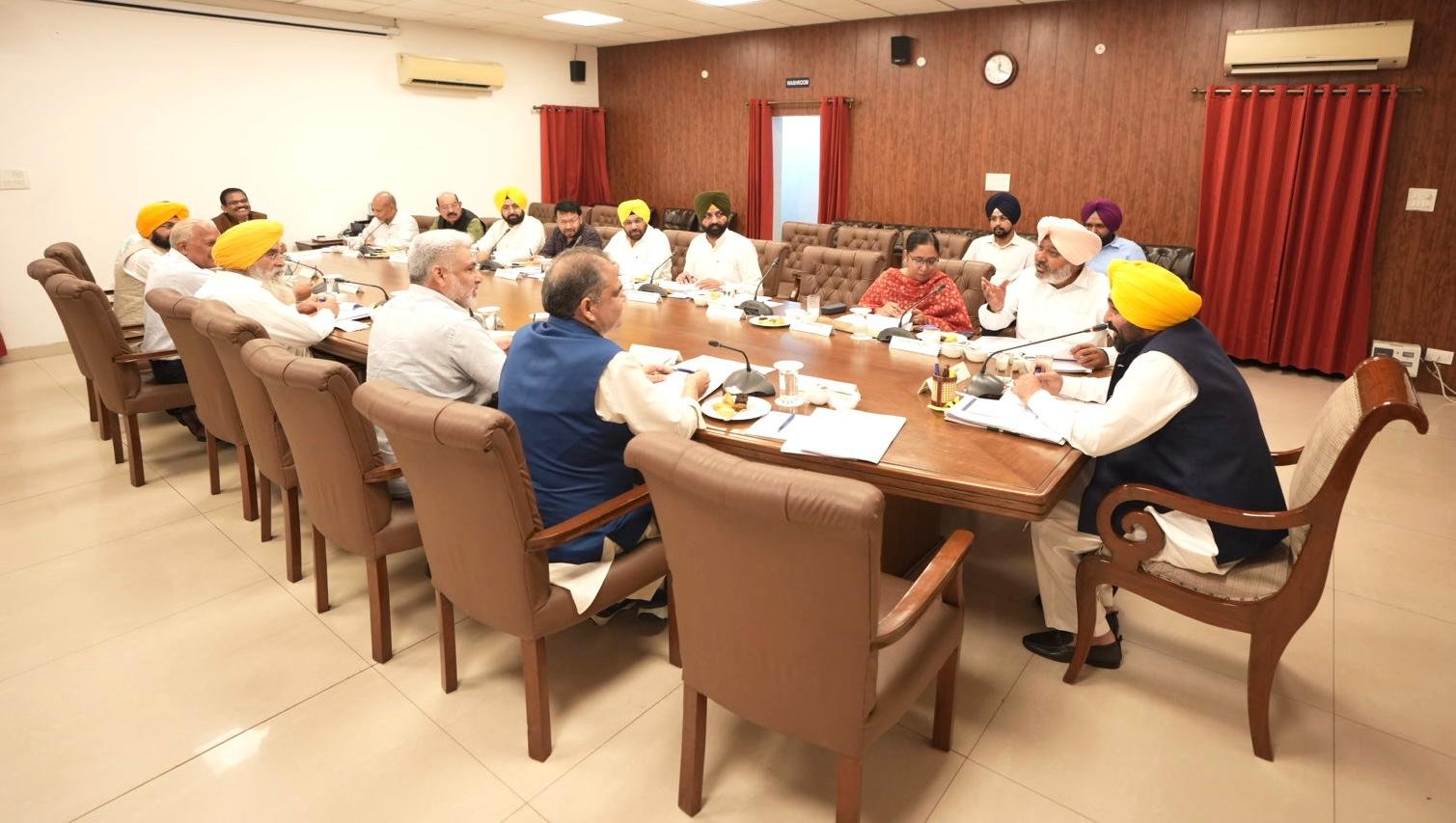
Punjab Cabinet clears major amendment
Chandigarh – The Punjab Cabinet, led by Chief Minister Bhagwant Singh Mann, has approved amendments to the Punjab Cooperative Societies Act, 1961. The decision, taken during a meeting of the Council of Ministers, is aimed at curbing unregistered property dealings, benami transactions, and other legally risky arrangements.
According to a spokesperson from the Chief Minister’s Office, the Cabinet also rolled back stamp duty and registration fee exemptions earlier available to certain cooperative societies. These exemptions were originally designed to support the growth of cooperative institutions. However, over time, the provision became a loophole, particularly in urban housing societies, allowing property transactions to bypass registration and mandatory stamp duty.
Why the amendment matters
The unchecked use of these exemptions, officials said, encouraged unregistered property possession and benami arrangements. To address this, Section 37 of the Act has been revised by adding Clauses 2 and 3.
These clauses empower the State Government to notify specific classes of cooperative societies or categories of instruments that will no longer enjoy exemptions. Once notified, such instruments will fall under the Indian Registration Act, 1908, making registration compulsory and bringing greater transparency to transactions.
Legal experts note that this move strengthens Punjab’s property governance framework. “It closes the backdoor to informal and benami land dealings in housing cooperatives,” said a senior legal analyst.
New post for rural development
Alongside property reforms, the Cabinet also approved the creation of the post of Panchayat Development Secretary. The new position will be formed by merging the cadres of Panchayat Secretaries and Gram Sevaks (Village Development Officers).
The state will constitute a unified cadre to ensure effective planning, supervision, and execution of development projects in villages. To safeguard the interests of existing employees, a “dying cadre” will be created for Panchayat Secretaries. They will be placed as per seniority after Gram Sevaks, based on self-declaration letters.
The government said this step is expected to accelerate rural infrastructure and governance reforms, ensuring better delivery of services across Punjab’s villages.
Focus on crop procurement
The Cabinet also gave ex-post facto approval for forming a Group of Ministers (GoM) to oversee smooth procurement of Kharif and Rabi crops. The Agriculture Minister will chair the GoM, while the Ministers for Food & Civil Supplies, Transport, and Water Resources will serve as members.
Officials explained that the GoM will coordinate logistics, procurement processes, and farmer grievances during the procurement season. With Punjab being a major contributor to India’s food security, the step is seen as a practical measure to avoid delays and ensure efficient handling of grain stocks.
Approvals on pay commission and land pooling policy
In addition, the Cabinet granted ex-post facto approval for creating a Cabinet Sub-Committee to review recommendations of the Committee of Officers on Parts II and III of the 6th Punjab Pay Commission Report.
Meanwhile, in a significant urban policy decision, the Cabinet approved the withdrawal of the Land Pooling Policy 2025, notified by the Department of Housing and Urban Development on June 4, 2025, along with its amendments.
A roadmap of governance reforms
The latest Cabinet decisions reflect Punjab’s attempt to strike a balance between tightening legal loopholes and enhancing governance efficiency. While the amendment to the Cooperative Societies Act aims to promote transparency in property transactions, the creation of the Panchayat Development Secretary post signals renewed focus on grassroots development.
By simultaneously addressing land, housing, agriculture, and employee welfare policies, the Mann-led government is sending a strong message that reforms are underway to plug systemic gaps and strengthen accountability.