
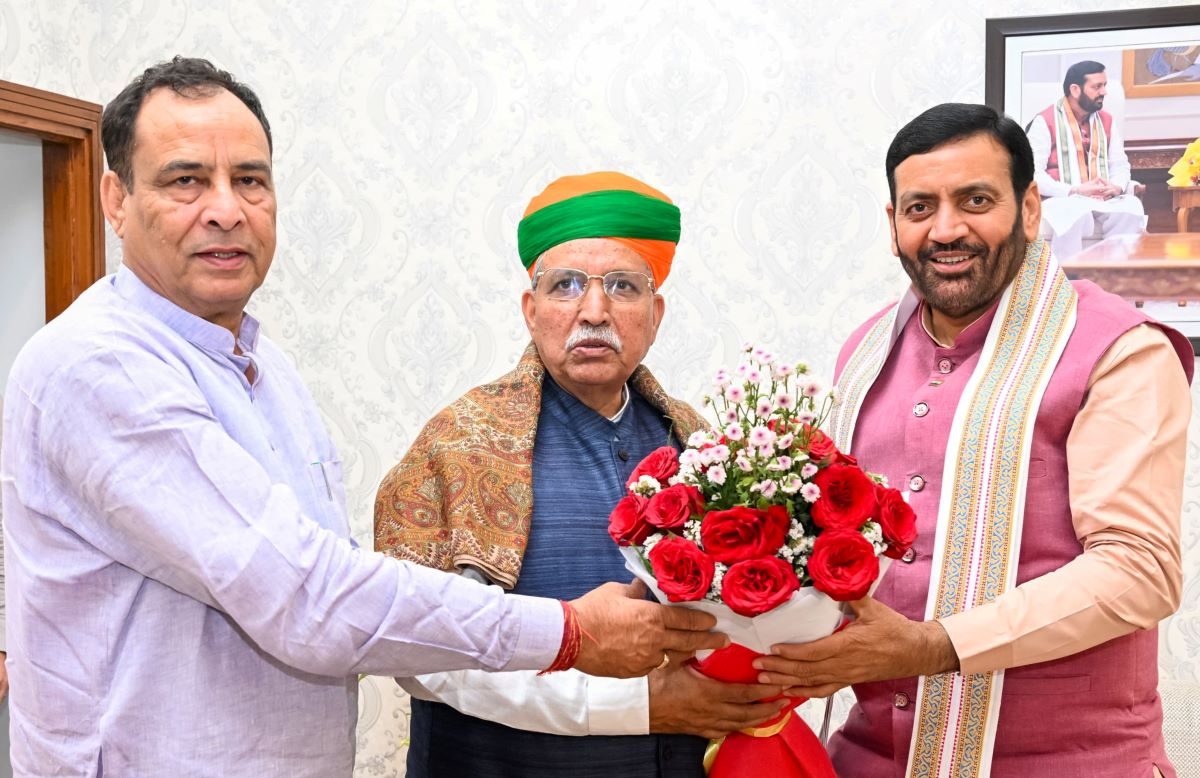
Chandigarh: A significant political meeting took place on Tuesday when Arjun Ram Meghwal meets Nayab Singh Saini at Sant Kabir Kutir in Chandigarh. The interaction was described as cordial and focused on key issues related to development and public welfare.
The meeting was hosted at Sant Kabir Kutir, where the Union Minister of State was warmly welcomed by Chief Minister Nayab Singh Saini.
Focus on Development and Public Interest
During the discussion, both leaders exchanged views on various developmental initiatives and public interest-related matters. The conversation reflected a shared focus on improving governance, strengthening administrative efficiency, and enhancing welfare-oriented policies for citizens.
आज मननीय केन्द्रीय राज्य मंत्री श्री @arjunrammeghwal जी का संत कबीर कुटीर पर हार्दिक स्वागत एवं अभिन्दन किया।
इस अवसर पर विभिन्न विकासात्मक एवं जनहित से जुड़े विषयों पर सार्थक चर्चा हुई। pic.twitter.com/YwL76dJa9x
— Nayab Saini (@NayabSainiBJP) April 14, 2026
Although no detailed agenda was officially released, the meeting highlighted the importance of continued coordination between the central government and the state leadership in Haryana.
Also read : Haryana CM Releases ₹203 Crore Under Deen Dayal Lado Lakshmi Yojana Sixth Installment
The meeting between Arjun Ram Meghwal and Nayab Singh Saini is seen as part of ongoing efforts to improve collaboration between the Union government and state administration. Such interactions help in aligning development priorities and ensuring smoother implementation of welfare schemes.
Arjun Ram Meghwal Meets Nayab Singh Saini : Warm and Cordial Interaction
According to updates shared from the Chief Minister’s official social media handle, the meeting was marked by a warm welcome and meaningful exchange of ideas. The interaction concluded on a positive note, with both leaders reaffirming their commitment to public service and development-focused governance.
The meeting of Arjun Ram Meghwal with Nayab Singh Saini at Sant Kabir Kutir underscores the importance of dialogue and coordination in driving development initiatives. It reflects a continued emphasis on cooperative governance aimed at public welfare and regional progress.