
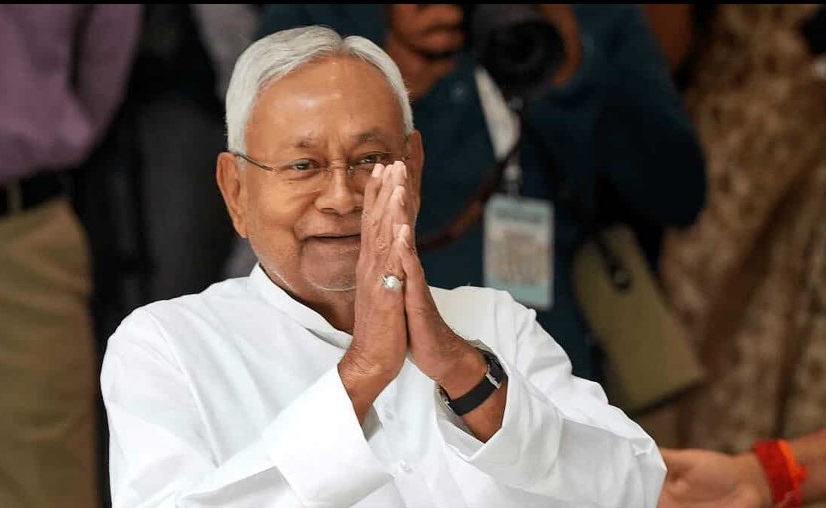
CM Nitish Kumar Govt Reserves 35% Bihar Govt Jobs for Domicile Women
Nitish Kumar Govt Reserves 35% Government Jobs for Bihar’s Women Ahead of Elections
Patna, July 8 – In a major political and social move, the Nitish Kumar-led NDA government in Bihar has announced 35% reservation for women domiciled in the state in all government job categories, ahead of the upcoming 2025 Bihar Assembly elections. The decision, taken during a Cabinet meeting on Tuesday, has sparked both applause and criticism across the political spectrum.
This significant amendment means only women who are permanent residents of Bihar will be eligible for the 35% quota in state government jobs, effectively excluding female candidates from other states. The policy introduces a domicile clause that aligns with the state’s broader push for prioritizing local candidates in public sector employment.
Aimed at Empowering Women – and Securing Votes
Chief Minister Nitish Kumar, who has long championed women’s empowerment, is positioning this move as a continuation of his legacy. In 2006, shortly after assuming office, he introduced 50% reservation for women in Panchayati Raj institutions, making Bihar the first Indian state to do so.
By extending and localizing this reservation to government jobs, Nitish aims to consolidate the support of women voters, a demographic that played a pivotal role in his past electoral victories.
“This is a historic step toward women empowerment. Bihar’s daughters will now have a stronger presence in governance,” said a senior JD(U) leader following the announcement.
Key Highlights of the Announcement
- 35% Reservation in Govt Jobs: Now exclusively applicable to women who are Bihar residents.
- No Quota for Outsiders: Women from outside Bihar will no longer be eligible under this quota, marking a policy shift toward domicile-based reservation.
- Applies to All Govt Departments: The quota will be implemented across all levels of state government employment.
- Political Timing: Announced months before the 2025 Assembly elections, the policy is seen as a strategic move to woo women voters.
Critics Question Domicile Clause
While the decision has been lauded for promoting local women’s representation in governance, it has drawn criticism for excluding non-domiciled female aspirants.
Several educationists and rights activists argue that the domicile clause contradicts the constitutional principle of equal opportunity, and could set a precedent for restrictive employment practices in other states.
A former member of the Bihar Public Service Commission (BPSC) noted,
“While promoting local candidates is important, such exclusions must be carefully balanced with the fundamental right to equality.”
Political Implications: A Strategic Bet Before the Ballot
With the Assembly elections nearing, Nitish Kumar’s government is leaving no stone unturned in securing its vote base. The women electorate, estimated to be over 48% of the total voter base, has traditionally been supportive of Kumar’s pro-women policies.
The reservation announcement is expected to reignite voter enthusiasm and could become a central theme in the JD(U)-BJP campaign narrative, especially in rural and semi-urban constituencies where government jobs are highly coveted.
Bihar’s Track Record on Women Empowerment
Nitish Kumar has built a strong reputation for progressive gender policies over the last two decades:
- 50% Reservation in Panchayats since 2006
- Free bicycles and uniforms for school-going girls
- Mukhyamantri Kanya Utthan Yojana for girl child welfare
- Enhanced female literacy and school attendance rates
This latest move is being pitched as the next logical step in that continuum of reform.
Conclusion
The Bihar government’s decision to implement 35% reservation for women residents marks a bold, politically astute, and socially significant development. While it promises to empower local women and improve gender parity in the state’s workforce, it also opens up debates on inclusive employment and constitutional rights.
With Assembly elections just months away, this announcement is likely to dominate headlines and influence both voter sentiment and electoral strategies across party lines.