
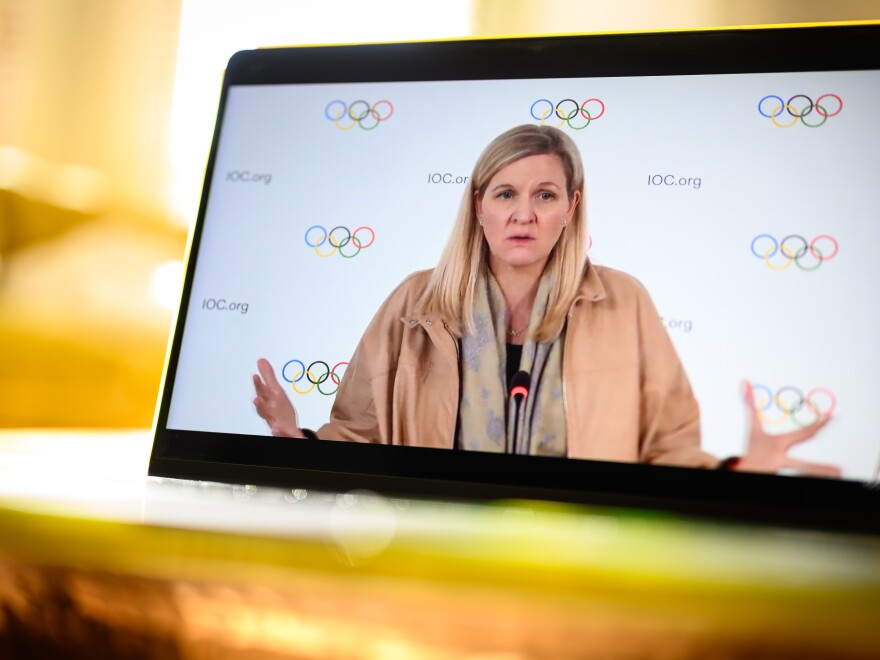
Lausanne, Switzerland: The International Olympic Committee (IOC) has announced a major change to eligibility rules ahead of the Olympics 2028 transgender ban, making clear that transgender women will be barred from competing in female categories at the Los Angeles Games and future Olympic events. The policy, rooted in scientific and fairness considerations, replaces previous guidelines with a unified eligibility framework.
Under the updated rules, athletes seeking to compete in women’s events must undergo a one‑time genetic screening for the SRY gene to confirm biological female sex. The IOC argued that this measure is essential to ensure fair competition and protect safety, particularly in sports where performance differences can be decisive.
Also read : BCCI Cancels IPL 2026 Opening Ceremony to Honour Victims of Bengaluru Tragedy
The Olympics 2028 transgender ban applies not only to transgender women but also, in most cases, to athletes with certain differences in sex development (DSDs) who may retain male‑level physiological advantages. However, rare exceptions will be allowed for athletes with conditions such as Complete Androgen Insensitivity Syndrome (CAIS), which do not confer significant performance benefits.
IOC President Stresses Fairness and Scientific Basis of Olympics 2028 Transgender Ban
IOC President Kirsty Coventry reaffirmed that the Olympics 2028 transgender ban aims to uphold fairness and integrity in elite competition, emphasizing that the criteria are based on scientific evidence that male physical development confers advantages in many sports disciplines. The introduction of mandatory gene testing marks a significant shift in Olympic eligibility policy after years of debate over inclusion and competitive equity.
Reactions to the Olympics 2028 transgender ban have been mixed. Some sports advocates and policymakers have welcomed the move as a way to protect women’s sport categories, while LGBTQ+ groups and human rights advocates have criticized the policy as exclusionary and potentially harmful to athletes’ dignity and mental well‑being.
The ban comes at a time of heightened global focus on gender and sports, and it is expected to shape discussions about athlete eligibility not only at the Olympics 2028 transgender ban but also across other international competitions. Implementation details and the impact on qualifying athletes will continue to unfold in the coming months.