
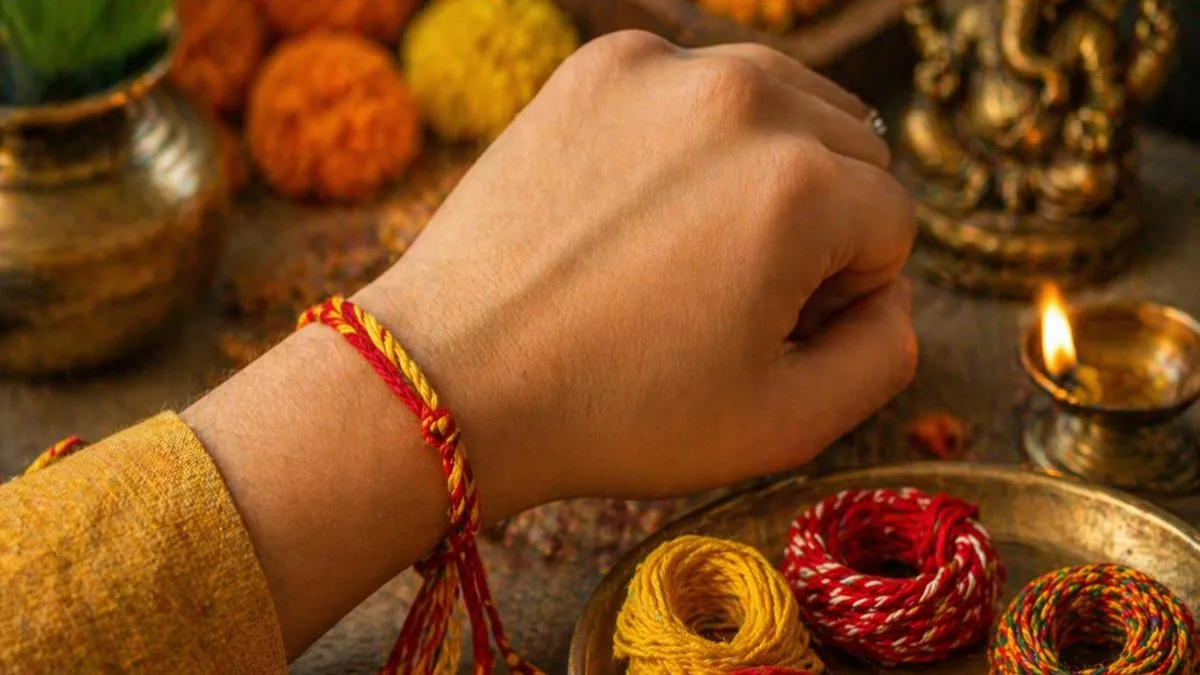
In many Indian households, tying a kalawa around the wrist is more than just a ritual—it is a symbol of faith, protection, and spiritual connection. Whether after a puja, a temple visit, or a special occasion, kalawa is often worn for weeks, sometimes without a second thought. However, spiritual experts suggest that this simple practice carries deeper meaning and should be followed with greater awareness.
According to spiritual guide, kalawa is not merely symbolic. It is believed to hold energy that interacts with a person’s aura. Over time, however, this energy can fade. Since most kalawa threads are made of cotton, their natural lifespan is limited. After around 21 days, the thread begins to weaken physically and spiritually. Wearing kalawa beyond this period may reduce its positive influence, rather than enhance it.
Also read : Buddha Purnima 2026 : Date, Timings and Significance Explained
The colours of kalawa also carry symbolic meanings. Red and yellow threads are associated with Mars and Jupiter, representing strength and prosperity. Yellow signifies protection and spiritual upliftment, while a combination of red and white is linked to growth and wealth. Some variations even include green, believed to enhance communication and balance.
Ultimately, the ritual of tying kalawa reflects how small traditions can hold profound significance. By understanding its purpose, wearing it mindfully, and replacing it at the right time, individuals can ensure that the kalawa continues to support their spiritual well-being rather than diminish it.