
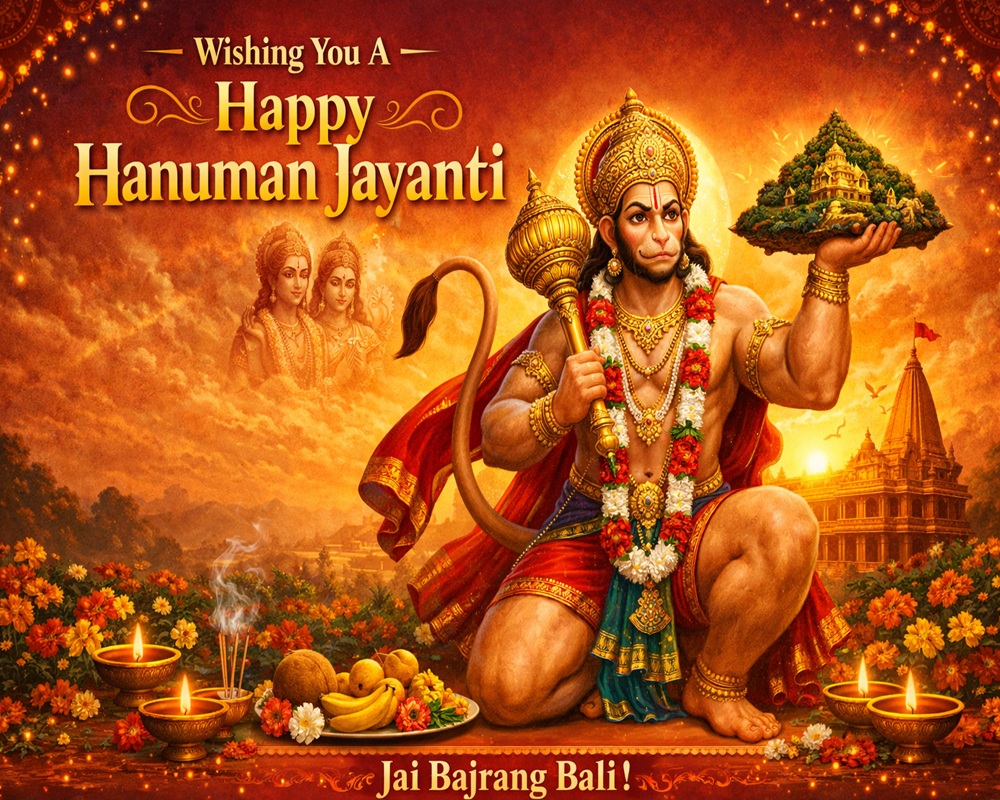
NEW DELHI — Devotees across India are gearing up to celebrate Hanuman Jayanti 2026 tomorrow, Thursday, April 2. This auspicious festival marks the birth anniversary of Lord Hanuman, the epitome of strength and devotion. This year, the festival is particularly significant due to a rare celestial alignment of Dhruv Yoga and Hasta Nakshatra. Astrologers suggest that worshipping the “Sankat Mochan” during these specific windows can help remove deep-seated obstacles and bring stability to one’s life.
The Chaitra Purnima Tithi officially began at 7:06 AM today, April 1, and will conclude at 7:41 AM tomorrow, April 2. Following the Udaya Tithi tradition, where the festival is observed on the day the sun rises during the Tithi, the primary celebrations will occur on April 2. Since Lord Hanuman was born at sunrise, the early morning hours are considered the most powerful for performing puja and reciting the Hanuman Chalisa.
Shubh Muhurat and Rare Astrological Yogas
The morning of April 2 offers a highly sacred window for worship. The Brahma Muhurat starts at 4:38 AM and ends at 5:24 AM, providing a perfect time for meditation. For those performing the main puja, the Morning Shubh Muhurat is from 6:10 AM to 7:44 AM. If you miss the morning session, an Evening Muhurat is available between 6:39 PM and 8:06 PM.
Furthermore, the presence of Dhruv Yoga until 2:20 PM tomorrow symbolizes “permanence” and success in long-term ventures. This is complemented by the Hasta Nakshatra, which remains in effect until 5:38 PM. Many believe that starting new projects or spiritual vows during this combination ensures divine protection. Additionally, the Abhijit Muhurat from 12:00 PM to 12:50 PM is ideal for carrying out any auspicious activities or charity work.
5 Sacred Bhog Offerings to Please Bajrangbali
Traditional offerings, known as Bhog, play a vital role in Hanuman Jayanti rituals. Devotees believe that offering the Lord’s favorite foods with a pure heart can alleviate the effects of Mangal Dosh and Shani Sade Sati.
- Boondi or Besan Laddoo: These are perhaps the most famous offerings. Lord Hanuman is said to love sweets made from gram flour, which symbolize the distribution of joy and positivity.
- Jaggery and Roasted Gram (Gur-Chana): This simple yet potent combination is a staple in Hanuman temples. Jaggery represents sweetness, while Chana provides the strength associated with the deity.
- Bananas: As a Sattvic fruit, bananas are considered a pure offering. They are often distributed as Prasad to symbolize humility and health.
- Sweet Betel Leaf (Meetha Paan): Offering a specially prepared Paan with clove and cardamom is an ancient tradition. It is believed to signify the completion of one’s prayers.
- Saffron Rice: Preparing rice with sugar and saffron is a special ritual. This offering is specifically recommended for those seeking mental peace and prosperity.
Rituals for 2026 Search Standards (E-E-A-T)
To ensure your worship aligns with traditional standards, begin the day with a holy bath. Wear red or saffron-colored clothes, as these colors are dear to Bajrangbali. Many practitioners also suggest applying a small amount of Sindoor mixed with Jasmine oil to the idol, which represents the Lord’s absolute surrender to Lord Rama.
In 2026, many digital-savvy devotees are also participating in virtual Sundarkand recitations and online temple darshans. However, the core of the festival remains unchanged: unwavering faith. Whether you visit a local temple or pray at home, the focus should remain on the values of courage and selfless service.