
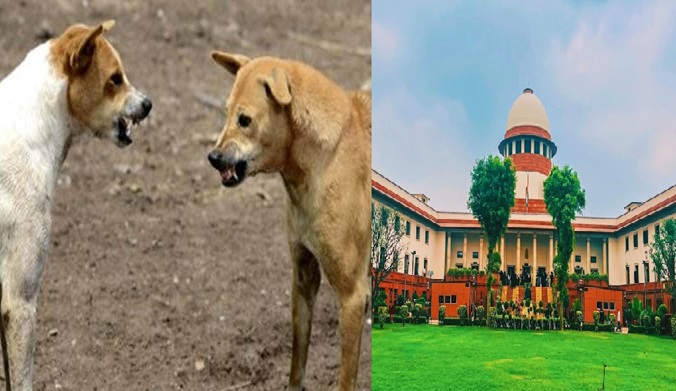
Supreme Court on Stray Dogs: “Why Don’t You Feed Them at Your Home?” Amid Surge in Child Deaths from Dog Bites
“Why Don’t You Feed Them at Your Home?”: Supreme Court Reacts Sharply Amid Spike in Dog Bite Cases, Child Deaths
New Delhi, July 16, 2025 — Amid a disturbing spike in dog bite incidents, especially involving young children, the Supreme Court of India has sharply criticized public feeding of stray dogs, stating, “Why don’t you feed them at your home?”
The comment came on Tuesday from a bench comprising Justices Vikram Nath and Sandeep Mehta, during a hearing on an appeal filed by Reema Shah, a Noida resident who alleged harassment by neighbors for feeding stray dogs in public areas.
As tragic cases of children mauled to death by street dogs dominate headlines, the court’s observations reflect growing national anxiety over public safety.
Supreme Court’s Stern Stand on Stray Dogs in Public Spaces
Addressing the matter bluntly, the court questioned:
“Should we leave every lane, every road open for these large-hearted people?”
Expressing clear disapproval of community dog feeding in residential areas, the court noted:
“There is all space for these animals, no space for humans.”
The judges went on to suggest that if the appellant is genuinely concerned about stray dogs, she should open a shelter within her own home rather than use public areas, which are frequented by children, elderly, and commuters.
Rising Dog Bite Cases Claiming Children’s Lives
India has witnessed a worrying rise in dog bite cases over the past two years, with several incidents proving fatal for children. In 2024 alone, media reports highlighted:
- A 5-year-old boy in Hyderabad killed by a pack of stray dogs while returning from school.
- A 7-year-old girl in Lucknow attacked in a park, sustaining serious injuries.
- Multiple attacks in Noida, Ghaziabad, and Bengaluru, prompting public outrage.
Health data from civic bodies indicates that dog bite cases have doubled since 2022 in urban centers. Children under the age of 12 account for nearly 60% of reported attacks.
Background: Noida Woman’s Plea and Legal Clash
Reema Shah had approached the Allahabad High Court earlier, seeking protection from harassment for feeding community dogs and urging enforcement of Animal Birth Control (Dogs) Rules, 2001. The High Court dismissed her plea on March 3, stressing the need for a balanced approach between animal welfare and human safety.
Shah then moved the Supreme Court, citing Prevention of Cruelty to Animals Act, 1960, and arguing that local authorities were obliged to designate feeding spots for stray dogs.
However, the Supreme Court dismissed these arguments with a realistic view of public risk. Referring to morning walks and cycling activities being endangered, the bench added:
“Try doing it (cycling) and see what happens.”
High Court Also Stressed Public Safety
The Allahabad High Court, while disposing of Shah’s petition, acknowledged the importance of animal rights, but made it clear that:
“The interest of the common man in moving on the streets must be protected.”
It noted an alarming increase in dog attacks, urging local authorities to take necessary steps to safeguard public movement, particularly that of school children and daily commuters.
Public and Civic Response
The debate around community dog feeding has polarized opinions. While animal rights activists insist on compassion and sterilization, residents in cities like Noida and Bengaluru have voiced fears of stray dog overpopulation and aggressive behavior, especially near schools, parks, and gated societies.
Municipal corporations in many regions have failed to set up designated feeding spots, and inadequate sterilization programs have worsened the crisis.