
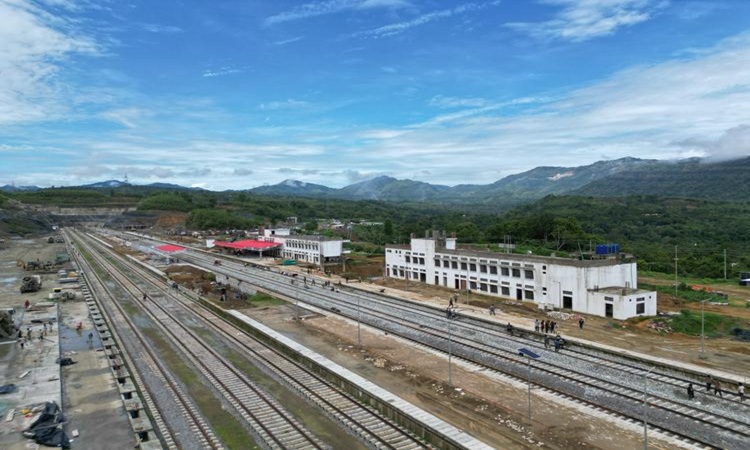
Historic Railway Milestone for Mizoram
More than 172 years after the British introduced railways to India, Mizoram is finally set to join the national rail network. Prime Minister Narendra Modi will inaugurate the Bairabi-Sairang broad gauge railway line on Saturday, marking a landmark moment for the northeastern state. Alongside this, he will also flag off the first Rajdhani Express connecting Aizawl with Delhi, scheduled to begin weekly services from September 19.
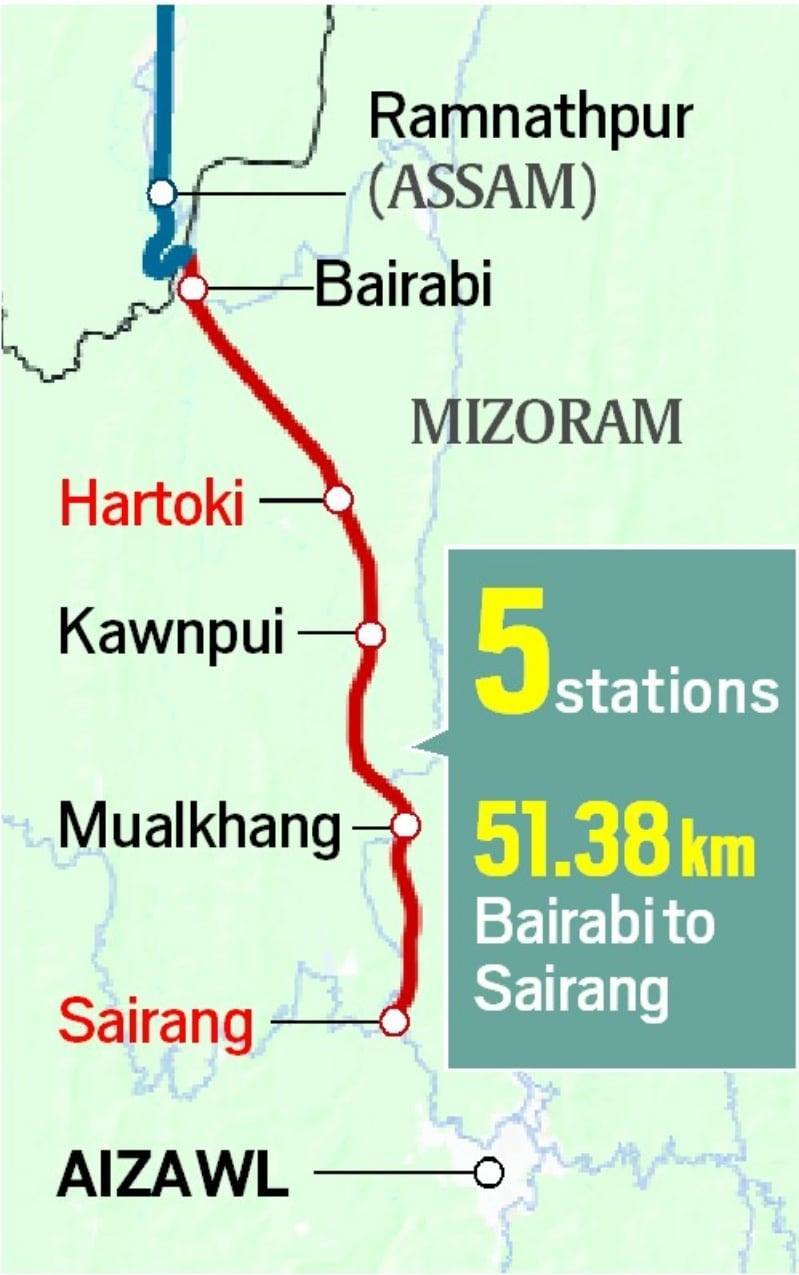
Rail Route from Assam To Mizoram
The Bairabi-Sairang line is expected to revolutionize travel and trade for Mizoram’s residents, cutting travel costs and improving access to healthcare, education, and business hubs across India.
Project Details and Significance
The 51.38-km Bairabi-Sairang broad gauge project, sanctioned in 2008-09, was executed by the Northeast Frontier Railway at a cost of ₹8,213.72 crore. The line passes through steep hills, deep gorges, and dense forests. To complete the track, engineers constructed 48 tunnels and over 150 bridges, making it one of India’s most challenging railway projects.

Celebration in Bairabi Station
The line also includes four new stations — Hortoki, Kawnpui, Mualkhang, and Sairang. Notably, the project features India’s second-highest railway bridge at 114 meters, which is taller than Delhi’s Qutub Minar by 42 meters.
PM Modi had laid the foundation stone in 2014. Despite geographical hurdles and material shortages — with construction materials sourced from states like Assam, West Bengal, Bihar, and Meghalaya — the project was completed within ten years.
Rajdhani Express: Connecting Aizawl to Delhi
The Rajdhani Express will cover a distance of 2,510 km in 43 hours and 25 minutes, running at an average speed of 57.81 km per hour.
- Inaugural Run: September 13, from Sairang at 10:00 am, reaching Delhi’s Anand Vihar at 7:30 am on September 15.
- Regular Service: From September 19, train number 20597 will depart Sairang every Saturday at 4:30 pm, arriving in Delhi at 10:50 am Monday.
- Return Journey: Train number 20598 will leave Anand Vihar every Monday at 7:50 pm, reaching Sairang at 3:15 pm Tuesday.
The train will halt at 21 major stations, including Guwahati, New Jalpaiguri, Malda Town, Patna, and Kanpur. Diesel engines will run until Guwahati, after which an electric locomotive will take over for the remainder of the journey.
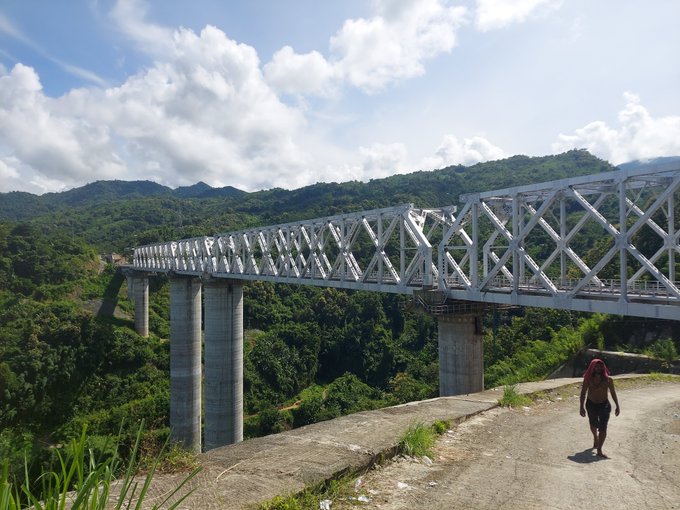
Railway Bridge enroute to Mizoram
Travel Costs and Benefits for Mizoram
Until now, train travel in Mizoram was limited to the Silchar-Bairabi route in Assam. The new connection will drastically cut travel time and expenses:
- Aizawl to Silchar: Reduced from 7 hours by road to 3 hours by train.
- Aizawl to Guwahati: Reduced from 16 hours by road to 12 hours by train.
- Travel cost: Road trips between Silchar and Aizawl cost up to ₹1,000. By train, the same journey will cost under ₹80.
Residents of Kolasib and Aizawl districts are expected to benefit the most, with easier access to affordable transportation. This will open doors for better opportunities in healthcare, education, and trade across major Indian cities like Delhi, Kolkata, and Guwahati.
Strategic Importance and Act East Policy
The railway project is a vital part of the Centre’s Act East policy, which aims to improve connectivity and promote development in the northeast. By linking Mizoram with Assam’s Silchar and the broader Indian railway network, the government expects to boost economic growth, tourism, and regional integration.
The completion of this project highlights India’s commitment to modern infrastructure in its border states, which often face logistical challenges due to difficult terrain. Officials believe this connectivity will enhance trade not only within India but also with neighboring Southeast Asian nations.