
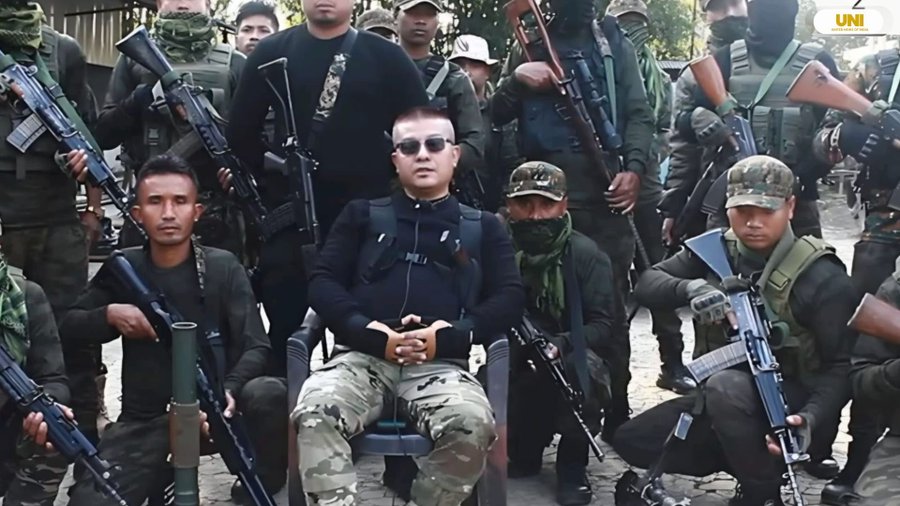
NEW DELHI — In a major breakthrough for national internal security, a joint law enforcement operation successfully neutralized a critical threat emanating from Northeast India. Officials confirmed on Thursday, May 28, 2026, that a high-ranking KCP commander arrested in Delhi has exposed a deeper underground network. The target, identified as Haobijam Dilip Singh, is a top mastermind of the banned insurgent outfit, the Kangleipak Communist Party (KCP). A coordinated strike team consisting of the Delhi Police Special Cell, the Manipur Police, and central intelligence agencies executed the arrest shortly after his arrival in the national capital.
Following the arrest, central intelligence operatives immediately initiated a comprehensive, high-priority interrogation of the rebel commander. Investigators revealed that the high-value operative had slipped into the metropolitan area specifically to orchestrate a highly classified, secret meeting. Consequently, central agencies are probing whether the national capital or other major metropolitan cities were on the immediate radar of the secessionist group. The captive leader is currently facing multiple serious charges, being a wanted individual in more than a dozen cases registered under the stringent Unlawful Activities (Prevention) Act (UAPA).
Also Read : Karnataka Leadership Change Speculation Intensifies as Siddaramaiah Resignation Buzz Grows
Midnight Counter-Insurgency Operation Unearths Mass Arsenal
The operational impact of the arrest extended rapidly back to the Northeast sector within hours of the initial capture. Based on precise tactical disclosures extracted during his initial questioning, security forces launched a swift midnight search operation in Manipur. Teams focused on a hidden tactical dump located within the Kakching district, uncovering a massive cache of military-grade weaponry. This successful recovery successfully disrupted a sinister conspiracy meant to trigger large-scale coordinated violence across the sensitive border state
Additionally, security personnel seized numerous empty weapon magazines alongside specific tactical gear, tarpaulin sheets, and specialized transport bags. The search party also confiscated a Redmi 13C mobile phone running active dual SIM cards from major service providers. Cyber forensics experts have taken custody of the mobile device to extract encrypted chat logs and map out the group’s local financing channels.
Dismantling Secessionist Networks and Extortion Frameworks
The Union Ministry of Home Affairs maintains a strict ban on the Kangleipak Communist Party due to its violent secessionist philosophy. Historically, the banned organization has relied heavily on systemic extortion rackets targeting local infrastructure projects, academic institutions, and regional businesses to fund its operations. However, this cross-border arrest signals a highly sophisticated level of real-time intelligence sharing between state police divisions and central defense networks.
Moreover, data analysts are tracking his exact transit route to determine how an active insurgent bypassed multiple regional security checkpoints. Investigators are mapping his local contacts in Delhi to identify sympathizers providing safe houses to active militants. This collaborative approach ensures that the broader logistics web of the group faces systematic deconstruction across multiple Indian states.
Conclusion: Fortifying Metropolitan Centers Against Terror Risks
Ultimately, the successful execution of the KCP commander arrested in Delhi operation highlights the shifting dynamics of India’s internal counter-terror initiatives. Neutralizing a top commander while simultaneously liquidating a major arms depot deals a severe psychological blow to regional insurgent factions. As cyber forensics units continue tracing digital footprints, security parameters around vital installations in Delhi remain significantly enhanced. Moving forward, maintaining this aggressive, proactive intelligence-led stance is essential to ensuring lasting peace and stability across Northeast India.